
Leader InterviewsMarTech Platforms & Strategy
Tamara Machado on Go-to-Market Strategy, AI & Digital Sovereignty
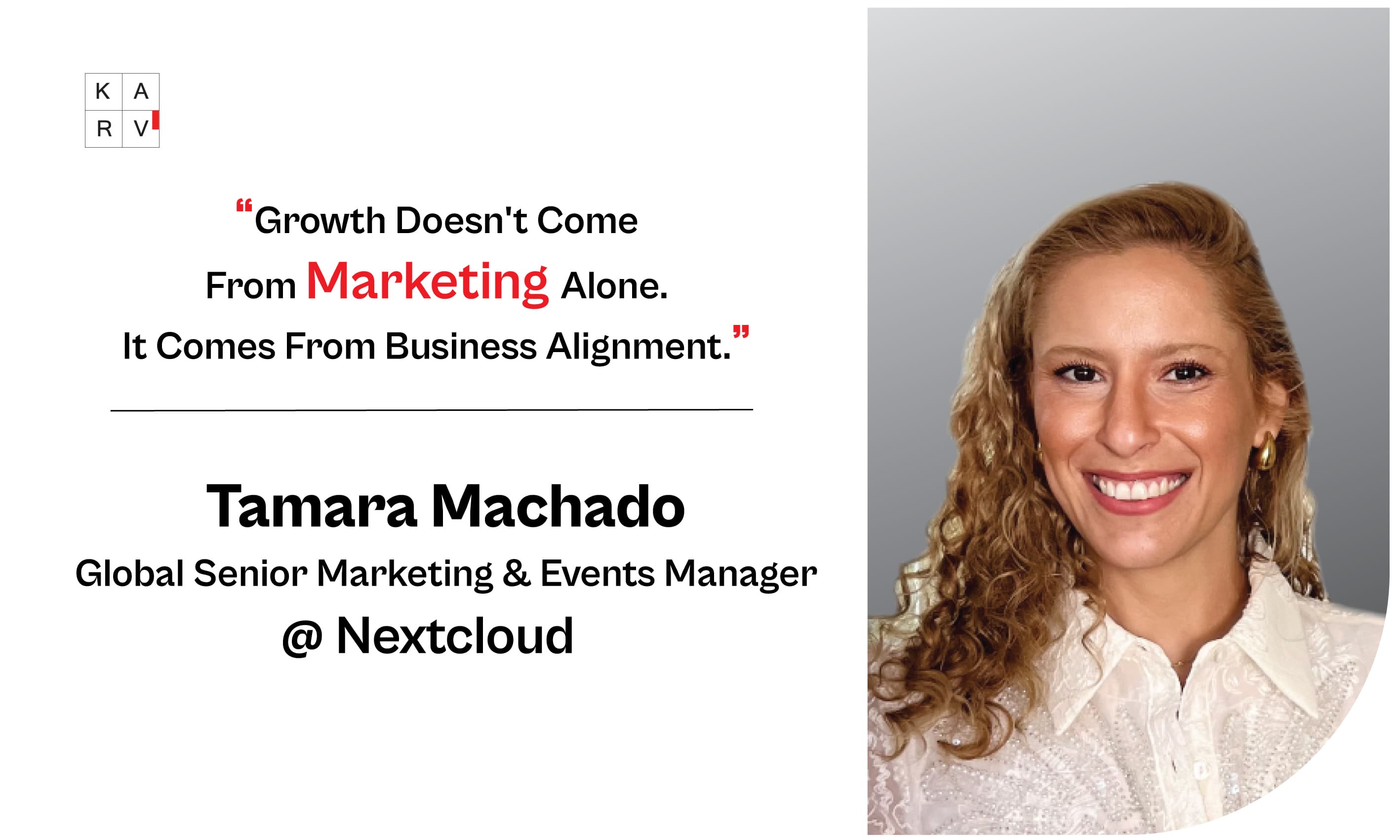
Article content
1. A Career Built Around Growth
Your career has evolved across global marketing, demand generation, revenue strategy, and go-to-market leadership. Looking back, what experiences have most shaped your perspective on building sustainable business growth?
A:
My perspective changed when I stopped looking at marketing as a department and started seeing it as part of the sales engine.
Early in my career, success was measured by campaigns, attendance, or brand visibility. Over time, working across SaaS, cybersecurity, and enterprise technology, I realized those metrics only matter if they contribute to business outcomes.
The biggest lesson has been that sustainable growth doesn't come from isolated marketing initiatives. It comes from alignment. When Marketing, Sales, Product, and Customer Success share the same objectives, growth becomes much more predictable.
Today, that's how I approach every GTM strategy: not asking "How do we generate more leads?" but "How do we create measurable business impact?"
The purpose of marketing isn't to generate activity. It's to generate revenue.
2. Why Nextcloud, Why Now?
Nextcloud has become a leading advocate for digital sovereignty and secure collaboration. What attracted you to the company, and what aspects of its vision and mission resonated most strongly with you?
A:
Throughout my career, I've always been drawn to companies that solve meaningful business challenges rather than simply offering technology.
What attracted me to Nextcloud was its commitment to digital sovereignty, privacy, and open-source innovation. As organizations become increasingly dependent on cloud technologies and AI, giving customers greater control over their data is no longer just a technical discussion—it's a strategic business decision.
The opportunity to contribute to a company that challenges traditional market assumptions while helping organizations collaborate securely was something that strongly resonated with me. It aligned with values I've always believed in: trust, transparency, and building technology that puts customers in control.
3. Go-to-Market Beyond Traditional Marketing
You've spoken about viewing marketing as a revenue engine rather than a support function. How should organizations rethink go-to-market strategies to create measurable business impact in today's highly competitive technology landscape?
A:
I believe many companies still confuse marketing execution with GTM strategy.
Campaigns, content, advertising, and events are channels.
Go-to-market is the system that connects them.
The strongest GTM organizations start with customer problems, business priorities, and revenue goals—not with tactics.
When every function understands who the ICP is, what value they're delivering, and how success is measured, marketing stops being a support function and becomes a growth driver.
That's where the predictable pipeline comes from.
4. Building Trust in the AI Era
As AI adoption accelerates, organizations are becoming increasingly focused on privacy, governance, and control over their data. How do you see the balance between innovation and digital trust evolving, and why is digital sovereignty becoming a strategic business priority?
A:
AI is transforming the way we work, but trust will become the real competitive advantage.
Organizations want innovation, but they also want transparency, governance, and control over their data.
I don't see those as competing priorities.
In fact, I believe responsible AI will accelerate adoption because customers will increasingly choose vendors they trust.
Digital sovereignty is becoming a strategic differentiator because organizations want the freedom to innovate without compromising security, compliance, or ownership of their information.
5. Marketing's Evolving Role in Business Growth
Marketing leaders today are expected to influence pipeline, revenue, and customer success, not just brand awareness. How has this evolution changed the way high-performing marketing teams operate?
A:
Marketing has earned a seat at the executive table because the expectations have changed.
Today, marketing is expected to influence pipeline, revenue, customer expansion, and retention—not just awareness.
That requires a different mindset. High-performing marketing teams think commercially.
They understand sales cycles. They understand customer journeys.
And they measure success based on business outcomes rather than activity metrics.
Marketing is no longer about creating demand. It's about helping the business grow.
6. Creating Customer Experiences That Drive Results
Modern buyers interact with brands across multiple channels before making decisions. What role do community engagement, events, and customer experiences play in building lasting relationships and accelerating business growth?
A:
Buying decisions rarely happen because of a single interaction. They're built through a series of meaningful experiences.
Events, communities, executive briefings, digital engagement, and customer conversations all play a role.
For me, the goal isn't simply creating memorable experiences. It's creating experiences that move customers forward in their buying journey.
When customer experience becomes part of the GTM strategy rather than a standalone initiative, it creates stronger relationships and ultimately better business outcomes.
7. Building High-Performing Global Teams
Leading international marketing initiatives requires balancing diverse markets, cultures, and business priorities. What leadership principles have been most valuable in building collaborative, high-performing global teams?
A:
Leading global initiatives has taught me that alignment is more important than hierarchy.
The best teams I've worked with shared three things:
- A common objective.
- Clear accountability.
- And trust.
When people understand the business goals and feel empowered to make decisions, geography becomes much less important.
Whether teams are in Europe, North America, or Latin America, strong collaboration always starts with clear communication and shared ownership.
8. Looking Ahead
As AI, open-source technologies, and cloud collaboration continue to reshape the enterprise landscape, what trends do you believe will define the future of go-to-market strategy, and how is Nextcloud preparing for what's next?
A:
I believe the future of go-to-market will be shaped by three major trends.
First, AI will dramatically increase productivity, but human judgment, trust, and strategic thinking will become even more valuable.
Second, digital sovereignty will continue to move from an IT concern to a boardroom priority. Organizations increasingly want innovation without compromising control over their data.
Finally, GTM will become far more integrated. Marketing, Sales, Product, Customer Success, and Partners will operate less as separate functions and more as one commercial organization focused on customer outcomes.
Companies that embrace these shifts and build their GTM strategies around customer value rather than channels will be the ones best positioned for sustainable growth.
About Tamara Machado
Tâmara Machado is a Global GTM, Growth, and Revenue Marketing leader with 15+ years of experience driving business growth for SaaS and technology companies. Having led global initiatives at Cloudflare and Nextcloud, she specializes in go-to-market strategy, demand generation, field marketing, and aligning Sales and Marketing to build predictable pipelines and measurable business outcomes.
Continue the Conversation
If you enjoyed this conversation on AI, go-to-market strategy, and the future of enterprise growth, you may also like our exclusive Leader Interview with Dana Averbouch, where she shares how AI Search, digital intelligence, and revenue marketing are reshaping customer discovery and modern GTM strategies.
Read the full interview: Dana Averbouch, VP Product Marketing & Revenue Marketing @ Similarweb