
Leader InterviewsMarTech Platforms & Strategy
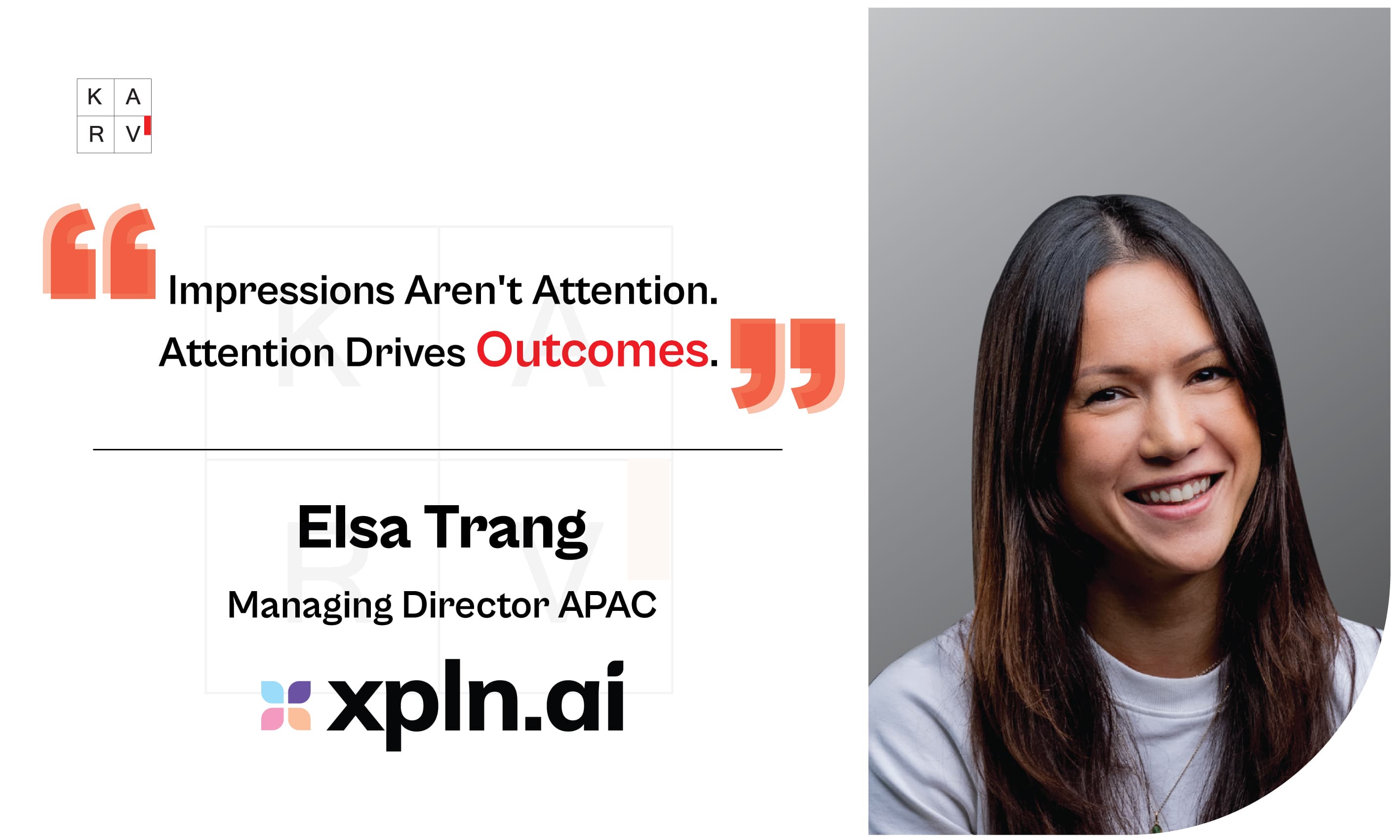
Elsa Trang on AI, Attention and the Future of Media Measurement
Article content
1. A Career Built Around Digital Advertising
Having spent over a decade helping brands, agencies, and publishers navigate the evolving digital advertising landscape, what experiences have most shaped your leadership philosophy, and how has your perspective on media effectiveness changed over the years?
A:
Over a decade on the front lines of digital advertising gave me a front-row seat to how this industry builds, sells, and measures value.
Early on, success meant scale: impressions, clicks, viewability. It was the best data we had, but relying on it created a real disconnect, rewarding cheap reach and ad clutter over genuine engagement.
It was, in many ways, a race to viewability and reach. The industry built itself around hitting media KPIs, and that focus could work against the very brand it was meant to serve. We kept building products and chasing trends designed to score better on media metrics, not to actually grow the brand, as if the two had become separate worlds. But they never were. Media only exists to build the brand and generate growth, short-term or long-term.
Watching that play out reshaped how I think about effectiveness and value. Viewability and clicks aren't the finish line anymore. True effectiveness today is about quality over quantity, about capturing real human attention, not just exposure.
That evolution also shaped my leadership philosophy. Navigating shifts like programmatic, privacy regulation, and the cookieless transition taught me that leading in adtech means transparency, adaptability, and an educational mindset. My job isn't just to sell a solution, it's to guide brands, agencies, and publishers through these resets, cut through the noise, and focus on what actually drives results.
2. Why xpln.ai, Why Now?
You've joined xpln.ai at an exciting stage of its global expansion to lead the APAC business. What attracted you to this opportunity, and what aspects of xpln.ai's vision and approach to AI-powered attention measurement convinced you that this is where the industry is heading?
A:
What drew me to xpln.ai was a rare alignment of timing, vision, and solution. The digital advertising industry has reached a genuine inflection point: legacy metrics are losing credibility, and APAC advertisers are actively looking for a smarter way to evaluate media effectiveness. xpln.ai sits precisely at that intersection.
What sets the company apart is its transparent, proprietary technology for delivering comprehensive, real-time attention measurement at scale, across every digital environment. It goes well beyond an incremental improvement on existing measurement. It's a genuinely different foundation for how the
Industry will evaluate ad effectiveness going forward, and that conviction is what brought me on board.
Joining during a peak growth phase makes the opportunity even more compelling. In just one year, xpln.ai has expanded into the US, UK, Germany, Spain, Italy, and Singapore, opening local offices in each market. As Managing Director APAC, my mission is straightforward: turn that global momentum into regional impact, and help brands across the region use attention measurement to drive real
brand outcomes.
3. Has Marketing Been Measuring the Wrong Things?
For years, the industry has optimised campaigns around impressions, clicks, and viewability. Do you believe marketers have been measuring the wrong things, and why is attention emerging as a far more meaningful indicator of advertising effectiveness?
A:
I wouldn't say marketers set out to measure the wrong things, they measured what was available at the time. The problem is that those metrics were gradually pulled away from their original purpose. Instead of building a healthier advertising ecosystem, an overreliance on clicks and viewability produced the opposite: low-quality ad formats, high ad clutter, and click fraud.
The deeper issue is that legacy metrics are binary and tell only half the story. Viewability tells you an ad had the opportunity to be seen, but not whether it was actually viewed. It offers no nuance: an ad is viewable or it isn't, full stop.
Attention is different. By combining eye-tracking data with dozens of contextual variables (share of screen, ad position, clutter, sound, user engagement, semantic proximity to content, and more) it measures the real opportunity an ad had to capture a user's attention, and for how long.
Crucially, attention is also a proven proxy for effectiveness. Brand lift studies consistently show a direct correlation between attention optimization and brand outcomes: recall, product attribution, purchase intent, desirability, brand perception. When you optimize for attention, you stop wasting media budget on impressions that never stood a real chance of moving the needle for the brand.
4. AI and the Future of Media Measurement
Artificial intelligence is transforming nearly every aspect of modern marketing. How do you see AI changing media planning, campaign optimization, and advertising measurement over the next few years, and where do you believe it is already delivering the greatest value?
A:
AI's ability to process enormous volumes of data at speed makes it a capability advertisers can no longer treat as optional, it's foundational to how media strategy will be built going forward. At xpln.ai, we put that capability to work by feeding eye-tracking and quality-signal data into our proprietary machine learning models.
Where AI is already delivering the clearest value is in real-time, automated optimization, and increasingly in reading creative the same way it reads media. Take our AI Creative Analyzer, Ideal
Attention Time: it scans a video creative frame by frame, second by second, and pinpoints exactly when it starts generating brand attribution, product recognition, or full brand recall, before the creative ever goes live. Close to 75 percent of ad impressions don't generate enough attention to be remembered, and often the reason isn't the media placement, it's the creative itself. IAT catches that upfront, benchmarked against the specific inventory it will run on, in minutes rather than after a campaign has already aired.
Over the next few years, I expect that shift from retrospective analysis to real-time, predictive optimization, on both media and creative, to become the industry norm rather than the exception.
5. Preparing for a Cookieless Future
With increasing privacy regulations and the shift away from third-party cookies, many organisations are rethinking how they understand audiences and measure campaign performance. How should brands prepare for this transition while continuing to deliver meaningful customer experiences and measurable business outcomes?
A:
I don't see the death of third-party cookies as a crisis. I see it as a long-overdue reset that restores consumer trust. It doesn't mean the end of data-driven marketing; it marks the beginning of a more respectful, privacy-first era.
Brands should prepare on two complementary fronts. First, invest in first-party data to deepen relationships with core customers. Second, move away from invasive, identity-based tracking of who the user is, and focus instead on understanding how users engage with a brand's content and media.
This is exactly where attention metrics become essential.
Because attention relies on cookieless, contextual and ad-level signals rather than personal identifiers, it's privacy-safe by design. It gives brands a way to optimize for genuine media effectiveness without ever compromising user privacy.
6. Proving Marketing's Value
Marketing leaders are under increasing pressure to demonstrate measurable business impact. How can better measurement help CMOs move conversations beyond media metrics and closer to revenue growth, customer value, and stronger business decisions?
A:
After every campaign, marketing leaders now face an almost unavoidable question: did this media activation actually convert into business outcomes, and to what extent? That's a materially harder question than whether a campaign lifted brand recall or purchase intent.
It's about real-world, measurable business impact, and right now there's no clear bridge between media performance and brand impact to answer it with.
The problem is that legacy metrics like viewability and completion rate simply can't answer it. There's no way to connect a "viewable" or "completed" ad to actual revenue or market share growth.
Attention metrics close that gap, giving marketing leaders a defensible line from media investment to business outcome, which is exactly the conversation CMOs need to be having in the boardroom.
There's also a deeper trap at play. Marketers keep shifting budget toward performance channels because they deliver a clean, direct ROI number, but that measurement doesn't tell the whole story. Over-investing in performance media quietly erodes the brand, which makes performance itself more expensive to sustain, so marketers pour in more budget just to hold the same results, cutting brand spend further to compensate, and the brand keeps weakening. Attention measurement helps break that cycle, because it holds brand and performance media to the same standard.
7. Leading Growth Across APAC
The Asia-Pacific region is one of the world's most dynamic and diverse advertising markets. As Managing Director APAC, what opportunities excite you most, and what trends do you believe will define the next chapter of marketing innovation across the region?
A:
What excites me most is that APAC isn't playing catch-up, it's setting the pace. The region's challenge is how fragmented it is. Measurement and tracking maturity varies enormously from one market to the next, from one industry to another, so winning here means staying global on standards while building a genuinely local service that adapts to each market's culture, expectations and habits.
We see that clearly in the data itself: how people consume media is changing at an incredible speed, and the way it changes looks completely different from one APAC market to the next. Build regional, but think local, that's really the only way to keep up.
The trend I think will define the next chapter is AI's growing footprint on both sides of the screen. On one side, more traffic and more content, sometimes creative, is now AI-generated or AI-driven, and that's already changing how people pay attention and how they behave online. On the other side, brands are right to start asking a more basic question: was this impression actually seen by a real person, engaging the way we assume they are?
Sustainability is something I feel strongly about, and I don't think we get to treat it as optional. As an industry that runs on digital media, we carry real responsibility for its environmental footprint, and wasted impressions are a big part of that. Every impression we serve that nobody actually attends to burns budget and burns energy for nothing. Attention measurement gives us a direct lever here: fewer wasted impressions, same media cost, less unnecessary infrastructure load. That's not a side benefit, it's part of the job.
On a personal note, what excites me most is being one of the people pushing this industry to actually move the needle on media effectiveness, to help shift the mindset behind it. It's not easy, but it's genuinely exciting to be part of that shift.
8. A Final Thought
If you could leave today's marketing and business leaders with one piece of advice on preparing for the next generation of AI-powered advertising and media measurement, what would it be?
A:
If I had to leave one thought, it's this: bring back a disruptive mindset, starting with the budget itself. Don't be afraid to take risks with it. If you never test something, you'll never know whether it actually works, and that fear of testing is exactly why so many media plans look identical today: they weren't built around the brand, they were built around a safe benchmark.
Chasing the cheapest impression looks efficient on a spreadsheet, but it's usually the impression nobody actually paid attention to, and that's not efficiency, that's waste dressed up as a good number.
Data is where real understanding and effectiveness come from, but only if you invest in knowing how to read it, not just in collecting it. The brands that win the next decade will be the ones brave enough to test and sharp enough to read what attention, not just cost, actually tells them.
About Elsa Trang
Elsa Trang is Managing Director APAC at xpln.ai. With ten years of experience in digital advertising, Elsa has held several senior roles at Invibes Advertising, serving successively as Team Leader, Head of Sales, and Commercial Director South East Asia. As Managing Director APAC, Elsa is responsible for steering xpln.ai's growth strategy in the region, fostering the company's presence across Asia-Pacific, and driving adoption of attention measurement solutions among agencies, advertisers, and key players across the local digital ecosystem.
About xpln.ai
xpln.ai is the attention intelligence platform helping advertisers measure, understand, and optimize how attention drives outcomes across media channels. Combining large-scale human attention data, predictive modeling, creative intelligence, and contextual analysis, xpln.ai provides marketers with actionable insights that improve media effectiveness and campaign performance across global markets.
Explore Another Exclusive Leader Interview
If this conversation resonated with you, you may also want to explore our exclusive Leader Interview with Bart Fanelli, Founder at Skillibrium.
Bart Fanelli on Skills, AI, Capability and the Future of Workforce Readiness
Read the full interview: Bart Fanelli, Founder at Skillibrium