
Leader InterviewsMarTech Platforms & Strategy
Cindy Heiser on Communicating Trust in the New Advertising Economy
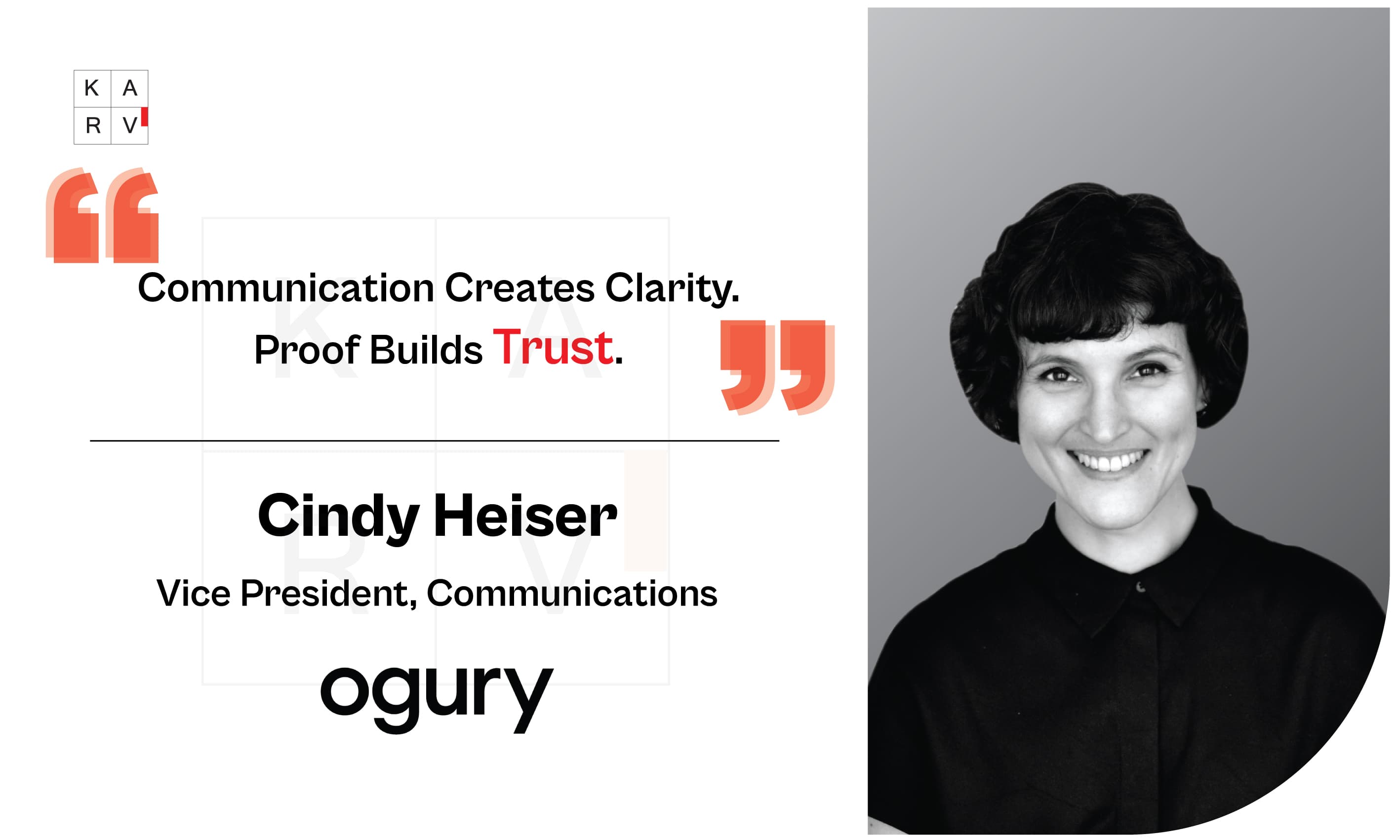
Article content
1. When an Industry Is Being Rewritten
Advertising is undergoing major shifts across privacy, AI, data, and audience targeting. How does communications help a technology company lead the conversation rather than simply respond to it?
A:
Communication has a role beyond explaining change. It can help shape how the market understands it. In advertising, the conversation often starts with constraints: privacy, the loss of identifiers, the complexity of AI. We have chosen to frame the shift differently, around a decision that marketers face every day: how do you define and understand the right audience for a business objective?
That distinction matters because language shapes how an industry thinks about a problem. If communications can identify a real shift in the market and give it a clear, useful vocabulary, it can move the conversation forward rather than simply react to it.
2. From AdTech Complexity to a Clear Story
For companies like Ogury operating across data, audiences, media, and technology, what does it take to turn complex innovation into a story that brands, agencies, and the wider market can understand?
A:
I think the adtech industry sometimes makes the mistake of explaining technology for its own sake. The starting point should be the customer, not the technology. Brands and agencies don't need to understand every signal, model, or technical layer behind a solution. They need to understand what it will help them do better: make a clearer audience decision, activate it more consistently, or demonstrate its impact.
That should also change how we communicate innovation. Saying that a product is AI-powered, for example, is not, in itself, a meaningful value proposition. Our job as communicators is to understand the technology well enough to identify the customer benefit that makes it relevant, and then find the story that brings that benefit to life.
3. When AI Changes the Advertising Narrative
AI is reshaping how audiences are understood, campaigns are planned, and media is activated. How should communications leaders separate genuine transformation from the growing noise around AI?
A:
A communications leader can't outsource their understanding of AI to the company's AI team. If we are going to communicate what AI changes for marketers, we need to understand enough of the technology to distinguish a genuine change from a repackaged capability, and to challenge the assumptions behind the claims we make.
For me, the most interesting question is not whether AI makes existing processes faster, but what it makes possible in terms of decision-making. It can process signals and variables at a scale humans cannot, surface patterns and trade-offs, and recommend options. The communications job is to understand where that creates genuine value, and translate it into a story that matters to the customer. For the next generation of communications leaders, that level of AI understanding will become essential.
4. From Personified Advertising to Persona Intelligence
Ogury has continued to evolve how it describes its approach to audience understanding. What makes a new category or industry narrative credible enough to change how the market thinks?
A:
For adtech companies that are shaping the market, evolving their positioning is part of the journey. Technology, regulation, and consumer behaviours and expectations are constantly changing, so the way a company explains the problem it solves has to evolve too. But introducing a new term doesn't create a category by itself. For a narrative to gain traction, it needs to articulate a genuine shift in the market and give marketers a clearer way to think about a problem they already face.
It also needs to be grounded in reality. The product has to deliver on the idea, customers need to recognise its value, and there needs to be evidence behind the claims. The role of communications is to connect those elements and give the market language for something that is already changing, rather than trying to manufacture a trend through terminology alone.
5. Communicating in an Era of Proof
As brands become more demanding about measurable outcomes, how can communications move beyond visibility and demonstrate the business value and impact behind a technology company’s story?
A:
Communications should be held to the same standard of proof as the technology it represents. Visibility matters, but coverage, impressions, or reach don't tell us whether the underlying decision was effective. For an adtech company, the stronger story is what changed as a result: did the campaign improve awareness or consideration, increase sales, or deliver another measurable business outcome?
That also changes how communicators work with the business. Customer results, independent measurement, and other evidence are not just supporting material for a press release; they can reveal the story that is most relevant to the market. Our role is to understand the business well enough to connect those proof points to a broader industry conversation and turn evidence into a compelling narrative.
6. Building Trust When Technology Moves Faster Than Understanding
New advertising technologies can create as many questions as opportunities. What role should communications play in building trust with customers, partners, employees, and the wider industry?
A:
I see communications as a provider of reasons to believe. Externally, that means giving customers, partners and media evidence that supports what a company is saying, whether through customer results, independent measurement or clear explanations of how a technology works. Internally, it means making sure employees understand and take ownership of the narrative.
That requires treating employees as an audience in their own right. They shouldn't discover the company's positioning through LinkedIn or a press article. When a company evolves its narrative, internal communication needs to explain why the change is happening, what it means for the business, and how employees should bring it to life in their own conversations with customers and partners.
7. The Next Chapter for AdTech Communications
Looking ahead, as AI, privacy, agentic technology, and fragmented audiences reshape advertising, what do you believe the most effective communications leaders will need to do differently?
A:
I think communications leaders will need to spend less time communicating technology and more time helping the market understand what it changes for customers. That means being selective about which industry shifts are genuinely meaningful, translating complexity into clearer decisions and benefits, and building proof around the claims we make.
Strong communications leaders will bring editorial judgement to an industry that increasingly rewards speed. They will know when a new development deserves attention, what makes it relevant to the market, and how to turn it into a point of view rather than another industry announcement.
About Cindy Heiser
Cindy Heiser is a communications leader specialising in the advertising technology industry. At Ogury, she leads external communications and works across corporate positioning, thought leadership, media relations and executive visibility. She focuses on translating complex technology and market shifts into clear narratives that resonate with brands, agencies and the wider advertising industry. Her work spans topics including audience intelligence, AI, and the evolution of digital advertising.
About Ogury
Ogury is a global adtech company powered by Persona Intelligence, its proprietary technology that enables brands and agencies to activate consistent persona-based strategies across channels and drive measurable brand outcomes. Founded in 2014, Ogury operates in 17 countries with 500 employees worldwide.
Explore Another Exclusive Leader Interview
If this conversation resonated with you, you may also want to explore our exclusive Leader Interview with Cynthia Lee, Vice President at Delinea.
Cynthia Lee on AI, Identity Security and the Future of Cybersecurity in APAC
Read the full interview: Cynthia Lee, Vice President at Delinea