
Leader InterviewsAI Business & Ecosystem
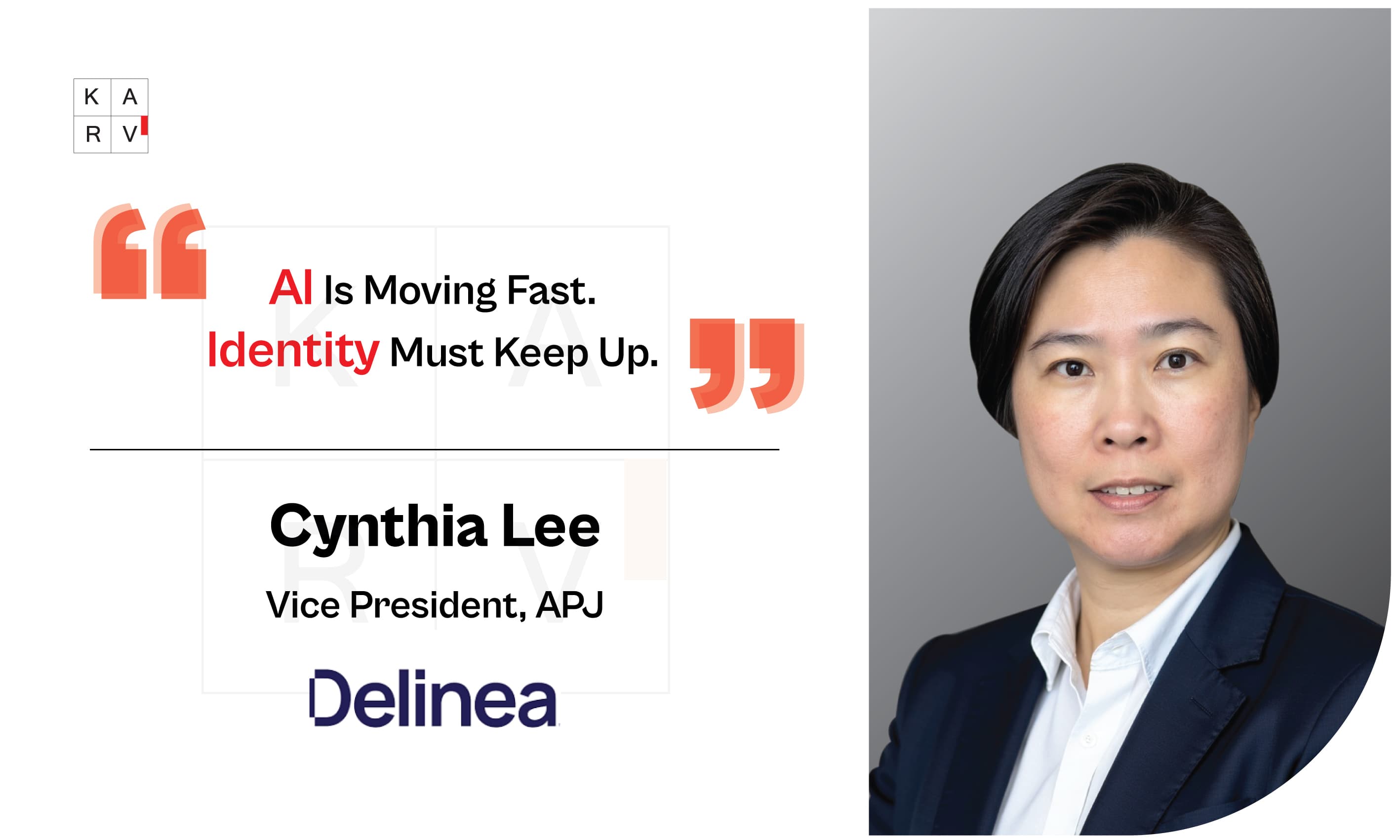
Cynthia Lee on AI, Identity Security and the Future of Cybersecurity in APAC
Article content
1. From Experience To Regional Leadership
You’ve built your career across technology and cybersecurity, working with customers and teams across diverse Asian markets. What experiences have most shaped your approach to leadership, and how are they influencing the way you think about your new mandate at Delinea?
A:
I’ve spent a large part of my career working across this region, including leadership roles at other cyber companies. One thing you learn quickly is that the APAC region is not a single market. Australia, Japan, India, Singapore and Southeast Asia can be at very different stages in terms of regulation, cybersecurity maturity and how organisations make buying decisions.
Japan and Indonesia taught me that most clearly. In Japan, deals tend to start on paper. You receive a detailed set of questions, and the expectation is that every one gets answered properly before the conversation moves on. It's genuine diligence, and by the time a decision is made, the whole organisation is behind it. In Indonesia, it's often the reverse. Customers want to get hands on early, run a proof of value in their own environment, and only formalise it through an RFQ once they've seen it work. Neither approach is quicker than the other in the end. They're two ways of building the same confidence; one before the trial, one through it. My mistake early on was assuming that whatever had worked in one market was the standard everywhere. In Tokyo, pushing a customer to trial the product before their questions were answered looked like I was cutting corners. In Jakarta, handing a customer a long written response when they just wanted to see it running answered a question they weren't asking.
What these experiences taught me about leadership is to not arrive anywhere with a fixed playbook and assume it will work everywhere. You have to start by listening, understanding what customers are dealing with locally, how they think about risk, and what pressures their teams are under. That also means taking counsel from the people on the ground. Local teams and partners often see shifts in customer behaviour, regulation and market demand before anyone else does, so giving them a voice in how you operate is important.
That is the approach I’ve brought to Delinea. Identity security is a common challenge across the region, but how organisations prioritise it and respond can vary considerably. My role is to make sure we have a clear regional direction while still giving our teams the flexibility to respond to what customers in each market actually need.
2. Why APAC, Why Now?
Delinea’s decision to strengthen its senior leadership across APAC and EMEA signals a clear ambition for regional growth. What makes APAC such an important market for Delinea at this stage of its journey, and where do you see the biggest opportunities ahead?
A:
APAC is a major growth opportunity because while many organisations are moving quickly on AI, the pace of adoption is running ahead of the controls needed to manage access safely.
Our 2026 Identity Security Report found that 92% of organisations globally expect AI to increase identity-related threats. In Australia, 90% of organisations said they are under pressure to relax identity controls to keep AI projects moving, rising to 95% in Singapore.
The answer is not to slow AI down. It is to make sure identity security keeps pace, with clear ownership and control over what AI, human and machine identities can access and do. That is one reason Delinea continues to invest in the region.
In markets such as Australia and Singapore, boards and regulators are putting greater focus on AI governance, cyber risk and accountability. Across Southeast Asia, many organisations are still building their identity security foundations while expanding their use of AI, which creates an opportunity to put the right controls in place early rather than retrofit them later.
3. Growth Needs More Than A Sales Strategy
Sustainable regional growth requires more than expanding revenue. It demands stronger teams, partner ecosystems, customer relationships, and local market understanding. What are the foundations you believe Delinea needs to build to create long-term momentum across APAC?
A:
For me, it comes down to three things: building strong local teams, investing in the right partner ecosystem, and staying close to customers.
We have been strengthening our leadership across the region, including the additions of Shane Bellos in ANZ, Barry Chen in ASEAN, Jason Choong leading our APAC channel organisation and Amy Sua supporting our people strategy. Having the right people in-market matters because they understand the local dynamics and can make decisions closer to the customer.
Partners are equally important. No vendor can effectively cover a region as diverse as APAC on its own. In July of this year, we launched Delinea’s Partner Advantage Program, designed to give partners clearer rules of engagement and greater confidence to invest in customer relationships.
The third piece is staying focused on the customer problem. Long-term growth comes when strong local teams and capable partners are solving real business and security challenges.
4. The Power Of Local Leadership
Global cybersecurity companies often have strong products but can struggle to translate that strength into local relevance. How can regional leaders balance Delinea’s global strategy with the distinct needs, buying behaviours, and cybersecurity priorities of markets across APAC?
A:
The balance is knowing what should stay consistent and what needs to be adapted locally. Delinea’s global strategy gives us clear direction on identity security, least privilege, and securing access across AI, human, and machine identities. That should not change from market to market.
What does change is how customers experience the problem, what is driving urgency and how they want to engage with us. In Australia, the conversation may be shaped more by regulatory pressure, cyber resilience and board accountability. In Singapore, there may be a stronger focus on governance, digital infrastructure and the growth of machine and non-human identities.
For regional leaders, the job is to translate that global strategy into something relevant and practical in each market. That means listening to customers and partners, understanding local regulation and buying behaviour, and giving local teams enough autonomy to respond to what they are seeing on the ground.
The aim is to make sure the same strategy lands in a way that makes sense locally, and that customers feel they are working with a company that understands their market.
5. Identity Security In The Age of AI
As AI introduces more machine and non-human identities into enterprise environments, the question of who or what should have access is becoming increasingly complex. How do you see AI changing the identity security conversation, and what should organisations across APAC be doing differently?
A:
AI is changing the identity security conversation because we are no longer only managing access for people. AI agents can call APIs, interact with applications, and take action across business systems at machine speed. In many cases, they are doing that with less oversight than we would accept for a human. Our research found that 80% of Australian organisations and 86% of Singaporean organisations cannot always explain why a non-human identity took a privileged action. That creates a real accountability problem.
At the same time, many organisations believe they are ready for AI-driven automation even though they acknowledge gaps in their AI governance. The practical change organisations need to make is to treat AI agents and other non-human identities as identities in their own right. They need to have a clear owner and receive only the access required for a specific task and time period. That is why approaches such as just-in-time access and Zero Standing Privilege matter. Rather than leaving powerful access in place indefinitely, organisations can provide it when needed and remove it when the task is complete.
6. Turning Regional Investment Into Customer Value
Delinea has continued to invest in its APAC presence through leadership, talent, partnerships, and customer engagement. What does meaningful regional investment look like from the customer’s perspective, and how will you measure whether those investments are translating into real value?
A:
For customers, the real value of investing in the region is getting stronger control without adding unnecessary operational burden to an already stretched security team.
By investing in the region, customers would be able to get the right expertise quickly, work with people who understand their local environment, and implement security without creating months of additional complexity.
We look at measures such as how quickly customers move from signing an agreement to enforcing controls, whether they are expanding their use of the platform and whether our local teams and partners are helping them solve a broader set of identity challenges over time.
7. Building The Team Behind The Growth
With new leadership across APAC and EMEA, Delinea is strengthening the organisation behind its next phase of growth. What qualities do you look for when building high-performing regional teams, and how do you create a culture that can scale without losing agility or customer focus?
A:
I look for people who are comfortable with change. APAC moves quickly, and a playbook that worked 18 months ago may not work today. You need people who are curious, willing to challenge assumptions, and genuinely interested in the customer’s problem rather than simply talking about a product.
You also need dynamic people who can work across very different markets. A customer conversation in Tokyo can look completely different from one in Sydney or Singapore, even when the underlying security challenge is similar.
As the organisation grows, the biggest risk is adding so much process that local teams lose the ability to make decisions. We try to keep those decisions close to the market while staying aligned around the same platform strategy and the same expectations for customer outcomes.
8. Defining The Next Chapter
Looking three to five years ahead, what do you want Delinea’s APAC business to be known for, and what will need to happen across technology, partnerships, talent, and customer relationships to make that ambition a reality?
A:
Three to five years from now, I want Delinea to be known as a company that organisations across APAC trust to secure access as their environments become more automated and AI becomes part of everyday business.
And to achieve that, our technology needs to keep pace with the way AI agents, people and machines are accessing systems. Our partner network needs to be strong enough to give customers local expertise and support across the region. And we need to continue building a deep regional team across sales, channel and customer success.
Most importantly, customers need to see that stronger identity security does not have to come at the expense of innovation.
About Cynthia Lee
Cynthia Lee is Vice President, APJ at Delinea, where she leads the company's growth across the Asia Pacific and Japan region. Her focus spans expanding Delinea's regional presence and deepening its partnerships throughout APJ.
Lee brings extensive cybersecurity sales leadership across the region to the role. Her career includes serving as Regional VP of Sales for APJ at Aqua Security. She has also held regional sales leadership roles at Cyberint and CyberArk.
About Delinea
Delinea is the identity security control plane enterprises trust to secure access across AI, machine, and human identities in on-prem, multi-cloud, and dynamic environments. Built for the AI era, Delinea continuously discovers identities, analyzes risk, and enforces least-privilege access in real time through just-in-time runtime authorization. By replacing static privileges with contextual, policy-based access decisions, Delinea helps organizations reduce risk, simplify governance, and move toward Zero Standing Privilege. Easy to deploy and built to scale, Delinea enables security teams to maintain control without slowing down the business, with deployment in weeks, not months, up to 90% fewer resources required, and 99.995% uptime.
Explore Another Exclusive Leader Interview
If this conversation resonated with you, you may also want to explore our exclusive Leader Interview with Ernesto Ortega, Global VP Demand Performance & Marketing Operations at Malt.
Ernesto Ortega on Demand Generation, Marketing Operations and the Future of Growth
Read the full interview: Ernesto Ortega, Global VP Demand Performance & Marketing Operations at Malt