
Leader InterviewsAI Business & Ecosystem
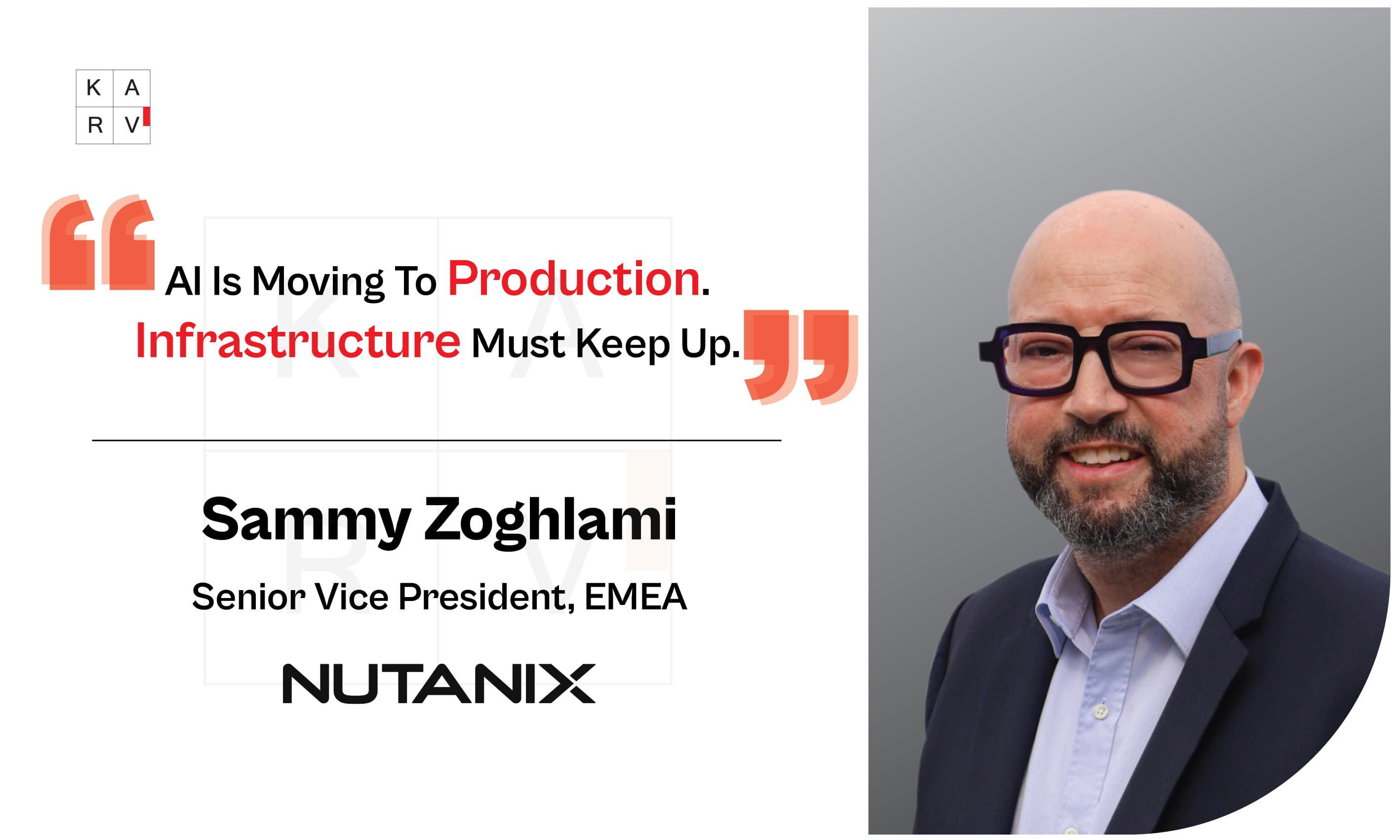
Sammy Zoghlami on AI, Hybrid Multicloud and the Future of Enterprise Technology
Article content
1. From Technology To Business Transformation
You’ve spent years working with organizations across EMEA as they navigate major technology shifts. What has changed most in the way business leaders think about technology today, and what separates organizations that turn technology investment into real business advantage?
A:
The biggest change is that technology decisions are now business decisions. When I started in the industry, much of the conversation was about infrastructure performance, capacity and keeping systems available. Today, CIOs are a lot less concerned about the bits and bytes; they are more inclined to ask how technology will help the company move faster, compete more effectively, manage risk and create room for innovation.
What separates the organizations getting real value from their investment is that they start with the problem they are trying to solve, rather than the technology they want to buy. They understand where they need speed, where they need control, which applications and data are critical, and what the business outcome should be. They also think about operational complexity. You can buy very sophisticated technology and still fail to create an advantage, particularly if it requires scarce specialist skills to run or leaves your teams spending most of their time managing the platform.
For me, the best technology investment gives the business more options. It should allow you to make a decision today without making it impossible to change that decision tomorrow.
2. The Hybrid Multicloud Reality
Hybrid multicloud has moved from a technology strategy to a business necessity for many enterprises. Where are organizations still struggling with complexity, and what does a more practical, simplified approach to hybrid multicloud look like?
A:
The problem is that many organizations do not really have hybrid multicloud. They have multiple cloud environments. One workload is here, another is there, each environment has its own tools, its own people, its own policies and sometimes its own operating model. That creates silos and complexity very quickly.
What I still hear from CIOs is: where do I place the workload? What belongs on-premises, what belongs in public cloud, and what needs to sit in a sovereign environment? That sounds straightforward, but it gets complicated very quickly because the answer is not fixed. Regulation changes, costs change, business requirements change, and sometimes a decision that looked right two years ago becomes very difficult to undo.
That is why flexibility matters so much. You need to be able to make a decision today and change that decision later if the situation changes, without having to redesign the whole environment. For me, that is where hybrid multicloud becomes useful. It is not about having several clouds. It is about being able to run and move applications and data across those environments without creating another set of silos around them.
3. AI Meets Enterprise Infrastructure
AI is moving rapidly from experimentation into production. What infrastructure decisions should leaders be making now to ensure their AI ambitions can scale securely, efficiently, and without creating another layer of complexity?
A:
One of the mistakes I would avoid is treating AI as a completely separate infrastructure project. We have already seen what happens when every new technology creates another silo, another specialist team and another management environment. AI should not repeat that complexity.
Organizations need to think about where their AI applications and data will run, how they will secure and govern them, what the economics look like as consumption grows, and how those environments fit with the infrastructure they already operate. They also need to prepare for the fact that AI and modern applications are increasingly tied to containers, so the platform decision cannot only be about the workloads they run today.
What I see with customers now is that many have done the experimentation, often in public cloud, and they are getting to the point where they are asking: okay, now I want to put this into production, how do I do it, where do I run it, and how do I keep control of the cost? As AI usage grows, and particularly as you start introducing more agents, consumption can increase very quickly, so the economics and the governance of the environment become much more important. That does not mean everything belongs in one place. Different workloads will have different requirements, so the priority is being able to choose where they run without losing control of security, governance or cost.
4. The Sovereignty Question
Across Europe and other EMEA markets, data and digital sovereignty are becoming increasingly important. How should organizations balance the need for control and compliance with the need to move quickly and innovate?
A:
I do not think control and innovation are opposites. The important thing is to design for both from the beginning. Sovereignty is also becoming much broader than simply asking where a file is stored. Organizations need to understand where their data can move, who can access it, which services and models are processing it, and what dependencies they are creating around infrastructure and technology providers. AI makes that discussion even more important because data is central to how these systems create value.
At the same time, sovereignty should not become an excuse to isolate the business from innovation. Enterprises still want access to public cloud services, AI models and the wider ecosystem. The answer is flexibility. You need an architecture that allows you to place workloads according to their regulatory, security, economic and performance requirements, while retaining the ability to change that placement as those requirements evolve.
5. Modernizing Without Disruption
Legacy infrastructure remains a significant barrier to transformation, yet enterprises cannot simply switch off systems that run critical operations. How should technology leaders approach modernization while protecting continuity, investment, and business momentum?
A:
Modernization should not begin by telling a customer that everything they have today is wrong. Most enterprises have made substantial investments in infrastructure, applications, skills and processes, and many of those systems run the most important parts of the business.
The better approach is to understand where you are today and create a path to where you need to be. For some organizations, the first priority is simplifying and improving the economics of the existing virtualized environment. At the same time, they may be introducing containers for new applications and beginning to put AI into production. Those stages will coexist for years.
That means the platform has to support the transition rather than force the business into a big-bang migration. Reuse what still has value, automate more of the operational work, and modernize at the pace the applications and the business can tolerate.
6. Leading Across A Diverse EMEA
EMEA brings together vastly different markets, cultures, regulatory environments, and levels of technology maturity. After years of leading across the region, what have you learned about building trust, developing high-performing teams, and creating a strategy that works across such diverse markets?
A:
The first lesson is that you cannot run EMEA as if it is one market. The way you build a relationship in Germany can be different from France, the UK, the Middle East or South Africa. The maturity of the technology market is different, regulation is different, the partner ecosystem is different and the expectations of customers are different.
What does travel across those markets is trust. You have to listen, understand what matters locally and then make sure people know you will do what you say you will do. That applies equally to customers, partners and your own teams. I have always believed that being present matters. You learn much more by spending time with customers and partners in the market than you do looking at a spreadsheet from a regional office.
For teams, I also believe strongly in giving people ownership. You want people who understand the local market and have the confidence to make decisions. The strategy can be common, but its execution has to respect the market.
7. From Complexity To Simplicity
One of the biggest promises of modern cloud platforms is making enterprise IT easier to manage. In your view, what should the next generation of enterprise technology eliminate or simplify so that IT teams can spend less time managing infrastructure and more time creating value?
A:
I think we sometimes underestimate the cost of complexity. It is not only a technology problem. Every additional tool, interface and specialized platform requires skills, processes and people, and those expert skills are becoming harder and more expensive to find.
The next generation of enterprise platforms should remove as much of that operational work as possible. If something can be automated reliably, automate it. If the same policy can be applied across different workloads, do not make the customer recreate it several times. If virtual machines and containers can be managed through a more consistent operating model, do not build separate islands around them.
Simplicity is not about taking capability away. It is about hiding unnecessary complexity so that a generalist can do more and the specialists can spend their time on problems that genuinely require their expertise.
8. The Next Three Years
Looking ahead, what do you believe will be the defining technology and business shifts for enterprise leaders over the next three years, and what should they start doing today to be ready for them?
A:
I think three things are going to come together very quickly. AI will move from experimentation into much broader production use, containers will become a much larger part of the enterprise application estate, and organizations will become more deliberate about where their applications and data run.
Those changes are connected. AI will accelerate the adoption of modern application architectures, but it will also increase the pressure around cost, security, governance and sovereignty. At the same time, enterprises will still be running large estates of traditional applications. The challenge for CIOs will be supporting both worlds without doubling the complexity of the IT environment.
So I would start with optionality. Build an infrastructure strategy that does not depend on one application architecture, one location or one provider. Invest in automation and skills, make governance part of AI from the beginning, and understand the economics of your environment properly. Nobody can predict exactly what the technology landscape will look like three years from now. The best preparation is to make sure you have the freedom to adapt when it changes.
About Sammy Zoghlami
Sammy Zoghlami is a Senior Vice President at Nutanix, where he leads the Europe, Middle East and Africa organization. For 20 years, he has driven international expansion for organizations by helping them accelerate their growth and do business smarter and faster.
Always interested in travel and challenges, he chose to do his graduate studies at the University of Hull UK, and his graduate training and career launch at Computacenter UK. After returning to his native France and gaining experience at Computacenter France and Cisco, he joined Nutanix in 2013 as one of the first Nutants in the region.
Initially charged with introducing, developing and expanding the business in France, then in Southern Europe, today he leads teams operating in nearly 40 countries across the EMEA theatre.
“It seems impossible to manage operations across such a vast, diverse region, but really it comes down to people,” he says. “It’s about listening, understanding and building trust. Deals rarely get done without demonstrating altruism and genuine intent to add value.” He believes you can get lucky once or twice, but if you build the right engine, you will be successful every time.
About Nutanix
Nutanix is a hybrid cloud leader and AI platform company, offering organizations a unified infrastructure software platform to safely run applications, data, and AI anywhere. Trusted by customers worldwide, Nutanix empowers more than 50% of the Global 2000 to innovate faster with AI, while modernizing infrastructure, simplifying operations, and controlling costs. Learn more at www.nutanix.com.
Explore Another Exclusive Leader Interview
If this conversation resonated with you, you may also want to explore our exclusive Leader Interview with Palmer Houchins, Vice President, Marketing at G2.
Palmer Houchins on AI-driven discovery, trusted customer intelligence, modern B2B marketing, and the future of go-to-market.
Read the full interview: Palmer Houchins, Vice President, Marketing at G2