
Leader InterviewsMarTech Platforms & Strategy
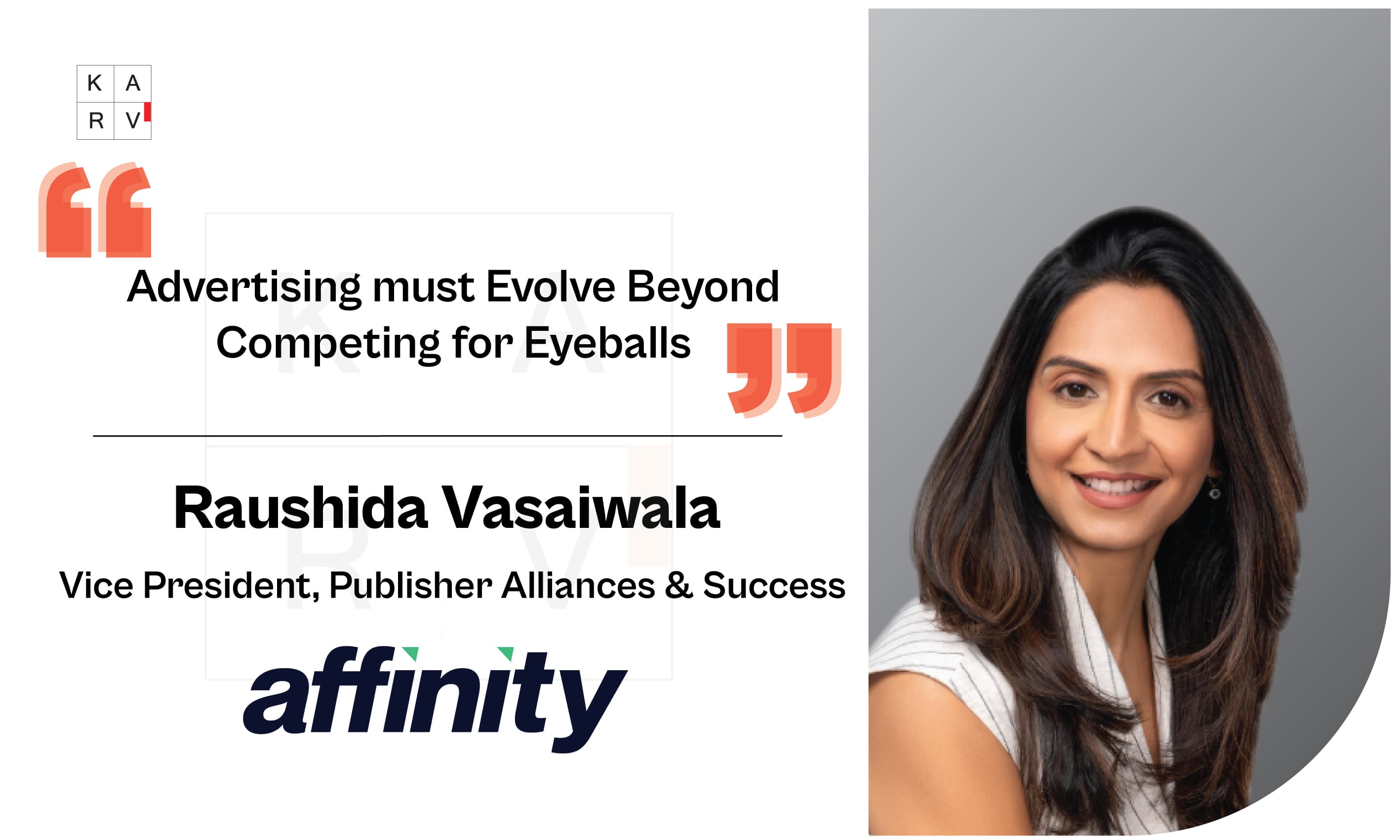
Raushida Vasaiwala on AdTech, Publisher Monetization and the Future of Digital Advertising
Article content
1. The Making of a Commercial Leader
With over 20 years across AdTech, MarTech and SaaS, which experiences most shaped your leadership philosophy, and what have they taught you about building businesses that scale sustainably?
A:
Over two decades of building businesses across diverse markets, I've come to believe that sustainable growth is built on three things: commercial clarity, strong relationships and the ability to adapt without losing sight of the outcome.
One of the most valuable lessons has been learning to challenge assumptions. I've seen opportunities that looked compelling on paper, particularly when successful global products were introduced into new markets, only for local realities to tell a different story. It taught me that market potential doesn't automatically translate into product-market fit. Sustainable scale requires validating hypotheses early, listening to customers and being willing to challenge the strategy before committing significant resources.
This has also shaped how I think about people and leadership. I don't believe in a one-size fits-all approach. Different situations demand different responses, whether that's empowering a capable team to lead, coaching someone through a challenge or stepping in to provide direction. But underlying that versatility is a consistent belief that people perform at their best when they feel trusted, heard and supported.
Relationships matter enormously to me, both internally and externally. Understanding what motivates people, recognising the nuances beyond formal conversations and building genuine trust often make the difference between a transactional relationship and one that creates lasting value.
At the same time, trust and empathy must coexist with accountability. We're ultimately working towards business outcomes, and as a leader, I'm responsible for ensuring that the strategy, capabilities and people are aligned to deliver them. That sometimes means making difficult decisions rather than allowing underperformance or misalignment to hold back the wider organisation.
What these experiences have taught me is that sustainable scale isn't simply about expanding into more markets or generating more revenue. It's about building a business that understands its customers, develops capable teams, makes disciplined commercial decisions and can consistently deliver value as it grows.
2. Driving Publisher Success at Affinity Global
As VP of Publisher Alliances & Success for APAC and India at Affinity Global, where do you see the biggest opportunities to help publishers unlock greater value from their audiences, and what does a truly successful publisher partnership look like?
A:
I believe the biggest opportunity for publishers lies in looking beyond their existing advertising inventory and recognising the broader commercial value of their audience relationships.
But unlocking that value requires more than introducing new monetisation solutions. It starts with understanding the publisher's business, their ambitions, challenges, competitive landscape and how their priorities are evolving.
For me, publisher success is about staying relevant to that evolution. As a partner, you need to stay close enough to the business to anticipate changing needs, identify opportunities for growth and contribute to creating competitive differentiation.
I often draw parallels with the SaaS industry, where long-term success depends on continuously delivering value and strengthening customer relationships. I believe the same principle applies to publisher partnerships. The goal shouldn't simply be to secure a partnership and generate revenue, but to become increasingly valuable to the publisher over time.
That requires moving beyond transactional engagement towards co-creation and co innovation. Whether it's exploring new revenue streams, developing differentiated monetisation experiences or contributing to broader strategic initiatives, the partnership should evolve alongside the publisher's business.
Ultimately, I define publisher success by the confidence a publisher has in its partner — knowing they can count on us not just to deliver revenue today, but to help identify and unlock the next opportunity for growth.
3. Beyond Revenue Growth: Building Better Business Models
Having led commercial transformations and market expansions, what separates businesses that achieve short-term revenue gains from those that build durable, profitable growth?
A:
I believe the difference lies in the quality of the opportunity and the discipline to look beyond immediate revenue.
Not every revenue opportunity is necessarily good business. I've encountered situations where a prospective customer has a genuine commercial need, but meeting that need would require significant product development, technical resources or operational investment. The question then becomes whether we're solving a problem for one customer or building a capability that can serve many.
If the opportunity isn't repeatable or scalable, sometimes the right decision is to walk away, even at the expense of short-term revenue. That's not always an easy call, particularly when teams are under pressure to deliver numbers, but it allows the business to direct its resources towards opportunities with greater long-term potential.
Equally important is recognising when a customer conversation reveals an opportunity larger than the one you originally set out to pursue. I've experienced situations where understanding a customer's broader business challenges led us to rethink not just the solution, but the commercial model itself. By moving beyond the initial proposition, we were able to develop an approach that addressed a wider market need and could be replicated across multiple markets.
For me, this reinforces why commercial teams need to do more than sell existing solutions. They need to understand customer problems deeply enough to identify new opportunities, challenge existing assumptions and work closely with product teams to build commercially viable solutions.
Sustainable growth isn't simply about winning more business. It's about knowing which opportunities to pursue, where to invest and how to build solutions that can deliver value repeatedly and profitably as the business scales.
4. Rethinking the Economics of Publisher Monetisation
As publishers balance revenue pressures with audience experience, are traditional advertising models reaching their limits? What needs to change for monetisation to become more sustainable for both publishers and advertisers?
A:
I don't believe traditional advertising is reaching its end. I believe the assumption that more advertising automatically creates more revenue needs to be challenged.
Publishers have historically been encouraged to maximise inventory. But increasing ad density can come at the expense of engagement, retention and ultimately the value of the audience itself.
The more interesting question is whether we can generate greater commercial value from fewer, more relevant interactions.
For publishers, this means looking beyond conventional display placements and exploring formats aligned with how users naturally engage with their platforms. For advertisers, it means evaluating whether those interactions influence meaningful business outcomes rather than simply generate clicks.
It also requires greater transparency around attribution, commercial economics and the impact of monetisation on user experience.
I strongly believe user experience and monetisation shouldn't be treated as competing priorities. A well-designed monetisation experience can strengthen the value a platform delivers.
The next phase of publisher monetisation will be less about how much inventory we can sell and more about how much value each interaction can create.
5. The Next Competitive Advantage in AdTech
As audience behaviour, advertising formats and technology continue to evolve, where can publishers find their next meaningful revenue opportunity, and how should AdTech partners help them capture it?
A:
I see a significant opportunity in turning existing digital touchpoints into more meaningful commercial discovery environments.
Commerce is a good example. Product discovery has traditionally been associated with retailers, marketplaces and search engines. But consumers spend considerable time on platforms that aren't primarily designed for shopping — payment apps, digital wallets, content platforms and connected devices.
These platforms can potentially influence what consumers discover, consider and eventually purchase.
For publishers, this opens opportunities to participate in commerce economics without becoming retailers themselves.
The challenge is execution. Most publishers don't want to build and manage individual relationships with hundreds of merchants, integrate multiple product feeds or develop an entirely new commerce infrastructure.
That's where AdTech partners need to evolve. Our role should be to simplify complexity, connect demand with relevant audiences and make new commercial models practical to implement and measure.
The competitive advantage won't belong to whoever introduces the most advertising formats. It will belong to whoever makes monetisation more relevant, measurable and easier for publishers to adopt.
6. AI: From Commercial Promise to Measurable Impact
AI is reshaping how businesses sell, optimize and make decisions. Where do you see its greatest commercial potential in AdTech, and what will it take to turn experimentation into measurable business outcomes?
A:
AI has enormous potential, but I think the industry needs to move beyond celebrating adoption and start measuring actual commercial impact.
In AdTech, some of the most valuable applications may be relatively unglamorous: improving demand forecasting, identifying revenue leakage, optimising yield, matching advertiser demand to relevant inventory and helping commercial teams make faster, better informed decisions.
I also see opportunities for AI to make products and offer discovery more contextual, particularly as digital platforms expand into commerce-led experiences.
But technology alone doesn't create business value. It needs reliable data, clear accountability and a well-defined commercial problem to solve.
My approach would be to start with the outcome. Are we improving publisher yield? Reducing operational costs? Increasing advertiser returns? Shortening the time required to activate a partnership?
If we cannot establish a baseline and measure improvement against it, we're still experimenting.
The real measure of AI success isn't how much of it a company deploys. It's how much better the business performs because of it.
7. Scaling Growth Across APAC and India
Having led businesses across diverse markets, how do you balance local market realities with regional growth ambitions, and what do global companies most often underestimate when expanding across APAC?
A:
One of the biggest mistakes global companies make is treating APAC as a homogeneous market. The region may share broad growth trends, but customer expectations, commercial maturity, operating practices and buying behaviours vary significantly from one market to another.
I've experienced situations where a product that performed exceptionally well in the US or Europe was assumed to have an equally strong opportunity in Southeast Asia. On paper, the market size and demand indicators supported that assumption. But once we engaged customers, we discovered that local workflows, levels of standardisation and business requirements were quite different. The opportunity existed, but the product-market fit needed further validation.
That experience shaped how I approach regional expansion. I believe global ambition needs to be supported by local intelligence. Before committing significant resources, it's important to test commercial hypotheses with multiple customers, understand the barriers to adoption and distinguish between an attractive market opportunity and a genuinely scalable business model.
This is also where local teams play a critical role. They're closest to customers and often recognise market nuances that aren't visible from a regional or global headquarters. As a leader, my responsibility is to ensure those insights influence product development, commercial priorities and investment decisions, even when they challenge the original strategy.
At the same time, localisation cannot mean building a completely different product or operating model for every market. That defeats the purpose of scale. The challenge is identifying what must remain consistent globally and where flexibility is essential to achieve local relevance.
I believe companies also underestimate the importance of relationships and the time it takes to establish commercial trust. Market entry is relatively straightforward compared with building a business that customers continue to invest in.
For me, successful regional expansion isn't about replicating a global playbook across more countries. It's about validating where the opportunity exists, adapting intelligently and building a model that can scale without losing its commercial relevance.
8. The Next Chapter of Digital Advertising
Looking three to five years ahead, what will distinguish the winners in digital advertising and publisher monetisation, and which widely held industry assumption do you believe leaders should challenge today?
A:
I believe the industry is underestimating how quickly AI, commerce and evolving digital experiences could reshape the relationship between publishers, advertisers and consumers.
Much of AdTech continues to focus on optimising existing advertising models, improving targeting, introducing new formats and driving greater efficiency. While these remain important, we need to ask a more fundamental question: will the way consumers discover, engage with and act on commercial information today still be relevant three years from now?
We're already seeing a shift in discovery through platforms like ChatGPT and emerging AI powered interfaces. As AI agents become more capable of researching, comparing and potentially making decisions on behalf of consumers, we may see a future where advertising isn't always competing for human eyeballs, but increasingly for consideration within AI driven journeys.
This has significant implications for publishers. As search, content consumption and commerce discovery evolve, publishers can no longer take direct audience engagement for granted. They need to rethink where consumers will spend their time, how they can remain relevant within these emerging ecosystems and where new commercial value can be created.
For advertisers, relevance will become even more critical. Advertising that interrupts without adding value will face increasing pressure as consumers gain more control over how they discover and engage with information.
I believe the winners will be those who recognise these shifts early, rethink their role in the consumer journey and are willing to experiment with business models beyond traditional advertising inventory.
The assumption I'd challenge is that the advertising models working today will remain relevant simply because we continue making them more efficient. The future may not just change how advertising is delivered, but who or what is making the decisions that advertising seeks to influence.
About Raushida Vasaiwala
Raushida Vasaiwala is a senior commercial leader with over two decades of experience across AdTech, MarTech and SaaS, building and scaling businesses across Asia-Pacific and the Middle East.
She currently serves as Vice President – Publisher Alliances & Success at Affinity Global, where she leads strategic publisher partnerships, monetisation initiatives and business growth across APAC. Over the course of her career, Raushida has held regional leadership roles spanning go-to-market strategy, enterprise sales and partnerships, working with brands, agencies, technology platforms and publishers across diverse markets.
Her expertise lies in connecting global business ambitions with local market realities, identifying scalable revenue opportunities and building high-performing teams and long-term commercial partnerships.
Her interests sit at the intersection of artificial intelligence (AI) and human intelligence (HI). She is particularly interested in how AI is reshaping the way businesses make decisions, build customer relationships and identify new avenues for growth and in the role human judgement, creativity and trust will continue to play as technology becomes increasingly embedded in business.
A strong advocate for inclusive leadership and women's empowerment, Raushida brings a perspective shaped by her experience as a business leader, competitive athlete and mentor. She believes the next generation of sustainable businesses will be built not by technology alone, but by organisations that successfully combine intelligent technology with human insight, strong partnerships and commercial discipline.
About Affinity Global
Affinity Global is an AdTech company pioneering privacy-first solutions that help publishers monetize more effectively by unlocking engaging touchpoints and connecting them with advertisers worldwide. Through direct partnerships with the world’s leading smartphone makers, browsers, app stores, and search and AI engines, Affinity Global powers over 1 billion touchpoints a day across 35+ markets, working with 3000+ advertisers and 300+ publishers* globally.
Its three publisher solutions, Veve, mCanvas and Siteplug are built to grow revenue, improve operational efficiency, and support sustainable digital publishing.
Explore Another Exclusive Leader Interview
If this conversation resonated with you, you may also want to explore our exclusive Leader Interview with Patrick Corcoran, Vice President at Hitachi Digital.
Patrick Corcoran on Enterprise AI, Business Outcomes and the Power of Market Influence
Read the full interview: Patrick Corcoran on Enterprise AI, Business Outcomes and the Power of Market Influence