
Leader InterviewsAI Business & Ecosystem
Steven Sidawi on AI-Powered Media Delivery, Intelligent Enterprises, and the Future of Business Transformation
Article content
1. From Transformation Leader to Media Executive
Your career spans consulting, technology, customer experience, and digital transformation. What key experiences have most shaped your leadership approach and prepared you for leading media delivery at global scale?
A:
In my career I have been fortunate enough to work across a diversity of disciplines including consulting, technology, operations, and customer experience. In my current role, I don’t just look after media; I get to help clients transform their businesses and activate that transformation through media.
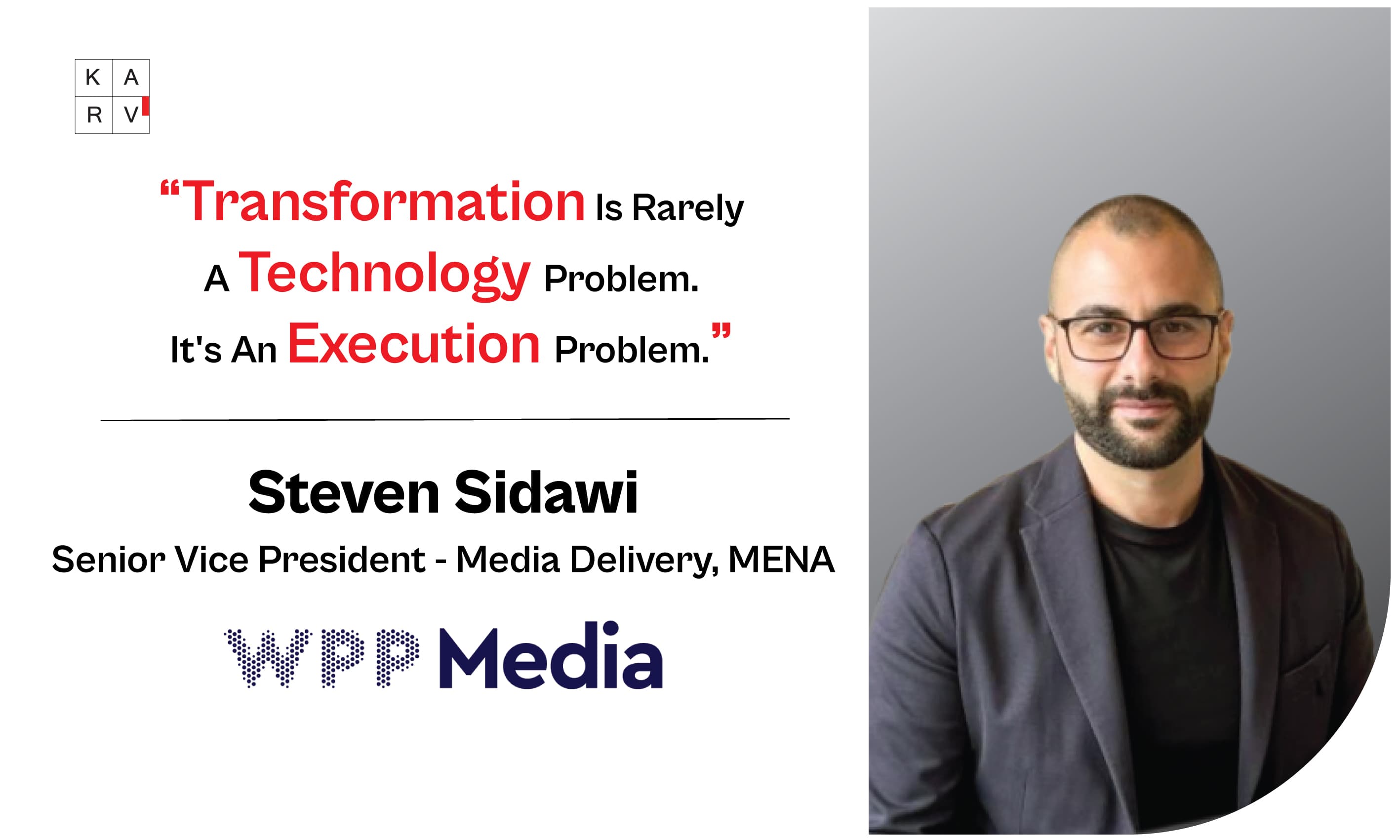
Looking back, every role has taught me one thing: transformation is rarely a technology problem, it's an execution problem.
The most important lesson I've learned is that strategy creates direction, but operational excellence creates outcomes. Whether you're transforming a media organisation or modernising a global enterprise, success comes from aligning people, processes, data, and technology around a common purpose.
Leading at scale has also taught me that no two markets are identical. The challenge isn't building one global model but rather building one that is scalable enough to create consistency while remaining flexible enough to respect local realities.
2. Redefining Media Delivery
Media delivery has evolved dramatically over the past decade. What do you see as the biggest shifts shaping the future of media operations, and how is WPP Media adapting to meet them?
A:
Media delivery has moved far beyond campaign execution. Today, it’s about orchestrating data, AI, commerce, content, and measurement into a single, connected ecosystem.
Three shifts stand out.
First is the move from manual optimisation to intelligent decision making powered by AI.
Second is the increasing convergence of media, commerce, and customer experience.
Third is the growing expectation from clients for measurable business outcomes rather than just media metrics.
At WPP Media, we are investing heavily in workflows enabled by AI, unified data platforms, and global operating models. These allow our teams to spend less time on repetitive work and more time solving our clients' most complex problems.
3. AI's Real Impact on Media
AI is transforming every aspect of the media value chain. Where are you seeing the most meaningful business impact today, and where do you believe the industry is still overestimating the near-term opportunity?
A:
The biggest impact of AI today isn't found in flashy generative AI use cases. It's in the way AI quietly improves thousands of operational decisions every single day.
We're seeing tremendous value in planning, optimisation, forecasting, audience intelligence, reporting, and workflow automation.
Where I believe the industry sometimes gets ahead of itself is in assuming AI can replace strategic thinking.
AI is incredibly powerful at generating options; it is still far less effective at defining the right problem to solve or navigating ambiguity.
The winners won't be the organisations with the most AI. They'll be the ones that masterfully integrate AI into the very fabric of how their business decisions are made.
4. Automation vs. Human Expertise
As AI-driven automation becomes more prevalent, which areas of media delivery are best suited for intelligent automation, and where will human judgment remain essential?
A:
The rule I follow is simple: Automate repetition. Augment expertise.
Tasks that are repetitive, based on rules, or data intensive are ideal for automation. Reporting, trafficking, quality assurance, documentation, and optimisation become faster and more reliable.
This frees up our people to focus where human judgment is most valuable: in strategy, client relationships, negotiation, creativity, ethics, and complex decision making.
The future isn't humans versus AI; it's humans working alongside AI, allowing each to do what they do best.
5. Delivering Excellence at Global Scale
Managing media delivery across markets, clients, and channels requires both consistency and flexibility. What are the biggest operational challenges leaders face today, and how can organisations successfully balance global standards with local needs?
A:
One of the biggest operational challenges is balancing standardisation with agility. Global organisations naturally want consistency, clients value flexibility, and markets inevitably evolve differently.
The answer isn't choosing one over the other.
It's about standardising the foundations (technology, governance, data, and processes) while empowering local and product teams to adapt their execution based on unique market realities.
That balance is what allows an organisation to scale effectively without becoming rigid.
6. Building the AI-Ready Workforce
As technology continues to reshape the industry, how should organizations approach talent development, reskilling, and change management to prepare teams for the future of work?
A:
Setting aside AI native companies, the biggest mistake an organisation can make is treating AI adoption as a mere technology rollout. It's a profound business transformation. Technology changes quickly; mindsets take longer.
Organisations must invest just as heavily in change management, leadership development, and continuous learning as they do in the AI platforms themselves.
The future workforce won't be defined by AI experts. It will be defined by curious, adaptable people who know how to collaborate effectively with AI.
Continuous learning will become one of the most valuable skills in the workplace.
7. The Next Wave of Media Transformation
Looking ahead, which emerging technologies or industry trends do you believe will have the greatest impact on media delivery and customer engagement over the next five years?
A:
Over the next five years, I see AI evolving from being an assistant to becoming an active participant in business operations, moving us from ‘human in the loop’ workflows to fully autonomous processes powered by agents.
I think we'll also see major advances in predictive decision making, synthetic audiences, real time personalisation, and connected measurement across all touchpoints.
But perhaps the biggest shift won't be technological; it will be organisational.
Companies will increasingly need to redesign how work gets done around AI first operating models rather than simply layering AI onto existing processes.
8. The Intelligent Enterprise of 2030
As AI, data, and automation become deeply embedded in business operations, what will distinguish the organizations that successfully evolve into truly intelligent and adaptive enterprises?
A:
I whole heartedly believe that the organisations that succeed won't be the ones that simply adopt more AI. They'll be the ones that fundamentally rethink how their entire enterprise operates.
The intelligent enterprise of 2030 will combine trusted data, decision making driven by AI, intelligent automation, and empowered employees into one connected system.
But technology alone won't create a competitive advantage. Culture will.
The organisations that embrace experimentation, continuously challenge legacy ways of working, and create environments where humans and AI learn together, will outpace competitors still trying to optimise yesterday's model.
The future belongs to those who can continuously adapt, not just digitally transform once.
About Steven Sidawi
Steven is a veteran when it comes to the digital transformation industry and currently oversees the practices at WPP. Throughout his career, he has led large-scale transformation initiatives across both client organizations and internal operating models, consistently building high-performing teams and scalable digital capabilities.
Steven has played a pivotal role in designing and delivering complex, enterprise-level solutions. His work includes developing end-to-end digital transformation roadmaps, experience design, architecting Mobile ID–based identity graphs to enable advanced data and personalization use cases, and building affiliate marketing ecosystems. Steven has worked on various scales of activity from smart city development to game development.
With a strong blend of strategic vision and operational execution, Steven is known for translating sophisticated digital concepts into practical, results-driven programs that accelerate business performance and long-term transformation.
About WPP Media
We are WPP's global media collective. We bring the best platform, people, and partners together to create innovative solutions that deliver unparalleled growth for brands in every market, every day.
Explore More Leadership Perspectives
If today's conversation around AI, intelligent enterprises, and business transformation resonated with you, we recommend our exclusive Leader Interview with Tim Pfaelzer, SVP & GM, EMEA at Veeam Software where he discusses the importance of trusted data, AI governance, cyber resilience, and leadership in an increasingly complex digital landscape.
Read the full interview: Tim Pfaelzer on Data and AI Trust, Cyber Resilience, and Leading Through Complexity in EMEA