
Leader InterviewsAI Business & Ecosystem
Julien Liabeuf on AI-Native Product Strategy, Enterprise Execution, and Building Technology That Delivers Business Value
Article content
1. Enterprise Technology & Business Outcomes
Technology is often viewed as a key driver of business transformation, yet many organisations struggle to realise measurable returns on their digital investments. From your perspective, what separates businesses that successfully turn technology investments into lasting business outcomes from those that fail to create meaningful impact?
A:
Technology is rarely the problem. Most organizations that struggle have the budget, the tools, and the intention. What they're missing is expert execution and ownership. Without it, projects fall short of expectations, if they get delivered at all.
Expert execution ensures that intentions are understood, translated into actionable, value-driven plans, and implemented with care and great attention to detail. There is a whole world between high-level business objectives and turning those objectives into reality.
Ownership ensures that someone is accountable for the outcome of the plans and their implementation. It’s not about ensuring the plans are followed correctly; it’s about protecting and maximizing value-driven delivery. When the work actually starts, delivering value can require drastically different plans and timing.
Companies that turn technology investments into lasting outcomes are the ones that understand those requirements and make human investments, not only financial ones. They give ownership, enable expert execution, and empower those who need to deliver. The opposite is typically an organization that commissions a vague roadmap, hands it to an internal IT team or a vendor, never wavers from that early roadmap, and, several months down the line, wonders why the result doesn't match the vision.
The gap between strategy and execution is where value dies.
At Nimble, we close that gap by putting the same team in charge of designing and building the solution and embedding it within the client's business until the outcome is realized. We've seen this pattern repeatedly across retail, manufacturing, energy, F&B, and hospitality. The businesses that get real results are the ones where the people building the solution understand the business problem as well as the business leaders do. That only happens when you're embedded, not working at arm's length.
The other thing that separates leaders from the rest is honest measurement. Too many organizations celebrate go-live as the outcome. Go-live is the start. The outcome is what changes in the business afterward. As soon as you are invested, you realize that you will always want more.
2. AI, Product Development & Enterprise Readiness
As AI becomes increasingly embedded into enterprise systems and customer experiences, where do you believe most organizations are still underprepared operationally, strategically, or culturally?
A:
Most organizations are unprepared at all three levels.
They struggle to define the right strategic objectives because they don’t fully grasp what AI can do in their business context. They lack cultural enablement because they don’t train people on what AI can do beyond chatbots. This is also due to low investment. Only the people who are interested and curious end up figuring out how to leverage AI for the benefit of the organization, and, unfortunately, it’s rarely enough to drive real change.
Organizations are not strategically ready, as some don’t understand that frontier models could commoditize any business. At the same time, they have several employees going back and forth training these models with proprietary information, which is the “moat” of any company. Some organizations are waking up to this reality and looking for their own AI sovereignty, building on-premises and open-source solutions and workflows.
Adopting AI at the enterprise level can become a competitive advantage and, as such, requires a dedicated strategy that starts with the fundamentals: understanding where it can serve the business, identifying the challenges to be solved, and showing people what AI looks like beyond the chat window.
The first unlock is cultural. When people start to understand the true capabilities of AI and see where it can be added to the organization, they can go beyond optimizing the way things are now and redesign the organization in depth to be efficient in an AI-native world.
This will then create a push for operational changes to enable the delivery of real value through AI. This can’t just come from the people who execute, however. The operational changes will necessitate investments, which means there must be an expected return on those investments.
To reconcile those conditions, there needs to be someone who can see both the strategic value and how that value materializes in day-to-day operations.
That’s the approach we take with our clients: sitting down with people up and down the chain to understand the needs, challenges, and expectations, and to discover the opportunities that AI is opening.
3. Building Agile Technology Organizations
Modern enterprises are under constant pressure to innovate faster while maintaining scalability and reliability. How should technology leaders rethink agility and product development in today’s AI-driven environment?
A:
Agility has been misunderstood for a long time. Too many organizations equate it with process, two-week sprints, daily standups, and quarterly roadmaps. Those are rituals. Real agility is structural.
The most effective technology organizations we've worked with aren't the ones with the most sophisticated methodologies. They’re the ones who are thoughtful about how they do things and why. They make sensible decisions because they understand the problems, and they design the methods to repeat what works.
If this foundation is right, then the agility required is simply to accept that AI changes the established way of doing things. Deeply. Fundamentally. And it requires going through the same exercise again from a different perspective: how can the same problems be solved and the same wins be repeated more quickly by incorporating AI at the core of the system?
The advice I'd give technology leaders: before you invest in tools or methodology, get your people in the room where business decisions are being made. Ensure they see and feel the problems, and make the wins clear and visible. This way, the whole team can be intentional with how things are done.
4. Customer Experience & Digital Product Thinking
Your background spans product management, infrastructure, and enterprise technology leadership. How important is strong product thinking today in helping businesses create differentiated customer experiences and long-term competitive advantage?
A:
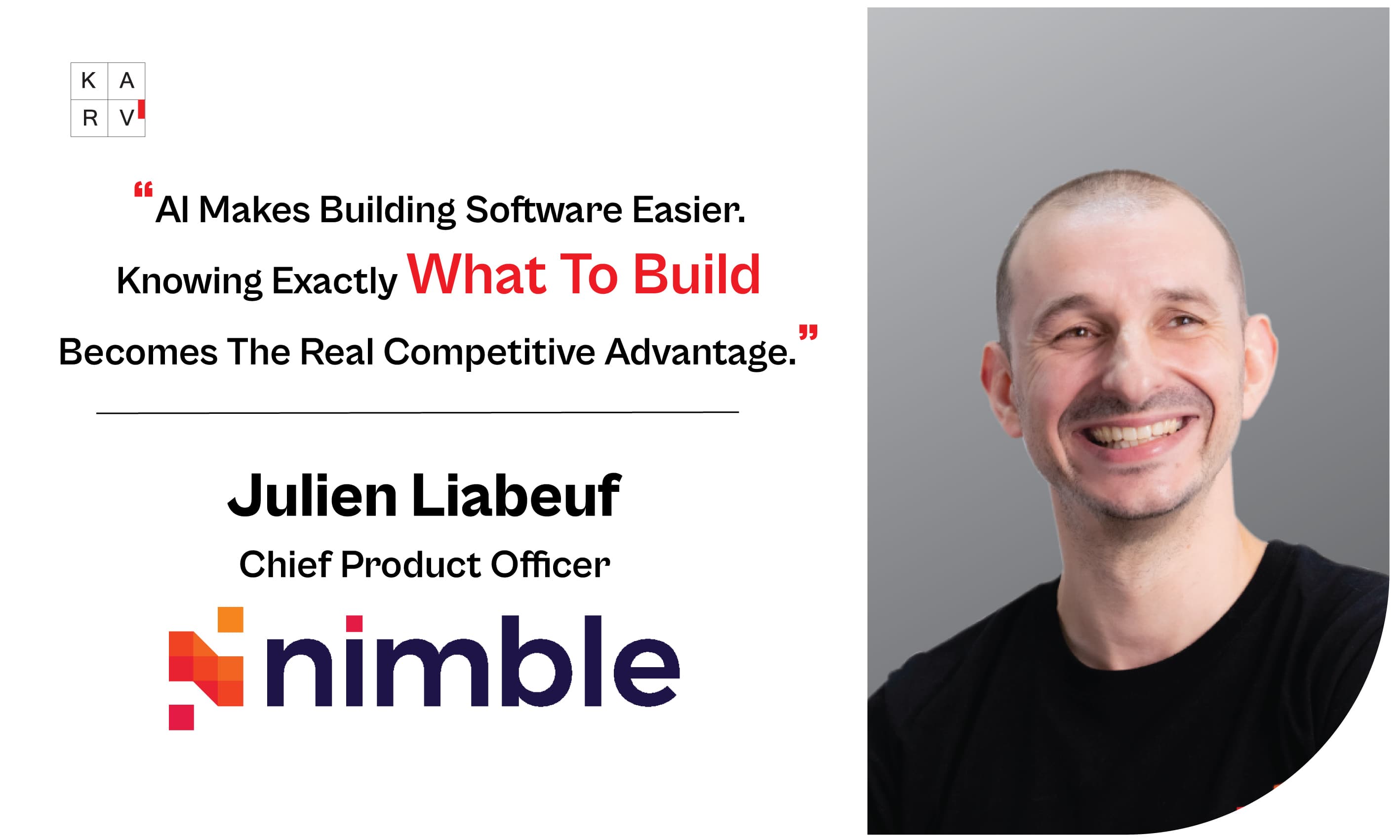
It is more important than ever! In the age of AI, creating products and features is becoming easier and cheaper. Besides expert execution, figuring out what to build and what not to build is the real differentiator. And it ties back to a deep understanding of the business.
When you can bring those two pieces together, the business acumen and the technology expertise then you can build real solutions, not just features.
Most technology organizations are good at building given a set of specifications, but as we discussed before, this doesn’t necessarily mean delivering value. Initial plans seldom remain unchanged, and if they do, it usually leads to disappointing results because extracting the maximum value requires adaptations and refinements that only surface late in the build.
The businesses that get this right have someone in the room equally fluent in business outcomes, user behavior, and technology.
We see this across retail, F&B, manufacturing and hospitality. The clients investing seriously in product thinking aren't just building better apps. They're building better businesses.
5. Southeast Asia’s Evolving Technology Ecosystem
Having built and operated across Southeast Asia’s startup and enterprise landscape, what major trends do you believe will define the region’s next wave of technology growth and digital transformation?
A:
Southeast Asia is in a different place now. The last decade was about building the basics: payments, logistics, and connectivity. That work is done. What comes next is the more interesting problem.
The biggest shift is enterprise modernization. The region's largest businesses are still running on legacy infrastructure that nobody has touched in years. That's changing. Companies that used to move slowly are starting to accelerate.
AI is going to matter more here than people expect. The talent exists, the cost of building is lower, and the appetite is real. The companies that move now will be hard to catch.
And then there's the rise of businesses that started here and are now competing globally. Jollibee is the obvious example. There will be more. The ambition and the capital are here. The infrastructure is here. The ideas are here. The question is who executes.
In terms of trends, with proximity to China, AI models that deliver better ROI are likely to be the foundation of up-and-coming solutions in the region. There is less resistance to adopting technology coming from China than in the United States.
6. Leadership, Scaling Teams & Innovation
As companies scale globally, maintaining culture, speed, and innovation becomes increasingly complex. What leadership principles have been most valuable to you when building high-performing teams and navigating rapid growth?
A:
The thing that breaks first when you scale is never the technology. It's the standard.
When companies are small, culture happens naturally. When you scale, it breaks down unless you're deliberate. People get hired for the wrong reasons. Speed starts to feel more important than quality. By the time most leaders notice, the damage is already done.
At the team level, one essential principle is to set a high bar of entry into the team because of compounding strength. When people know they are surrounded by talented individuals, it pushes everyone to give their best and to support each other.
At the individual level, the things I keep coming back to are ownership mentality and builder mindset. Hiring for and nurturing those traits leads to one core principle: delivering value.
People who take strong ownership and love building things naturally find ways to constantly deliver value.
7. Looking Ahead: The Future of Enterprise Technology
Looking ahead over the next few years, what major shifts do you believe will most significantly reshape enterprise technology, software development, and digital transformation strategies globally?
A:
Software is going to become fundamentally different, not just faster to build. For two decades, the constraint was cost and time. That shaped everything: what to build, what to buy, what to leave broken. AI removes that constraint.
The question shifts from "can we afford to build this" to "do we understand the problem well enough to define the right solution?"
That changes who wins. The advantage shifts from organizations that can build software to those that understand what is the right software to build. It requires business judgment, product instincts, and teams close enough to operations to see the real problems.
The vendor model breaks down too. For the longest time, companies had to choose the solution that came closest to their needs. That’s how many ended up with extremely complex and expensive software, of which they used only a fraction. Now, they can have a solution that exactly matches their needs thanks to AI leverage.
With that said, execution matters more than ever. While AI creates leverage, it also brings risks if used carelessly. We already see the consequences of careless implementation with many service outages in recent months.
There will be a widening gap between companies that understand how to use AI as a lever for human expertise and those that try to use AI solely to boost profits.
About Julien Liabeuf
Julien Liabeuf is the Chief Product Officer at Nimble, a Southeast Asia based technology consultancy that helps Fortune 500 companies make progress through technology. Originally from France, he spent his early career in marketing and business development before co-founding a web agency, serving clients worldwide and building digital products at scale.
He joined Nimble in 2016 and has led its product and design organization ever since, overseeing consulting and product development across e-commerce, fintech, loyalty, health, and retail engagements. Among his current priorities is AI adoption, standardizing AI driven workflows across product and design teams to raise both the speed and the quality of what Nimble delivers.
About Nimble
Nimble is a regional technology firm with offices in Thailand, Hong Kong, and Vietnam. We are solution engineers combining software, hardware, and product expertise to solve complex business problems with lasting impact. We blend strategy and execution to deliver solutions competitors can't match and clients can't do without, working where insight meets impact to turn complex challenges into outcomes that set our clients apart.
Since 2014, Nimble has partnered with some of Asia's most recognised enterprises, including Central Group, C.P. Group, PTT, SCG, The Pizza Company, 1112, Easy Hotel, Jollibee, Coffee Bean and Tea Leaf.
Learn more: Nimble
Explore Another Exclusive Leader Interview
If you enjoyed this conversation on AI, enterprise transformation, and the future of technology leadership, you may also like our exclusive Leader Interview with Steven Sidawi, Senior Vice President – Media Delivery, MENA at WPP Media. Steven shares his perspective on AI-powered media operations, enterprise transformation, intelligent automation, and why organisations that continuously adapt not just digitally transform once, will define the future of business.
Read the full interview: Steven Sidawi on AI, Enterprise Transformation, Media Operations, and Building the Intelligent Enterprise of Tomorrow