
Leader InterviewsAI Business & Ecosystem
Johnny J Pawlik on AI, Trust, Leadership Communication and the Future of Brand Building
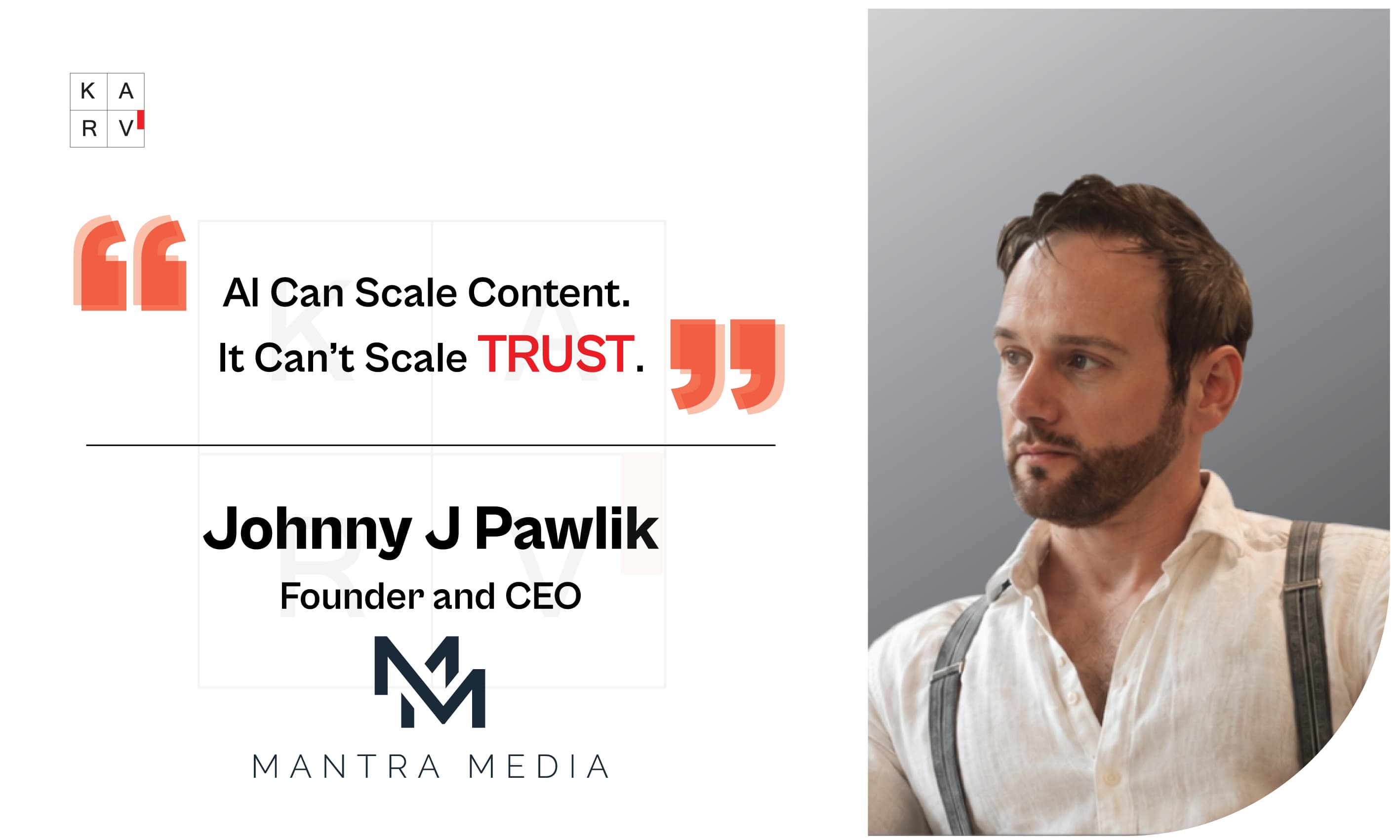
Article content
1. A Career at the Intersection of Business, Psychology, and Leadership
Your career spans entrepreneurship, psychology, strategic communications, and academia, giving you a unique perspective on leadership and business. Looking back, what experiences have most influenced your approach to building successful organizations, understanding human behavior, and helping leaders communicate with impact?
A:
The most formative lesson of my career has been that organisations are human systems before they are commercial systems. Strategy, capital and technology are important, but each depends on people deciding whom to trust, which ideas to support and whether change feels credible. Over more than two decades, I have worked with entrepreneurs, global businesses, public institutions, and government bodies. These environments operate at very different scales, yet the underlying questions are remarkably similar. What motivates people? What creates confidence? Why do certain messages prompt action while others are ignored? How does a leader retain trust when circumstances become difficult?
My work between the United Kingdom and Japan has been especially influential. Communication that succeeds in one culture can fail completely in another, even when the words have been translated correctly. Meaning is shaped by history, social convention, hierarchy and the expectations people bring to an interaction. This has given me a deep respect for cultural intelligence and the discipline of listening before speaking. My academic work and lectures in Oxford have also required me to examine the reasoning behind professional instinct. Teaching forces clarity. It is insufficient to know that something works; one must understand why it works, where it may fail and whether it is ethically defensible.
Entrepreneurship has brought these ideas into a sharper focus. Building Mantra Media and co-founding Atelier Japan have taught me that leadership is ultimately expressed through decisions. The clearest message a leader sends is the organisation they create what it rewards, what it tolerates, and how it behaves when tested.
2. Why Mantra Media, Why Now?
The communications landscape has evolved dramatically, with AI, digital media, and changing audience expectations reshaping how organizations build trust and influence. What inspired you to establish Mantra Media, and what opportunity did you see that continues to drive the company's vision today?
A:
Mantra Media grew from both a frustration and an opportunity.
The frustration was seeing communications treated as a decorative layer applied after the important business decisions had been made. In reality, language, perception and reputation frequently determine whether a strategy succeeds. An organisation may have an excellent product, a capable team and considerable technical knowledge, yet struggle because people cannot understand its value or lack sufficient confidence to act. The opportunity was to build a consultancy that brought together commercial strategy, communication psychology, creative thinking and cultural intelligence. Many agencies separated brand, marketing, public relations and business development into different activities. I saw them as interconnected expressions of the same question: why should someone choose to believe in, work with or buy from this organisation? That question has become more important. Organisations can now produce and distribute content at extraordinary speed. AI has extended that capacity further. Content is abundant, but meaning, originality and judgement remain scarce. Visibility can be purchased or automated; trust still must be earned. Our work has also become increasingly international, particularly between the United Kingdom and Japan. Over the past decade, we have helped Japanese businesses, institutions and government projects communicate their value overseas, enter new markets and build commercially credible propositions for audiences in Europe and North America.
The continuing purpose of Mantra Media is therefore quite simple: to help serious organisations become easier to understand, easier to trust and easier to choose. The tools will continue to change. That central commercial and human need will remain.
3. The Changing Nature of Leadership Communication
Today's leaders are expected to communicate more frequently, more transparently, and across more channels than ever before. From your perspective, what separates leaders who successfully build credibility and influence from those who simply communicate more often?
A:
Credibility begins with congruence. People compare what a leader says with what that leader decides, rewards and does under pressure. When those elements agree, trust accumulates. When they conflict, a higher frequency of communication usually makes the contradiction more visible. Effective leaders are clear about what their audience needs to understand, why it matters and what should happen next. They do not confuse transparency with an indiscriminate release of information. Good transparency provides honest context. It distinguishes between what is known, what remains uncertain and when further decisions will be made.
Consistency also matters, although consistency should not be mistaken for rigidity. A credible leader can change a decision when the evidence changes, provided that the reasoning is explained. People are generally more tolerant of uncertainty than leaders assume. What they find difficult is uncertainty disguised as confidence, or a sudden change presented without acknowledgement. Communication also carries a relational obligation. Leaders need to listen closely enough to recognise what has been understood, what has been misinterpreted and what remains unsaid. This is particularly important across cultures, generations and professional disciplines, where identical words can carry very different assumptions. The leaders who build influence communicate with precision, presence and consequence. Their words are supported by observable behaviour. They give people a coherent account of reality, including its difficulties, and a credible reason to participate in what comes next. Influence is cumulative. Influence forms through repeated encounters in which words and conduct remain recognisably aligned.
4. The Psychology Behind Trust and Influence
Technology continues to evolve, but human psychology remains at the heart of every meaningful relationship. How should organizations better understand the psychology behind trust, decision-making, and influence, and why do these principles matter even more in today's digital-first world?
A:
Trust is closely connected to prediction. We trust people and organisations when experience allows us to anticipate how they are likely to behave. Reliability reduces psychological risk. Decision-making is rarely a purely rational calculation. People use mental shortcuts to interpret complex choices. We look for credible authority, consistency, social evidence and signals that others share our values. We are influenced by how information is framed, how easily it can be understood and whether the proposed action feels proportionate to the risk.
Organisations should study these principles, but they should do so with ethical discipline. The purpose of communication psychology should be to help people make confident and informed decisions, rather than to exploit cognitive vulnerabilities. Ethical influence preserves agency. It makes value clearer, supports claims with evidence, and removes unnecessary uncertainty. This is vital in a digital-first environment because many of the signals once used to assess credibility have been weakened or removed. We often encounter an organisation through a search result, a social post, an automated message, or an AI-generated summary. At the same time, synthetic content and digital impersonation have made surface-level polish less reliable as evidence of competence.
Trust must therefore be designed into the whole experience. Claims should be specific. Evidence should be accessible. Processes should be comprehensible. The behaviour of the organisation should confirm the language of the brand. Trust is not created by one persuasive message. It emerges from repeated alignment between what an organisation promises, what it delivers and what people experience when something goes wrong.
5. AI, Reputation, and the Future of Brand Building
Artificial intelligence is transforming content creation, media, and customer engagement. How do you see AI changing the way organizations build brands and communicate with their audiences, and where should leaders balance technological innovation with authenticity and human connection?
A:
AI is making competent, average communication extraordinarily inexpensive. Organisations can produce more copy, more images, more analysis and more personalised interactions than at any previous point. The immediate benefit is efficiency. The wider consequence is an immense increase in undifferentiated material competing for limited human attention. This changes the basis of brand advantage. Production capacity will matter less than judgement. The decisive questions will be: Does this organisation have an original point of view? Can it support its claims? Does its communication reflect genuine experience? Is someone prepared to accept responsibility for what has been published?
AI can be extremely valuable in research, synthesis, translation, scenario planning and the analysis of large volumes of information. It can help organisations recognise patterns and serve customers with greater relevance. However, it can also reproduce errors, flatten cultural distinctions and create a false impression of certainty. Human oversight cannot become a ceremonial final check. It must involve informed judgement. I would encourage leaders to use AI extensively behind the scenes while remaining visibly accountable for intent, accuracy and consequence. The more technology participates in an interaction, the more valuable recognisable human responsibility becomes. Authenticity does not require every communication to be spontaneous or unpolished. It requires correspondence between identity, language and conduct. A leader can use sophisticated tools while remaining authentic, provided that the tools amplify genuine thought rather than simulate convictions the organisation does not hold.
AI should extend human capability. It should not become a substitute for attention, relationships or moral responsibility.
6. Building Organizations That Thrive Through Change
Businesses today operate in an environment of continuous disruption. Based on your experience advising organizations and business leaders, what qualities define resilient organizations, and how can leaders create cultures that embrace innovation while remaining grounded in purpose?
A:
Resilience is the capacity to adapt without losing coherence. Endurance is only one part of it. An organisation can withstand pressure for a period while becoming progressively more fragile, particularly when exhaustion is mistaken for commitment. Resilient organisations tend to share several qualities. They have a clear sense of purpose, disciplined finances, reliable information and sufficient psychological safety for people to report problems before those problems become crises. They distribute intelligence across the organisation rather than assuming that seniority confers perfect knowledge. Leaders have an important role in distinguishing between principles and methods. People need to know which commitments will remain fixed and which practices are open to revision. This gives teams enough stability to experiment without creating confusion about the organisation’s identity.
Innovation also requires boundaries. Teams need permission to test ideas, challenge assumptions and learn from failure, but they also need clear expectations regarding risk, evidence and accountability. A culture becomes more inventive when intelligent disagreement is welcomed and reflection follows action. Purpose is useful when it functions as a decision-making standard rather than a sentence displayed on a wall. It should help leaders decide which opportunities to pursue, which compromises to reject and how the organisation will behave when commercial pressure conflicts with its stated values. The leader’s task during change is to make reality intelligible. People can respond constructively to difficult circumstances when they understand the situation, believe that their contribution matters and see consistency between the organisation’s declared purpose and its decisions.
7. The Future of Media, Marketing, and Human Connection
As traditional media, social platforms, AI-powered discovery, and digital communities continue to converge, how do you see the relationship between brands and audiences evolving, and what should organizations do differently to remain relevant and trusted?
A:
The boundaries between media, marketing, customer experience and community are becoming less distinct. A customer-service exchange can become public content. An employee can carry more credibility than a corporate campaign. A specialist community can shape reputation long before the mainstream media notices an organisation. Audiences are also becoming active interpreters and participants. They compare claims, exchange experiences and create their own accounts of what a brand represents. Organisations can contribute to that meaning, but they cannot fully control it. AI-powered discovery adds another layer. People will increasingly encounter organisations through generated answers and recommendations rather than through a conventional search result or advertisement. Brands will need to make their knowledge clear, useful, attributable and supported by credible evidence if they want to be represented accurately within these systems.
This environment should encourage organisations to pursue depth rather than constant volume. Distinctive expertise, first-hand evidence, credible spokespeople and well-supported ideas will carry greater value. Short-form content can open a door, but lasting authority usually requires substance behind it. Connection will remain central because people still want recognition, belonging, and confidence that someone is listening to. Technology can identify an audience segment, but it cannot automatically create a meaningful relationship with the person inside that category. Relevance will come from cultural attentiveness and genuine usefulness. Trust will come from consistency between public language and lived experience. Organisations that remember this will be better placed than those attempting to maintain attention through volume alone.
8. Looking Ahead: The Next Chapter of Leadership
As you look toward the next decade, what trends do you believe will have the greatest impact on leadership, communications, and business growth, and what advice would you offer to leaders preparing for an increasingly AI-driven and interconnected world?
A:
AI will become a routine layer in research, decision-making, customer experience and commercial discovery. Leaders will not need to become computer scientists, but they will need sufficient literacy to question systems, recognise their limitations and accept responsibility for how they are used. Reputation and provenance will also become more important. As synthetic media becomes harder to distinguish from human-created material, people will place greater value on credible sources, recognised expertise and evidence accumulated over time. Reputation will become a form of commercial infrastructure rather than a communications concern addressed after a problem occurs. Cultural intelligence will be equally significant. Businesses can reach international audiences with unprecedented ease, but access does not guarantee comprehension. Leaders will need to recognise differences in language, social expectations, and decision-making behaviour. This is especially important for organisations operating across Europe, Asia and North America, where assumptions about authority, risk, and relationships can differ considerably.
My advice to leaders is to invest in the human capabilities that become more valuable as technology improves judgement, curiosity, critical thinking, empathy, and moral courage. They should maintain direct contact with customers and colleagues rather than allowing dashboards and generated summaries to become their entire account of reality. Purpose should remain stable enough to guide decisions, while methods remain flexible enough to respond to new evidence. Leaders should also resist the idea that speed is always synonymous with progress. The next decade will reward those who combine computational scale with human discernment. Speed and content will be plentiful. Wisdom, trust, and responsibility will remain scarce.
About Johnny J Pawlik
Johnny Pawlik is an award-winning CEO and visiting Professor. Over the years, I’ve had the honour of being featured in international media, including Forbes, the Asahi Shimbun, Good Morning Britain, and the BBC, where I’ve spoken on topics spanning business, psychology, and leadership. In 2024, Johnny was included in the '42 under 42' list and in 2025, shortlisted for the International Trade Awards.
About Mantra Media
Mantra Media is the world's ethically leading branding and marketing firm based in the U.K and Japan. Our award winning and globally respected agency helps businesses, government agencies and charities communicate with clarity and purpose.
Explore Another Exclusive Leader Interview
If this conversation resonated with you, you may also want to explore our exclusive Leader Interview with Pat Breen, Area Vice President for ANZ at Cloudflare.
Pat Breen on AI, Cybersecurity, Digital Trust and the Future of Enterprise Technology
Read the full interview: Pat Breen on AI, Cybersecurity, Digital Trust and the Future of Enterprise Technology