
Leader InterviewsAI Business & Ecosystem
Pat Breen on AI, Cybersecurity, Digital Trust and the Future of Enterprise Technology
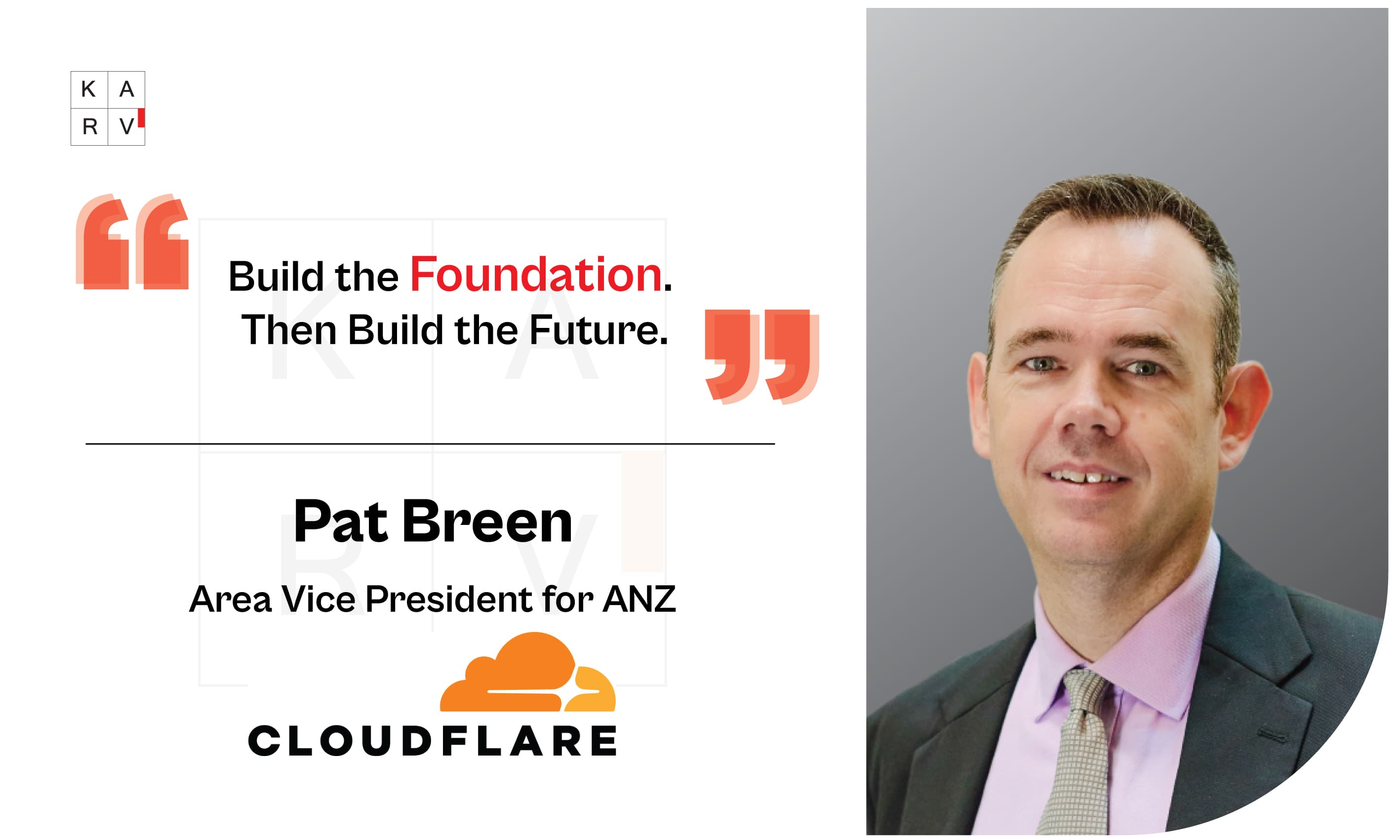
Article content
1. Building Businesses Through Technology Leadership
Throughout your career, you've worked across enterprise technology, customer engagement, and business growth. Looking back, what experiences have most shaped your leadership philosophy and your approach to helping organizations embrace technology with confidence?
A:
I’ve been lucky enough to ride several waves of disruption, from the early Internet and virtualisation through to SaaS, cybersecurity and now AI, and the one thing that’s stayed constant is that technology is never the hard part. The hard part is getting an organisation to keep moving with confidence while everything around them is shifting.
The moment that really crystallised this for me came towards the end of my time at Sun Microsystems, when I heard Bill Joy say that his biggest regret was designing solutions for problems people didn’t yet know they had. That stuck with me. It’s easy to fall in love with capability and assume the market will catch up, but in enterprise technology you’re asking people to bet budgets and careers on your vision. You can’t be ten steps ahead of their understanding and expect them to follow.
What I took from that, and what’s shaped how I lead since, is a pretty simple discipline: before you talk about innovation or ideas, you have to understand what the customer is actually trying to achieve as a business, and then be able to articulate it back to them in metrics and language that matter to them. Always work backwards from their strategic outcomes, not forwards from your product features. The organisations that embrace technology with confidence are the ones whose leaders never let the tool become more interesting than the outcome.
2. The Changing Priorities of Modern Enterprises
Organizations today are navigating an increasingly complex digital landscape, balancing performance, security, resilience, and customer expectations. From your perspective, what are the biggest priorities business leaders should be focusing on as they build for the future?
A:
If I put myself in the shoes of a customer executive, I'd consider three important shifts happening in front of our eyes right now.
The first shift is that business resilience can no longer rely on a passive approach to cyber threats. We blocked over 300 billion cyber threats daily last quarter, with volumes up more than 30% over three months. AI-powered threats are scaling in real-time, post-quantum computing is on the horizon, and supply chain risks now span physical and digital domains. Being able to adapt and respond agentically to dynamic cyber threats at the edge is a major focus for many of our largest customers right now.
Second is the shift from consuming software to building it. I've watched customers drop their SaaS subscriptions to build their own solutions after their business models were disrupted. That pressure is reshaping IT strategy at its core. The winners won't be the ones with the biggest vendor stacks; they'll be the ones with platforms that let developers build fast, cheap, and very importantly, securely. When customers see what Isolates and Durable Objects can do on our developer platform – the efficiency, the cost reduction, the reduced attack surface – you see their realisation that there’s a genuinely better way to modernise their business.
Finally, the control over organisational IP and data is becoming a board level issue around competitive advantage. It used to be about compliance and residency, and now it’s about AI training boundaries. Every organisation is waking up to the fact that its intellectual property is being scraped, modelled, and commoditised. Simply blocking bots is insufficient because some of that traffic represents future business relationships. Leaders need granular control over what AI can see, learn from, and reuse.
3. Rethinking Connectivity and Cybersecurity
Cloudflare has played a significant role in helping organizations build faster, safer, and more resilient digital experiences. How do you see the relationship between networking, cybersecurity, and business transformation evolving as organizations continue accelerating their digital strategies?
A:
Networking and security are no longer separate conversations. They used to be sequential, where you build the network, then layer security on top. That worked when your applications sat in a corporate data centre and your people sat in an office. But today, that assumption no longer holds. Now your applications are spread across a dozen cloud environments, your people are logging in from home, airports, and coffee shops, and AI is creating data flows nobody planned for.
I'm increasingly seeing customers treat connectivity and security as one system, not two. Every connection needs to be fast and reliable, but it also needs to be verified and secure by default, whether that's an employee opening an app, an API talking to another service, or an AI agent accessing customer data.
If your architecture still assumes trusted users inside a trusted network, you're designing for a company that doesn't exist anymore.
4. AI Is Reshaping Enterprise Technology
Artificial intelligence is transforming nearly every aspect of business. Beyond productivity gains, where do you believe AI will have the greatest impact across enterprise technology, cybersecurity, and customer experience over the next few years?
A:
The greatest impact is going to be cultural. For decades, in "human run" organisations, we've communicated in high-level language, with intent often being inferred based on the assumption that people can read the room and fill in the blanks. This is not effective with LLMs because if you aren't precise in specifying what you want, the AI will still give you an answer, but it may drift away from the one you needed. Getting business value out of generative AI means learning to specify intent at a level of detail most organisations have never had to operate at before.
That precision forces an examination of job descriptions. The epiphany happening everywhere is that jobs aren’t about managing processes. The value of human work lies in making judgment calls when those processes break. As AI handles predictable work, the human focus shifts to exception handling, quality control, and deciding what “good” looks like. And those job definitions will keep evolving. The more difficult challenge than making use of the technology itself is overcoming the cultural (and very "human") resistance to redesigning roles when the old assumptions no longer hold.
That also changes how you plan. We went from five-year strategic plans to three-year plans to annual operating plans, and those loops are still too long. If your agents are executing in real-time, your planning, feedback, and adjustment cycles need to match that speed.
This also changes the tech stacks you need. SaaS is starting to look a lot more like PaaS. You’re less interested in someone else’s interface and workflow; you want access to their APIs, data models, and underlying capabilities so you can build your own. The application layer is moving in-house again, except now it’s bolted together from pieces instead of built from scratch.
And that creates a security problem nobody’s fully solved yet. We used to assume the software we were protecting was engineered by people who understood the stack and followed design standards and operating processes. The reality is that it’s no longer a safe assumption. A lot of what organisations are securing today is cobbled together: AI-generated code, no-code automations, and APIs connected by people who don’t fully know what’s exposed. You can’t secure what you don’t understand, and increasingly, nobody fully understands how their own environment is put together.
5. Building Digital Trust
As organizations become increasingly connected, trust has become one of the most valuable business assets. What practical steps should organizations take to strengthen digital trust while continuing to innovate at speed?
A:
If I were advising a customer, I'd tell them that digital trust starts with visibility of your environment. You need to understand exactly what you're running, where it came from, and who can touch it. Many organisations struggle to understand what software is running across their environment, let alone where it came from. That's become a serious problem because supply chain risk has moved from a procurement checkbox to an active attack vector. You used to assume that if you bought software from a reputable vendor, it was safe, but today, a single compromised library upstream can become a critical cyber breach.
This naturally leads to the Zero Trust mindset, not as a product category, but as a practical response to the reality that you can no longer assume safety based on where it sits. The old model was simple: inside the office and inside the network meant you were safe. That assumption no longer holds. Treat every access request as if it came from an untrusted network, where every user, device, and connection needs to be continuously verified.
Finally, security needs to be integrated into how you build, not just what you deploy. If your security team only gets involved at the end of a project, you've already baked in risk that will slow you down later. The organisations that move fastest are the ones that treat security as a design requirement from day one, rather than extra work that needs to be addressed when software is productionised. When developers understand the requirements upfront, it shapes their design decisions and eliminates the need for costly retrofitting or redesign later on.
6. Leading High-Performing Teams in a Fast-Changing Industry
Technology evolves rapidly, requiring leaders to constantly adapt while keeping their teams focused and motivated. What leadership principles have guided your career, and what qualities do you believe define successful technology leaders today?
A:
A few things have stayed constant for me. First, you have to see further ahead than the people you're leading. Your team is heads down executing, and they need you to be looking around the corner and translating what you see into opportunities they can actually connect with.
Inspiring people goes hand in hand with coaching them. It’s about helping your people find and focus on the one thing standing in the way of what they want to achieve. Sometimes it might be a skill gap, but more often there's a pattern getting in the way that they can't see themselves. Once they see the blind spot, they usually can figure out their own next steps.
Many people say integrity is their most important value. To me, that means following through on what you said you would do and, if there is a breakdown, being proactive in communicating and addressing it. When leaders don't follow through or go quiet, trust erodes fast.
Having a mindset around "agency" is important. There are always actions you can take, maybe small ones, maybe uncomfortable ones, but one that moves things forward. Leaders who believe that tend to attract teams who believe it too.
And finally, curiosity. The dangerous thing about experience is that it makes you think you've seen a pattern before. An effective leader keeps looking at what's actually changing and is willing to challenge assumptions that used to be true. The moment you think you've got all the answers is usually the moment you stop growing, and your team stops believing you're seeing clearly.
7. Looking Ahead
If you could leave today's business and technology leaders with one piece of advice as AI, cybersecurity, and digital transformation continue to reshape industries, what would it be?
A:
Every customer is trying to figure out how to use it, how to build with it, how to make it actually improve productivity. At the same time, cyber threats are scaling exponentially. It's the gap between those two realities where tension is building in many business models today.
My advice is to focus on getting the foundations right first and putting the fundamental controls in place. You need to know what you're running, where your data sits, and who has access to what, because once you start wiring AI into your operations, those gaps become expensive fast. Build the controls and visibility first to support building out the capability.
That's exactly what we've built at Cloudflare - a single platform for connectivity, security, access, and developer tools. Instead of stitching together separate capabilities, you remove the gaps, cut the overhead, and get a foundation you can actually build on.
That foundation is what lets you build the agentic Internet where agents talk to agents and make decisions at machine speed. You can't run that on fragile integrations. You need connectivity, verification, and enforcement in one place. Get the foundation unified, then build your agentic business on top of it.
About Pat Breen
Pat Breen is the Area Vice President for Australia and New Zealand at Cloudflare, responsible for driving the company's strategic growth, customer engagement, and partner ecosystem across the region. Drawing on more than 25 years of leadership experience spanning Splunk, NetApp, Sun Microsystems and BHP, Pat works closely with organisations to build resilience, reduce complexity, and unlock the value of digital transformation, cybersecurity and AI.
About Cloudflare
Cloudflare, Inc. (NYSE: NET) is the leading connectivity cloud company on a mission to help build a better Internet. It empowers organizations to make their employees, applications and networks faster and more secure everywhere, while reducing complexity and cost. Cloudflare’s connectivity cloud delivers the most full-featured, unified platform of cloud-native products and developer tools, so any organization can gain the control they need to work, develop, and accelerate their business.
Powered by one of the world’s largest and most interconnected networks, Cloudflare blocks billions of threats online for its customers every day. It is trusted by millions of organizations – from the largest brands to entrepreneurs and small businesses to nonprofits, humanitarian groups, and governments
Explore Another Exclusive Leader Interview
If this conversation on partnerships, ecosystem-led growth, AI, GTM strategy and revenue architecture resonated with you, you may also want to explore our exclusive Leader Interview with Kim Tremblay, Director, Global Partner Programs, Channels & Alliances at Demandbase.
Kim explores AI, partner ecosystems, channel strategy, partner enablement and the future of B2B go-to-market, sharing how increasingly connected ecosystems are changing the way organizations build pipeline and create customer value.
Read the full interview: Kim Tremblay on AI, Partner Strategy, Ecosystem Growth and the Future of B2B GTM