
Leader InterviewsMarTech Platforms & Strategy
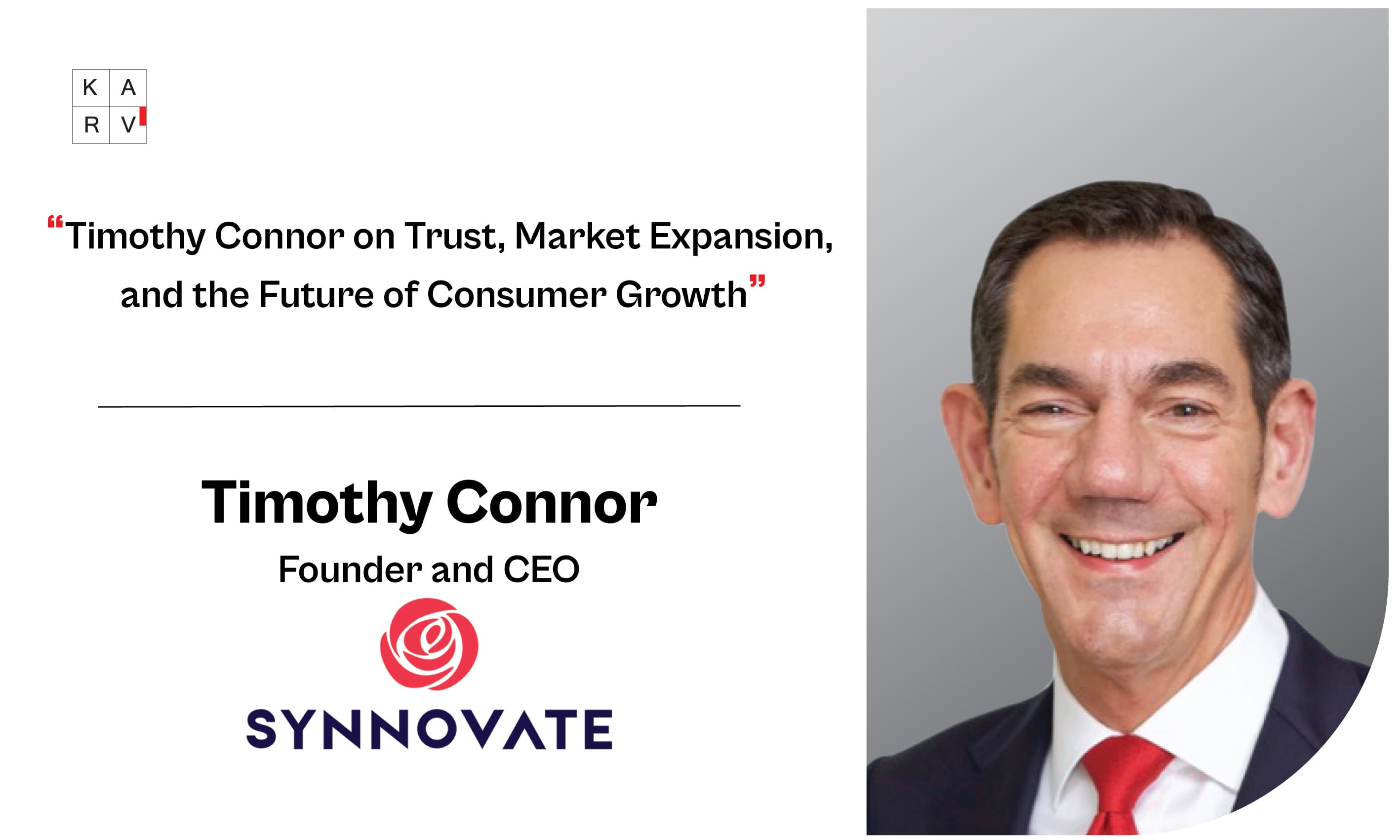
Timothy Connor on How Global Brands Can Win Consumer Trust and Scale Successfully in Japan
Article content
1. From Global Executive to Entrepreneur
Your career spans more than three decades across consumer brands, market expansion, and business leadership in Japan. Looking back, what experiences most shaped your leadership philosophy, and what inspired you to found Synnovate?
A:
I have been extremely fortunate to have such fascinating journey in Japan in my career. I actually say that I am an “unlikely entrepreneur,” and have embraced that aspect of my career.
Japan has been a fertile place to discover, to grow, and to learn. From growing global teams to pivoting to start a business, and going back to both larger Japanese and Global firms as executive. Little did I know when I arrived in Japan that I would pivot to start a business. Three times.
The lessons from inside an easily misunderstood culture and within a highly contextual, holistic culture. Being in that culture helped shape my beliefs about how to treat people, teams, customers, stakeholders: respect first and kindness.
I learned the value of a holistic way of looking at leadership and working with people.
2. The Vision Behind Synnovate
What market challenges or opportunities led to the creation of Synnovate, and how is the company helping global brands successfully enter, scale, and compete in the Japanese market?
A:
I started Synnovate in January 2020. Then COVID hit in March 2020. This really gave me the time to think about my journey. I decided to focus on my strengths and what I had learned previously as founder and senior executive in growing companies.
Synnovate helps brands evaluate the Japanese market, both to enter and to grow existing businesses, and then execute growth plans.
3. The Evolving Consumer Landscape in Japan
Japan is often viewed as one of the most attractive yet challenging markets for international brands. What makes Japan fundamentally different from other global markets, and what do foreign companies most often misunderstand when entering the region?
A:
The Japanese market is highly developed, highly competitive, and has all the outward appearances of other Western markets. There are two main factors. First is the concrete reality that Japan already has highly developed consumer and industrial industries. The availability of products and services is extraordinary. Telling a compelling story about why your product satisfies a need or issue is difficult. Customer journeys have entirely different architecture and so user needs are often entirely different that other markets. Determining that requires deep on the ground expertise. Second Japan is built on relationships, and relationships are built on trust. Trust is built on face-to-face interactions in a culturally intelligent manner.
Far too many companies fail to do the homework and actually get on the ground experience, and expertise.
4. AI's Impact on Market Entry and Growth
Artificial intelligence is transforming how companies research markets, understand customers, and execute go-to-market strategies. How do you see AI changing the way brands launch and scale in new markets such as Japan?
A:
The biggest aspect of AI on market entry and growth is how AI is perceived by users in the market. Japan has been used to robots for decades, and so AI has not had any material shock effect. On the contrary, given the highly contextual and relational nature of the society, AI is seen as un-biased because it is a machine. Using that tool in market entry and growth required cultural intelligence, but it is an asset rather than something to avoid.
5. Building Effective Go-to-Market Strategies
Many international brands struggle when entering Japan despite global success elsewhere. What are the most common mistakes companies make, and what separates successful market entrants from those that fail to gain traction?
A:
This is very simple. Far too many companies assume that their global playbook will map to the Japanese market. Nothing is further from the truth. You have to get in country, do the homework, learn the market, and craft a Japan market entry strategy.
6. Retail, E-Commerce, and the Future of Customer Acquisition
With the continued convergence of retail, digital commerce, and marketplaces, how should brands rethink customer acquisition, distribution, and growth strategies in today's environment?
A:
Customer acquisition continues to get more and more expensive in the conventional channels. I think that right now, optimizing for AI search is the number one challenge. The second is the optimal use of new media like TikTok and the coming de-influencer movement.
7. Scaling Growth in an AI-Powered Economy
As AI becomes embedded across business operations, marketing, and commerce, what capabilities will organizations need to develop to remain competitive over the next three to five years?
A:
The question will not be “where do we deploy AI?” but “what can we do what we do better? and What aren’t we doing that we should to grow?”
8. The Future of Consumer Brands in Japan
Looking ahead, what trends do you believe will most influence consumer brand growth in Japan over the next decade, and what advice would you offer leaders planning long-term expansion in the region?
A:
The brands that will succeed are those that recognize the need for a culturally integrated offer that actually speaks to people’s needs in Japan. Moreover, as the foreign population and workforce grows, we will see more and more people who are culturally fluent about Japan. That means brands need to do the same. the traditional export model of relying of a distributor to build your brand are effectively over. Brands need to be here, to be able to have finger always on the pulse of the ever-changing Japanese consumer.
About Timothy Connor
A bilingual and bicultural longtime resident of Tokyo Japan. He has 25 years of experience in consumer related businesses, both B2B2C and B2C of various sizes, from launch startup to growth-oriented SME. During this time, he has developed a deep understanding of the Japanese market, its consumers, and the unique aspects of doing business in Japan, where trust relationships are essential.
He has demonstrated the ability to assess new markets quickly from market size to marketing viability and resource availability. By working in multiple consumer product and FMCG sectors, he has deep insights into the complex Japanese distribution system, as well as consumer behaviours especially regarding foreign brands. Marketing to Japanese consumers requires a highly developed customer experience and attention to the finest details of quality, an area of expertise.
As CEO of Synnovate, Timothy, he helps companies and startups evaluate, enter, and grow in the Japanese market. At Synnovate he leads relevant consumer and market research as needed, develop road maps to growth, leads the implementation of that strategy, and works synergistically with local distributors to achieve growth.
As a non-Japanese, he can often see opportunities that the Japanese partners cannot and has more flexibility that a Japanese to do things outside the box.
He is also Partner Faculty at Globis Graduate School of Management (part time), where he is in charge of an upper-level MBA course called Venture Management, Globalization of Japanese and Asian companies, and Customer Journey and Branding. He also owns an upper-level MBA course at Hosei University Global MBA program in Entrepreneurship, Strategy, and Leadership.
Timothy is a long-time member and committee chair at the American Chamber of Commerce in Japan.
He is also a member of the America Japan Society in Tokyo.
About Synnovate
Synnovate helps companies and brands to evaluate, enter, grow, and succeed in the Japanese market. Through our 40 years of experience in Japan, we have developed a fully bilingual and bicultural lens on consumer behavior and norms. We utilize this deep insight and experience to develop the optimum marketing and sales strategies for your brand.
We specialize in developing and implementing omnichannel strategy: integrating digital commerce and communications with retail presence and activation. Synnovate also offers strategic leadership solutions to ensure that you have the right leadership at every stage of growth. Synnovate believes that success depends on a great customer experience (CX), and that great CX can only be delivered by great employee experience (EX).