
Leader InterviewsMarTech Platforms & Strategy
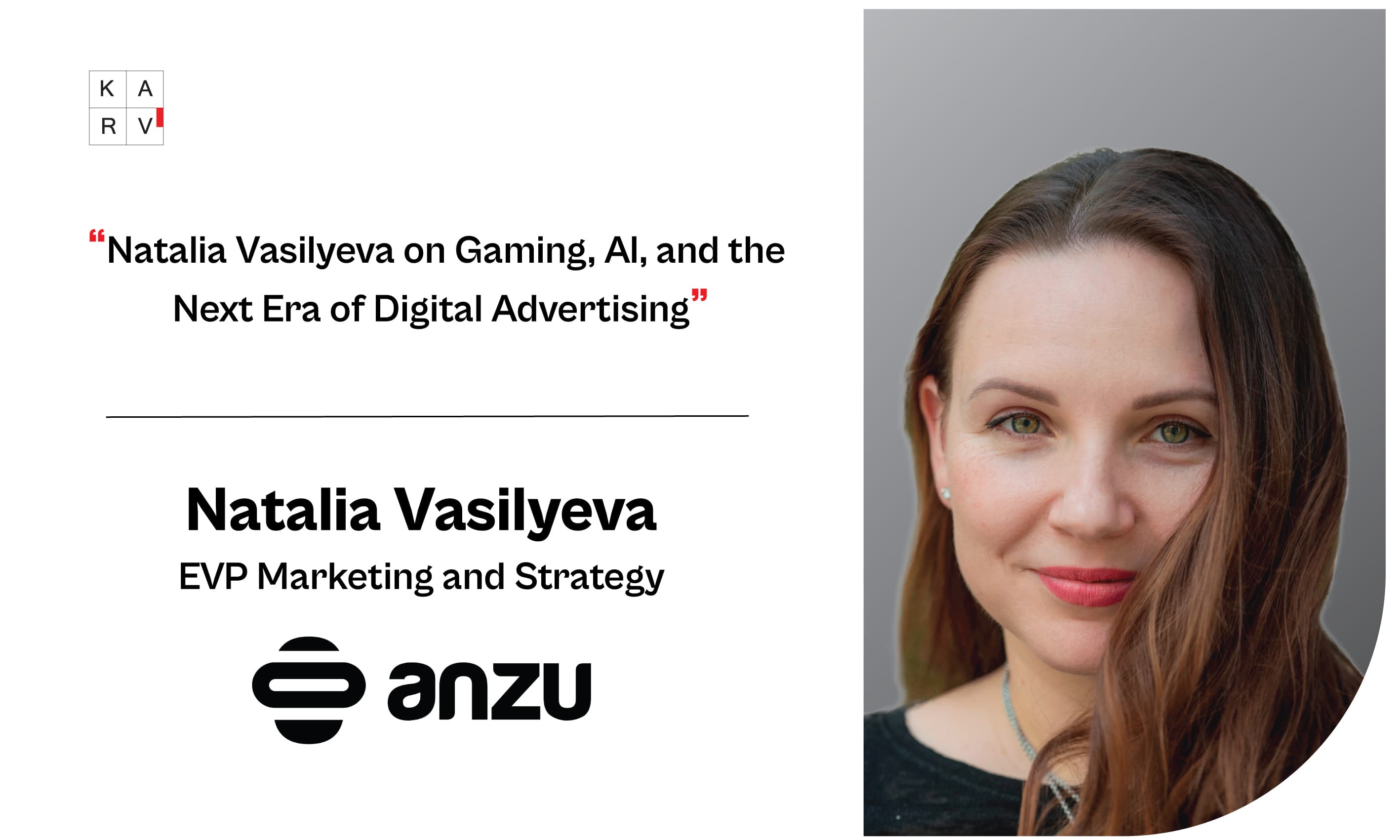
Natalia Vasilyeva on Gaming, AI, In-Game Advertising, and the Future of Human-to-Human Marketing
Article content
1. Gaming, Media & Industry Evolution
Gaming has evolved into one of the most influential media environments globally. How do you see the relationship between brands, gaming platforms, and audiences evolving over the next few years?
A.
When you look back at the last decade, the transformation is incredible, but we are really just at the beginning of the next major phase. The foundation has been laid, the audience has matured, and over the next few years, we are going to see the relationship between brands, platforms, and players become much more seamless and intentional.
First, from the brand perspective, the mindset shift is finally solidifying. Marketers no longer view gaming as a siloed experiment or a niche hobby; they recognize it as a solid media channel. They understand that their audiences are already here, and they need to speak to them where they are already paying full attention.
Second, audiences themselves have evolved. Today’s gamers are not only diverse across generations and demographics, but they are also much more open to advertising - provided it respects their space.
Third, the gaming platforms and developers understand the necessity and benefits of gamer-first monetization.
We’ve spent the last several years doing the heavy lifting - establishing the standards, proving full-funnel measurement, and building privacy-safe targeting. Now that the groundwork is done, the next few years are all about scale and alignment: letting brands, developers, and audiences meet in a way where everyone wins.
2. In-Game Advertising & Brand Perception
Anzu has been at the forefront of intrinsic in-game advertising. What do you think brands still misunderstand most about gaming audiences and advertising within gaming environments?
A.
First of all, the audience size and diversity. There is still a lingering, outdated stereotype about who a gamer is, and that their target audience doesn’t play games, but statistically, that is almost always incorrect. Gaming is mass culture now literally everyone is a gamer.
Second, brands frequently misunderstand the "rules of play" in gaming. Gaming is a unique, highly immersive medium, and you have to understand how to build your narratives that fit natively, place them at contextually appropriate moments, and speak to the audience in a language they respect.
Furthermore, brand safety in gaming isn't accidental it’s built into the infrastructure. It’s driven by precise genre selection and tight collaborations with developers to ensure a brand's message sits naturally within a positive, secure environment.
Finally, we are still constantly justifying measurement. The gaming ad ecosystem delivers the accountability brands demand from any other mainstream media channel. We use standard ad formats, verified measurement frameworks, and programmatic capabilities. We can track full-funnel business outcomes from viewability and attention to brand impact and purchase intent.
3. AI, Attention & Audience Engagement
As AI increasingly reshapes marketing and media strategies, how do you see AI influencing audience engagement, campaign personalization, and brand storytelling within gaming ecosystems?
A.
Right now, AI is completely reshaping marketing and advertising from behind the scenes. The backend machine learning algorithms are becoming incredibly sophisticated, creative generation is faster and more diverse, and personalization at scale is becoming infinitely easier to execute. But if we look at where this is headed over the next few years, we are moving far beyond just optimizing traditional media strategies behind the curtain; we are moving toward a fundamental rewriting of how brands exist in virtual spaces, with generated words, experiences and real-time intent. This opens up massive opportunities for early adopters to deeply embed themselves into these experiences and build a level of authentic, human-to-human engagement we've never seen before.
However, we have to stay grounded: there are still significant gaps, and a mountain of testing needs to be done. This new frontier introduces real risks that the industry must solve, including loss of control over brand representation, complex measurement challenges, and ethical concerns around hidden influence.
The technology is incredibly exciting, but the ultimate question marketers need to start preparing for now is a structural one: If virtual worlds are being generated in real-time by AI, who decides if your brand even exists in them?
4. Building Trust in Modern Advertising
In an era where consumers are becoming more selective about the content and ads they engage with, what role does authenticity and non-disruptive advertising play in building long-term brand trust?
A.
Authenticity and being non-disruptive are a must when it comes to building long-term trust in gaming.
Gamers as an audience are becoming more mature, their expectations are getting higher and they absolutely do not want to be disrupted. We’ve always said that people don’t actually hate advertising; they just hate intrusive advertising that snaps them out of their experience. When a brand forces an ad into a moment that requires full focus, it creates instant friction and resentment.
In fact, when done right, these ads actually enhance the realism and authenticity of the virtual world. That act of respect doesn’t go unnoticed. When a brand demonstrates that they understand the space and value the player experience, it builds a bridge of trust. That respect is what sets the precipice for a long-lasting relationship between the consumer and the brand.
5. Marketing Leadership in Emerging Categories
You’ve helped position Anzu in a category that many brands are still learning about. What are the biggest challenges and opportunities when building marketing strategy within a fast-evolving industry like gaming and adtech?
A.
The challenges and opportunities we face are not entirely unique. If you look at the early days of social media, programmatic advertising, or CTV, the playbook for a category leader and first mover is more or less the same.
If we look at gaming specifically, the immediate challenge is breaking down those persistent myths and misconceptions about audiences and measurability. But beneath that, the biggest challenge and simultaneously our greatest opportunity is simply defining the space for the rest of the industry.
AdTech moves incredibly fast, and there are always going to be data gaps and fragmentation, especially when you are bridging it with cross-platform gaming ecosystems. But to be frank, that fast-evolving nature is exactly where the fun is.
In a fast-moving, noise-filled world, a marketer’s real superpower is the ability not just to read trends, but to filter them in a smart way. You have to lean on your foundational, structured media experience to instinctively know what is a temporary fad and what is a fundamental shift. It’s about connecting the dots even when they don’t initially seem to be connected.
As a leader in an emerging category, you have to be willing to bet boldly, but you also must possess the ability to pivot without ego. If a strategy hits a roadblock, you don't stall; you reroute immediately.
6. Data, Measurement & Brand Impact
Measurement remains one of the biggest conversations in modern advertising. How should marketers rethink success metrics when it comes to immersive and in-game advertising experiences?
A.
First of all, you have to approach it from a medium perspective. Gaming is a unique channel, and because the environment behaves differently than traditional digital media, the metrics we prioritize must reflect that. We have to recognize that brand impact, awareness, and performance are not measured in the same way, and in general, every channel's measurement strategy needs to be aligned with that specific channel's core differentiators.
In gaming, your superpower is undivided player focus. Because of that, metrics like viewability and attention are naturally going to be significantly higher than in other channels. On the flip side, certain traditional performance metrics are going to be less topical or simply harder to measure.
But one thing is clear: gaming is measurable. This is a reality that a lot of marketers still disregard or treat with skepticism because they view gaming as a legacy "black box." It isn't. Rethinking success metrics isn't about lowering the bar for gaming; it's about shifting the bar to measure what actually matters in a 3D immersive environment.
7. Global Strategy, Leadership & Team Building
Having worked across international markets and fast-moving industries, what principles do you believe are most important when building global marketing strategies and high-performing teams?
A.
For me, building the right team starts with culture and values. When evaluating a candidate, I always look first at whether they're the right fit for the team at a human level — do their core values align with ours?
In a nascent, rapidly evolving space like in-game advertising, some skills can be (and should be!) upgraded, but traits like adaptability, curiosity, integrity, and a collaborative mindset are the basics.
As a leader, my role is to ensure everyone shares the same global North Star and speaks the same core language, while giving them the autonomy to flex and tailor that strategy within their respective domains.
8. Looking Ahead
What is one major shift in gaming, advertising, or digital media that brands and marketing leaders should start preparing for now?
A.
Right now, we are seeing the initial buzz around AI fade away. The industry is moving past the stage of just being amazed by what AI can generate, and we are finally asking: What is the real, sustainable value here?
The answer lies in contextual data leverage at scale. In privacy-safe, 3D gaming environments, AI's true power is about real-time adaptation. It allows us to deliver hyper-personalization at scale without ever compromising player privacy.
But beneath all this technology, the deeper shift is a psychological one. I believe the traditional corporate frameworks of B2B and B2C are fundamentally being replaced by Human-to-Human marketing.
Gaming has proved to us that consumers - especially Gen Z and Gen Alpha - don’t want to be treated like passive targets for a sales pitch. They want authenticity. If a brand wants to show up there, the old rules don't apply. You have to engage respectfully, add actual value to their experience, and speak to them as human beings.
The leaders who win the next few years will be the ones who use advanced AI data capabilities to make their tech invisible, allowing a more human, authentic connection to come to the forefront.
About Natalia Vasilyeva
Natalia Vasilyeva is the EVP Marketing and Strategy at Anzu.io, the world’s most advanced in-game advertising platform. Throughout her tenure, she’s been shaping Anzu’s strategy, proposition, and roadmap, having helped transition the company from Start-Up to Scale-Up to its current status as the in-game advertising leader.
Natalia is an influencer and industry expert who has played an essential role in establishing and standardizing in-game advertising as a media channel, building strong relationships with leading brands, game companies, and industry bodies worldwide. A multilingual author and speaker, she writes extensively about AdTech and in-game advertising and regularly takes the stage at global industry events to educate audiences on the potential of gaming as an advertising medium. She was a finalist for Advertising Week Europe's Future is Female Awards and received the IAB Service of Excellence Award in 2024.
About Anzu.io:
Anzu is the leading intrinsic in-game ad solution for mobile, PC, and console, supporting both brand and performance advertising inside gameplay. Anzu’s player-first in-game ads help advertisers reach audiences programmatically in a non-disruptive, highly engaging way, from awareness through to action. A patented 3D ad tracking engine, the first to bring viewability measurement in-game, and partnerships with trusted AdTech vendors make Anzu the preferred in-game advertising partner for brands, agencies, and performance buyers.
Backed by WPP, Sony Innovation Fund, NBCUniversal, Samsung Next, Bandai Namco Entertainment, and Amex Ventures, Anzu is on a mission to make advertising in games better.