
Leader InterviewsLeadership & Strategy
Building Global Founders: Lee Jean on Storytelling, AI, Capital, and Japan’s Startup Future
Article content
1. Mission & Market Perspective
Q: You're on a mission to make Japan the best place to build global startups. What are the biggest gaps today that founders in Japan need to overcome to compete globally?
A:
Japan has incredible potential to produce world-class startups, but there are three core gaps that hold founders back from competing on the global stage: language, mindset, and storytelling.
Language is the first barrier and it runs deeper than most people realize. Japan consistently ranks near the bottom globally in English proficiency, and the trend is not improving. Having taught English in both Vietnam and Japan, the contrast is stark. Vietnamese children begin learning English in kindergarten, and more importantly, the culture encourages using the language imperfectly in order to improve. In Japan, the fear of making mistakes keeps people silent, and silence is the enemy of progress. The consequence is not just communication. Limited English access means Japanese founders are often 6 to 12 months behind on emerging technology trends that surface first in the US. When your information diet is restricted to Japanese-language media, your worldview and your market instincts stay local.
The second gap is mindset, particularly around failure. In the US, we treat failure as a feature, not a bug. It is how you learn. Japan's cultural strengths such as precision, craftsmanship, and hardware excellence are actually a liability in software, where rapid iteration and constant course-correction are the only path forward. The concept of nemawashi, building group consensus before any decision is made, produces slow-moving organizations that frustrate foreign partners and miss market windows. I have also seen founders who are hesitant to adapt their product for international markets because the approach has not been proven yet. But what works in Japan rarely translates directly elsewhere, and waiting for perfection before going global is a strategy for staying local.
The third gap is storytelling, and this one is the most fixable. I firmly believe it is not what you say, but how you say it that determines outcomes. Too many Japanese founders present pitch decks that are walls of text, delivered with little energy, reading directly from their notes. In the West, charisma and conviction often matter as much as the idea itself. Investors bet on people. Beyond pitching, personal branding is a massive missed opportunity. LinkedIn has 270 million users in the US. Japan has 5 million. I recently spoke with a founder on my podcast who successfully raised from Japanese investors while based in the US, but is now struggling to get in front of American investors because he has no network, no visibility, no personal brand presence. He wants to go global, but has not picked up the most powerful tool available to do exactly that. That gap is solvable but it requires a cultural shift away from the idea that standing out is something to be avoided.
2. Founder Storytelling
Q: You've worked with hundreds of founders. What's the most common disconnect between what founders want to say and what investors actually hear?
A:
The most common disconnect I see is this: founders want to talk about how amazing their idea is and how they are going to change the world, but investors are thinking about something else entirely.
When you are standing in front of an investor, remember what is actually at stake for them. This person is considering writing you a check for hundreds of thousands of dollars, betting that you will return 10 to 100 times that amount. That is an enormous responsibility. Yet most founders never stop to put themselves in the investor's shoes. Investors already know your solution will pivot multiple times before finding its final form. They also know that statistically, 9 out of 10 startups fail. So the idea itself? It is almost secondary. What they are really evaluating comes down to four things.
First, do you know your numbers? Investors need to see a credible path to getting their money back. If that story is not airtight, if you hesitate, guess, or contradict yourself on financials, the conversation is effectively over. Know your metrics cold.
Second, are you the right person to build this? Investors do not fund ideas. They fund founders. They are asking themselves whether you have the background, expertise, and resilience to actually solve this problem. Your credentials, your lived experience with the problem, your team, these all speak to whether you are a credible bet.
Third, can they feel your conviction? Investors are human beings, and human beings are emotional decision-makers. I always tell founders to use their body, their voice, and their visuals to express genuine passion, because investors need to believe you will still be working obsessively on this five years after they write that check. And here is something most founders get wrong: the pitch is not the main event. It is the teaser. The Q&A is where the real decision gets made. If investors are asking questions, that is a green light as they are interested. But if you stumble during Q&A, you lose the deal regardless of how polished your deck was. Anticipate every hard question. Back every claim with real data. The Q&A is where conviction either holds up or falls apart.
Fourth, does your product actually work? Traction is proof. Investors want to see that real people are paying for your product and will continue to do so. If you are a pre-seed founder with no sales and no users, the hard truth is you are not ready to raise yet. Go get traction first, ideally revenue. Come back when the market has already started to validate you.
The disconnect, ultimately, is that founders lead with the dream. Investors need the evidence.
3. Pitching That Works
Q: What separates a good pitch from one that truly gets investor attention and drives action?
A:
A good pitch might have sleek visuals, a polished demo, and a confident founder at the front of the room. But a pitch that truly gets investor attention and drives action does something different. It creates a narrative.
Most founders treat their deck like a checklist. They assemble slides, cover the bases, and call it done. Very few take the time to craft an actual story. And the ones who do? They are the ones investors remember.
There is also a common imbalance in where founders focus their energy. Too many spend the majority of their pitch on the solution, the features, the technology, the roadmap. But investors are most interested in three things: the problem and the size of the market opportunity, the traction and numbers that prove it is real, and the founder's passion and conviction. Lead with those, and you earn the right to talk about your solution.
The framework I come back to most is the Hero's Journey. It maps surprisingly well onto a startup pitch. You open with the Ordinary World, a hook that draws the audience into the current reality, the world as it exists today. This is not just an attention-grabber; it is an invitation to feel the problem. From there, the Call to Adventure is your problem slide, where you show why this matters and why you personally care about solving it. Your solution then becomes the Victory, the moment where your product enters the story and changes everything. And you close with the Return with the Elixir, your vision for what the world looks like once your solution has done its work. That is what gets investors excited about the future they are being asked to fund.
Humans are hardwired to remember stories. Data fades. Narratives stick.
Here is a real example. I worked with a founder preparing for a pitch competition. He was building a blockchain payment solution for his home country, but the audience was international and his pitch was not landing. The problem felt distant to people who had not lived it. So we rebuilt his hook around a character: his mother. He opened with a short, vivid story about how she used to carry large amounts of cash through the streets at night to send money home via Western Union, the anxiety, the vulnerability, the risk. Then he revealed his solution as the answer to that exact experience.
The response was remarkable. Audience members, regardless of where they were from, could immediately picture a woman walking alone at night, cash in hand, feeling unsafe. It was visceral and human. After the pitch, people lined up to tell him how much they connected with it, and several expressed genuine interest in his product. Nothing about the underlying technology had changed. The story did all the work.
That is the difference between a good pitch and a great one. A good pitch explains. A great pitch makes people feel something, and feeling is what drives action.
4. Communication as a Growth Lever
Q: Through your work at Omni English, how important is communication and storytelling in a founder's ability to raise capital and scale globally?
A:
Having worked with hundreds of founders across Japan and beyond, I can say without hesitation that communication and storytelling are not soft skills. They are fundraising skills.
Everything I have seen in my work points to the same conclusion. Investors do not just fund ideas, they fund people. And the way a founder communicates is often the single biggest signal of whether they are worth betting on. A founder who cannot articulate their vision clearly, who reads from their slides, who stumbles in the Q&A, who pitches without passion, that founder loses deals that a better communicator would have won, even with an inferior product.
This is especially visible in Japan, where founders often struggle to express their startup's vision in a compelling way. Decks become walls of text. Pitches become recitations. The charisma and conviction that Western investors respond to, the energy that makes someone lean forward and say "I want to be part of this," is something many founders here have not been taught to develop.
At Omni English, this is exactly what we work on. Because the ability to tell a clear, emotionally resonant story is not just about raising a round. It is the foundation of everything, recruiting talent, winning customers, building partnerships, and eventually scaling into global markets. The founders who grow fastest are almost always the ones who can make people feel something about what they are building.
Communication is not a nice-to-have. For a global founder, it is the whole game.
5. Frameworks & Execution
Q: You've developed the CAPE Method. What are the key elements founders should focus on to communicate with clarity and confidence?
A:
The CAPE Method is the backbone of everything I teach. It came out of years of working with founders and professionals who had brilliant ideas but struggled to express them, and realizing that the problem was not knowledge, it was the learning environment itself.
C is for Confidence. Before anyone can communicate effectively, they need to feel safe enough to try. I deliberately design environments where it is okay to experiment, make mistakes, and improve together. For many of the founders I work with, especially in Japan where the fear of getting something wrong runs deep, this is the most important unlock of all. You cannot find your voice if you are afraid to use it.
A is for Application. Learning something conceptually is not enough. Skills only stick when you put them into practice immediately. Every lesson I design includes real-time application so that what is learned in the room gets carried into the real world.
P is for Personalization. People remember what they care about. Generic training does not move the needle. Every workshop and lesson I run is tailored to the specific context of the person in front of me, their industry, their startup, their communication challenges. When the material is relevant to your life, it lands differently.
E is for Empowerment. The goal was never to make founders dependent on a coach. It is to give them skills that stay relevant long after our work together ends, skills they can apply in a pitch, a board meeting, a hiring conversation, or a keynote stage.
In terms of what founders should actually focus on to communicate with clarity and confidence, I always come back to this: it is not just what you say, it is how you say it. Research tells us that body language accounts for 55% of the meaning conveyed in communication, and tone of voice accounts for another 38%. That means the words themselves, the part most founders obsess over, are only 7% of the equation. I work with founders on physical presence, vocal delivery, and how to use both to project genuine conviction. Pair that with the ability to craft a concise, compelling narrative, and you have a founder who does not just have something worth saying but has the tools to make people actually listen.
6. Ecosystem Building
Q: You're deeply involved in Tokyo's startup ecosystem. What makes a startup ecosystem truly thrive, and where is Japan evolving today?
A:
A thriving startup ecosystem needs three things working in harmony: capital flowing freely, events and community creating constant collision between people and ideas, and connectors who genuinely care about bringing everyone together.
By that measure, Tokyo is headed in the right direction. There is real momentum here. Capital is moving through the ecosystem from corporates, government organizations, and VCs who are increasingly paying attention to startups. Every week there are hackathons, pitch competitions, panel discussions, and community gatherings happening across the city. There are also excellent free resources available to founders such as Tokyo Innovation Base and Shibuya Startup Support that lower the barrier to getting started. And there are some genuinely remarkable ecosystem builders doing the invisible but essential work of connecting people to opportunities and to each other.
The best example I can point to is Venture Cafe Tokyo's Thursday Gathering, a weekly event that has become a true hub for the community, bringing together founders, investors, corporates, and creatives in a way that consistently produces real connections and real outcomes.
But Tokyo still has meaningful gaps to close.
The first is access for international founders. Most of the resources, funding pathways, and institutional support that exist here are designed for Japanese speakers. Foreign founders often find themselves on the outside looking in, without the same access to capital or knowledge. That needs to change.
The second and more structural issue is that the Japanese and international startup ecosystems are largely operating in parallel rather than together. They coexist in the same city but rarely truly integrate. Bridging that gap is not just a nice idea, it is a strategic necessity.
Which brings me to the third gap: regulatory clarity. Recent policy changes, including the 30 million yen capital requirement for a business manager visa, have made it significantly harder for foreign founders to come to Japan and build here. That is moving in the wrong direction. Given the mindset challenges we discussed earlier, the risk aversion, the slow decision-making, the resistance to failure, Japan genuinely needs more international founders coming in, partnering with local founders, and bringing the global perspective and diversity of thinking that can unlock what is already here. The potential is enormous. But policy needs to match the ambition.
7. Building in a Global Context
Q: For founders looking to expand beyond their home market, what are the biggest mindset shifts they need to make?
A:
The biggest mindset shift is understanding what going global actually means, because most founders get it completely wrong.
Too many think going global means translating their website, uploading their app to a new market, and waiting for users to show up. That is not a global strategy. That is wishful thinking.
Real global expansion starts with a deep understanding of your new customer. The problem your product solves in Japan may barely register as a pain point in another market. The buying behavior, the cultural context, the competitive landscape, all of it is different. You have to be willing to adapt your product, your positioning, and your entire go-to-market strategy for each market you enter. That requires getting local experts on the ground as advisors, people who know the market intimately, speak the language, and can tell you what you do not know. And if you do not share a common language with those experts, you are already at a disadvantage. This is yet another reason why English proficiency is not optional for founders with global ambitions.
Going global also means eventually leading an international team. That is a profound shift for many Japanese founders. Management styles that work well here, the consensus-building, the hierarchy, the indirect communication, do not always translate. Diverse teams require different leadership. You have to meet people where they are, not expect them to adapt entirely to you.
And here is perhaps the most important mindset shift of all: why wait? There is no rule that says you have to fully conquer your home market before thinking globally. In fact, I would argue the opposite. Go global from day one but start small. Run experiments in new markets before making big bets. Test your assumptions cheaply and early. The signals you get will either give you the confidence to push forward or save you from a costly mistake. Either way, you win.
Going global is not a destination you arrive at after you have made it at home. It is a muscle you build from the very beginning.
8. Looking Ahead
Q: As technology and AI continue to evolve, how do you see the role of storytelling and human connection changing in the startup journey?
A:
We are entering an era where it is going to become increasingly difficult to distinguish what is real from what is generated. And paradoxically, I think that makes storytelling and human connection more valuable than ever, not less.
AI is already transforming the pitch process. You can drop your ideas into Claude or Gamma today and walk away with a sleek, well-structured pitch deck in minutes. The barrier to looking polished has essentially collapsed. Which means the deck itself is no longer a differentiator. What remains, what cannot be replicated or automated, is the human being standing in front of the room, and their ability to make other human beings feel something.
The founder who can genuinely connect with an audience, who can deliver a story with conviction and authenticity, is going to have a dramatically easier time raising capital than someone hiding behind AI-generated assets with nothing real behind them. Investors have always been betting on people. In an AI-saturated world, that instinct is only going to sharpen.
I would go further than just fundraising though. I think human connection is going to become the defining currency of the next era, in business, in leadership, in life. As AI takes over more and more of the functional and technical work, what is left, what becomes most precious, is our ability to relate to each other. To inspire. To lead. To build trust.
If I were a student today, honestly, I would focus almost entirely on learning to communicate at the highest possible level. Not because other skills do not matter, but because AI is going to handle so much of the execution that the ability to connect, persuade, and move people is going to be the one skill that compounds in value the most. Everything else can be delegated to a model. Your voice, your presence, your story, those are still yours.
About Pulsar Innovations
Pulsar Innovations is a Tokyo-based startup consultancy and ecosystem builder helping founders, institutions, and organizations in Japan operate and compete on a global level. Through bilingual educational programs, strategic consulting, and community-driven initiatives, the company equips entrepreneurs with the skills, mindset, and connections needed to raise capital, expand internationally, and build world-class startups.
About Lee Jean
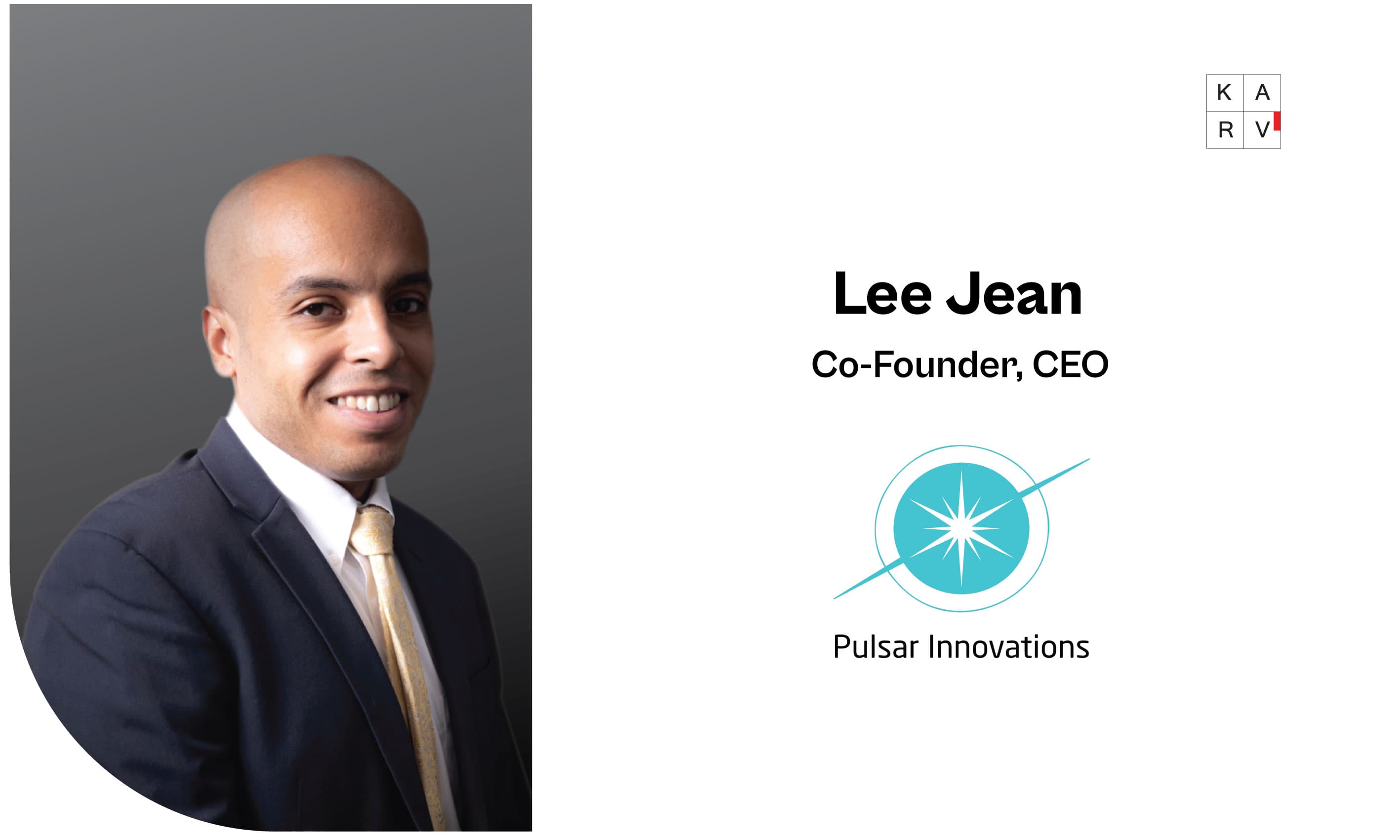
Lee Jean is a startup founder, pitch coach, and podcast host helping early-stage founders in Japan succeed globally. As Co-Founder & CEO of Pulsar Innovations, he works with entrepreneurs and leaders to build the communication, storytelling, and strategic thinking needed to raise capital and expand internationally.
With a background across startups, education, and international business in the U.S., Australia, Vietnam, and Japan, Lee brings a practical, cross-cultural approach to high-stakes communication. He also hosts the Produck Podcast, sharing candid conversations on building and scaling products.
Driven to position Japan as a global startup hub, Lee equips founders with the tools to compete internationally and capture overlooked opportunities.