
Expert ArticlesAdvertising & Performance Marketing
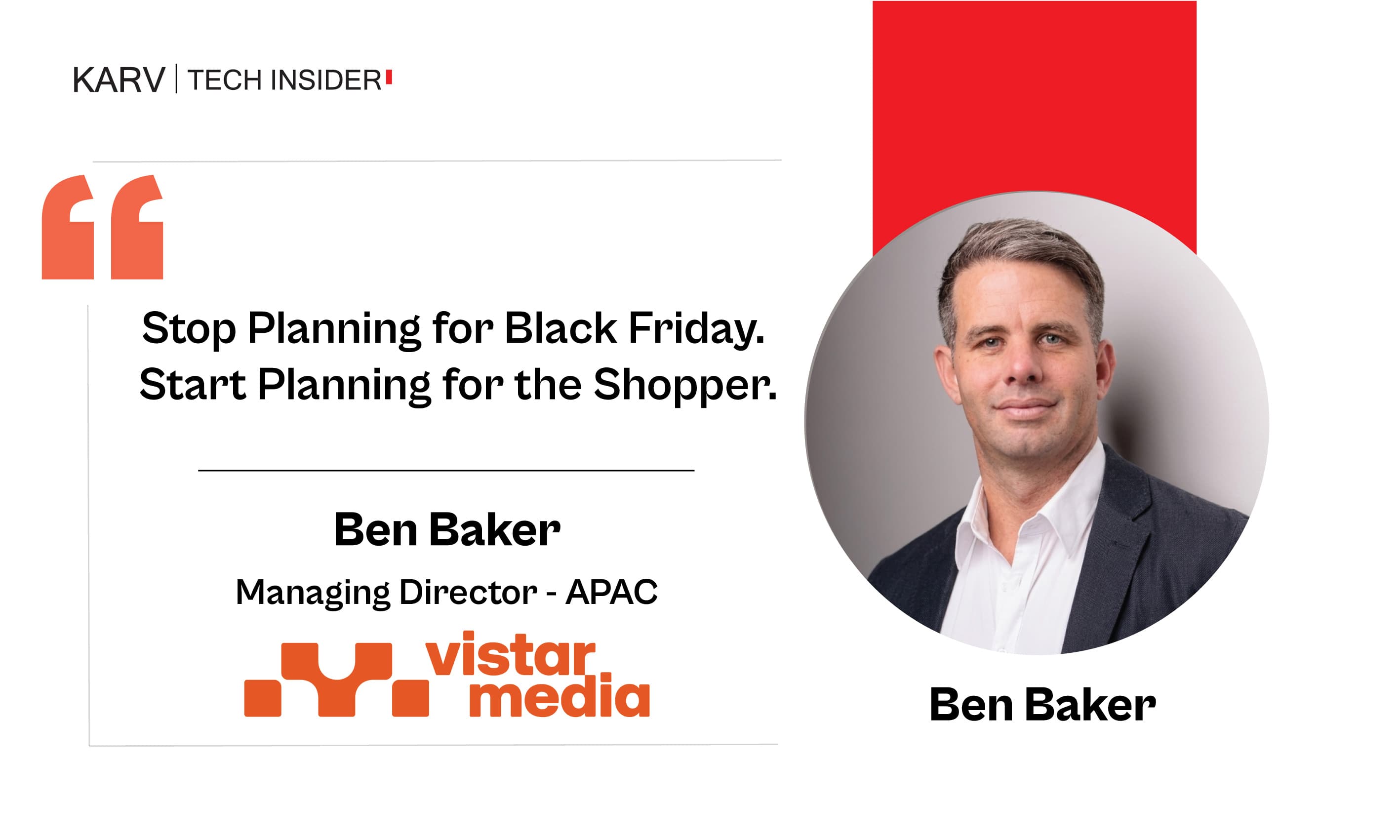
Stop Planning for Black Friday and Start Planning for the Shopper: Ben Baker on the Changing Retail Advertising Playbook
Article content
Stop Planning for Black Friday and Start Planning for the Shopper
By Ben Baker, Managing Director, APAC, Vistar Media
Black Friday might still have a date on the calendar, but for Australian shoppers, it's no longer a single weekend of frantic bargain hunting. What was once a concentrated burst of retail activity has evolved into weeks of promotions, with consumers researching, comparing and purchasing well before the final Friday in November.
Yet while the shopping season has changed, the advertising playbook hasn't always kept pace. Too many campaigns are still built around fixed promotional windows, predetermined messaging and the assumption that reaching the largest audience at the busiest time is the best way to drive results.
Winning Black Friday in 2026 won't necessarily mean spending more or shouting louder. It will mean being more relevant, responsive and aligned with how people actually shop.
The shopping calendar has changed
The numbers tell an interesting story. According to Australian Bureau of Statistics figures, retail turnover reached $39.1 billion in November 2025, up 7% year on year. Separate research from the Australian Retailers Association and Roy Morgan found that 29% of Australians were starting their Christmas shopping earlier than the previous year, reinforcing the shift towards a longer peak shopping season.
At the same time, shoppers are becoming more considered in how they spend. Deloitte's 2026 Retail Report found that 77% of Australians are changing their shopping behaviour in response to cost-of-living pressures.
Consumers have more time to compare offers, more opportunities to purchase and more reasons to be selective. For advertisers, a campaign designed to dominate one weekend risks missing shoppers who have already made their purchasing decisions, while brands that simply extend the same creative across November risk becoming part of the promotional noise.
More advertising isn't necessarily better advertising
It's tempting to respond to a longer shopping season by making campaigns longer too. But stretching a traditional Black Friday campaign across November doesn't automatically make it more effective.
Shopping priorities change throughout the month. Early on, consumers might be researching products, comparing prices or narrowing down their options. As promotions intensify, the focus shifts towards specific offers, availability and convenience.
These moments call for different messages, yet advertising strategies often treat them as one continuous promotional opportunity, prioritising reach and frequency over relevance.
A larger share of voice isn't necessarily valuable if the message doesn't reflect what consumers are looking for. Instead of asking how to maintain maximum visibility throughout November, brands should be asking when, where and how their advertising can make the biggest difference.
Follow the shopper, not just the calendar
The opportunity lies in creating campaigns that adapt as the shopping season unfolds.
Consumers move between digital research, physical retail environments, commuting and everyday activities. Each presents a different opportunity to influence a purchasing decision.
For brands, this means thinking beyond fixed media placements and rigid campaign schedules. Advertising should reflect changing shopping priorities, locations and the context in which consumers encounter a message.
Programmatic digital out-of-home (DOOH) has an important role to play here. Its ability to adjust campaign delivery and creative messaging gives advertisers greater flexibility to respond to different moments throughout the retail season.
A brand might prioritise awareness earlier in November before shifting towards more immediate promotional messaging as Black Friday approaches. Messaging can also be tailored to different environments, recognising that someone commuting to work may have different priorities from someone already visiting a shopping centre.
A great example of this is Priceline, which leveraged programmatic DOOH in the lead-up to Black Friday last year to promote its Pink Friday campaign. By targeting audiences within 3km of Priceline stores across retail, outdoor and transit environments between 7am and 8pm, the campaign reached shoppers in relevant locations during key shopping hours, helping drive awareness and consideration ahead of the sales event.
This doesn't mean abandoning traditional planning or reacting to every change in consumer behaviour. It means establishing a clear strategy while retaining the flexibility to make advertising more relevant as circumstances change.
Black Friday remains an important retail event, but treating it as an isolated advertising opportunity no longer reflects how consumers shop.
For years, the Black Friday advertising playbook has been built around a simple principle: show up big when everyone is shopping. But when shopping happens over several weeks, being everywhere at once is no substitute for being relevant at the right moment.
The question for advertisers is no longer how to win Black Friday weekend, but how to earn consumers' attention throughout the shopping season.

KARV Editorial Analysis
Ben Baker's perspective highlights a fundamental shift in retail advertising: the need to move from campaign-calendar thinking to consumer-behaviour-led planning. As shopping journeys become longer and purchasing decisions more considered, brands can no longer rely solely on concentrated promotional bursts or repetitive messaging to capture attention. The real opportunity lies in understanding when consumers are researching, comparing and ready to purchase, then aligning advertising with those moments.
The Priceline example demonstrates how programmatic DOOH can connect location, timing and messaging to make advertising more contextually relevant. At KARV, we see this as part of a broader evolution in advertising, where effectiveness is increasingly determined by the ability to combine audience intelligence, contextual relevance and adaptable execution. For retailers, the competitive advantage will not simply come from having a larger advertising presence, but from making every interaction more meaningful throughout the shopping journey.
About Vistar Media
Vistar Media is a global advertising technology company specialising in digital out-of-home (DOOH) media. Its technology platform enables advertisers to plan, execute and measure campaigns across digital out-of-home environments, connecting brands with audiences through data-driven and programmatic advertising.
Source & Credits
Expert Commentary: Ben Baker, Managing Director, APAC, Vistar Media.
Media Source: Hotwire Global AU.
Editorial Analysis: KARV Tech Insider Editorial Team