
Industry NewsMarketing Automation
Google explores new AI chip partnership with Marvell Technology to scale inference workloads
Article content
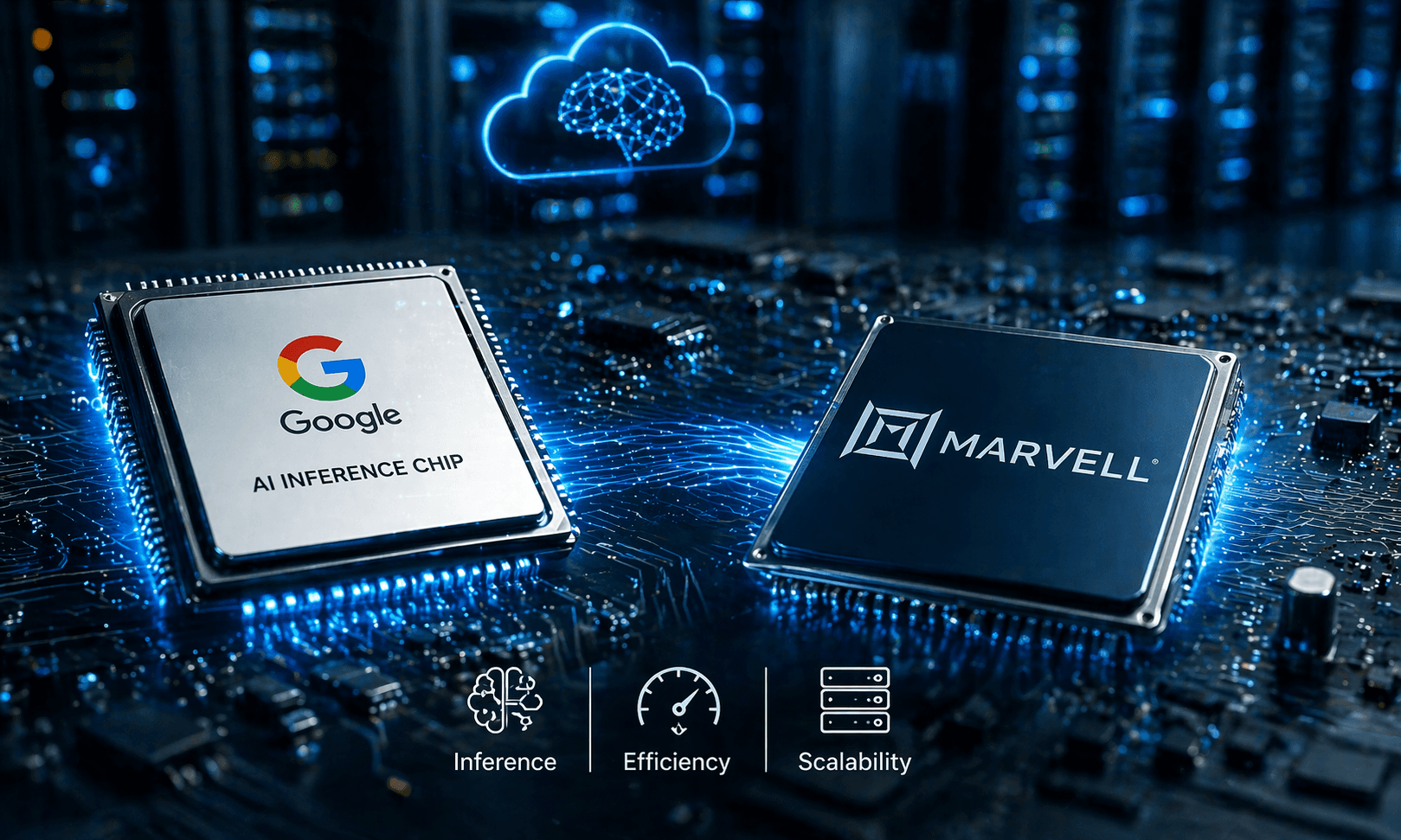
Google is in discussions with Marvell Technology to develop a new generation of artificial intelligence chips, underscoring the growing importance of specialized hardware in scaling AI workloads.
The talks center on building two custom chips designed to improve how efficiently AI models run, particularly in inference tasks. One of the proposed designs is a memory processing unit intended to complement Google’s existing tensor processing units, while the other is a new TPU optimized for running AI models at scale.
This move reflects a broader shift in AI infrastructure, where companies are increasingly focusing on inference performance rather than just model training. As enterprise adoption of generative AI accelerates, the cost and efficiency of running models in production environments have become critical differentiators.
Google has been steadily investing in its in-house silicon capabilities, positioning its TPUs as a competitive alternative to GPUs from Nvidia. These efforts are also closely tied to the growth of its cloud business, where AI-driven workloads are becoming a key revenue driver.
The potential collaboration with Marvell suggests a diversification of Google’s chip ecosystem. While the company has an established relationship with Broadcom for chip design, expanding its partner base could provide greater flexibility in supply and innovation, especially as demand for AI compute continues to surge.
Industry-wide, the development highlights a clear trend. Hyperscalers are moving toward vertically integrated AI stacks, combining custom silicon, cloud infrastructure, and software models to optimize performance and cost. In this landscape, inference-specific chips are emerging as a critical layer, enabling faster and more efficient deployment of AI applications across enterprise use cases.
Although discussions are still ongoing and remain unconfirmed, the direction is evident. Control over AI hardware is becoming as strategic as control over the models themselves.
Source and Credits: Reuters