
Industry NewsAI Business & Ecosystem
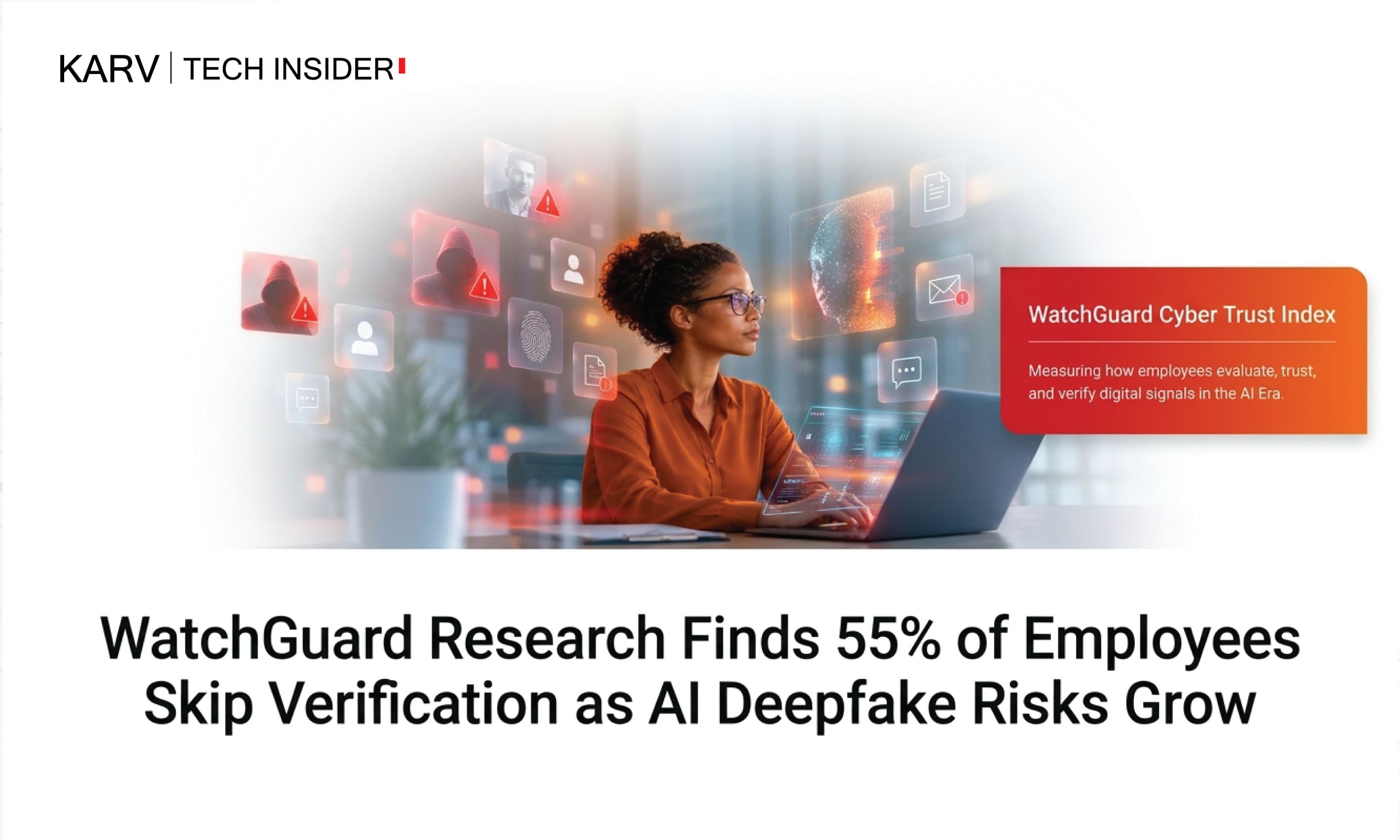
WatchGuard Cyber Trust Index Finds 55% of Employees Do Not Always Verify Digital Communications
Article content
As artificial intelligence makes it increasingly difficult to distinguish genuine digital communications from convincing imitations, employee trust in familiar senders, voices and brands is creating new cybersecurity challenges for organisations.
New research from WatchGuard Technologies finds that 55% of employees do not always independently verify the sender before acting on sensitive requests involving payments, credentials or confidential information.
The findings come from the company's inaugural 2026 Cyber Trust Index, titled The Cyber Trust Gap: When Familiarity Is Not Enough in the AI Era. The research surveyed more than 500 full-time employees across eight countries, examining how people assess and verify digital communications amid the growing use of AI-generated content and deepfakes.
The study found that 46% of respondents trust digital communications more than they did five years ago, compared with 31% who reported lower trust. This growing confidence, combined with inconsistent verification practices, creates opportunities for attackers to exploit familiar names, voices, faces and organisational branding.
Australia, however, presents a notable contrast to the global findings.
Australia Leads in Digital Verification
Australian employees demonstrated the strongest verification habits among the eight countries surveyed, with 69% saying they always verify sensitive requests before taking action.
This compares with just 22% of respondents in Germany, highlighting a significant difference in how employees approach digital trust and security across markets.
Interestingly, 59% of Australian respondents also said they trust digital content, making the country second only to the United States, where the figure reached 62%.
However, confidence does not necessarily translate into unquestioning behaviour. Only 39% of Australian respondents said they would likely trust an urgent text from their CEO requesting payment or sensitive information without independently verifying it. The corresponding figure for US respondents was 59%.
The findings suggest that organisations can maintain confidence in digital communications while reinforcing independent verification as a routine security practice.
Familiarity Is Becoming a Cybersecurity Vulnerability
The research highlights how easily familiar digital signals can influence employee decisions.
Globally, 72% of respondents said they had clicked a link or opened an attachment because it appeared to come from someone they knew.
Other factors influencing trust included:
-
38% said a known sender makes a digital request appear trustworthy.
-
36% cited familiar workplace or personal details.
-
32% relied on correct company branding.
-
Only 27% identified independent verification as a reason for trusting a request.
The findings become particularly relevant as AI tools make it easier to reproduce familiar communication styles, voices and visual identities.
The research also found that 53% of employees rely on a person's face, voice or display name when assessing unusual or sensitive video requests. Only 28% prioritise checking through another communication channel or following an established organisational procedure.
Furthermore, 42% said they would likely trust an urgent text from their CEO or manager requesting payment or sensitive information without verification. Another 40% said they would likely trust a similar voice message.
These behaviours highlight the limitations of relying on familiar communication signals as proof of authenticity.
"The most striking finding isn't that employees trust digital communications," said Corey Nachreiner, Chief Information Security Officer at WatchGuard Technologies. He explained that AI is making familiar names, voices, faces and brands easier to imitate, making independent verification an increasingly important cybersecurity skill.
AI-Driven Impersonation Raises the Stakes
The growing sophistication of AI-generated scams is adding urgency to the verification challenge.
The broader research summary found that 54% of respondents had encountered an AI-generated scam, deepfake, impersonation attempt or fraudulent communication.
At the same time, 38% identified insufficient training or employee awareness as their organisation's greatest obstacle to cybersecurity preparedness.
Together, the findings point to a growing gap between the sophistication of emerging threats and the everyday security habits of employees.
As attackers increasingly use AI to replicate trusted individuals and organisations, businesses can no longer rely solely on employees recognising suspicious messages through appearance, language or tone.
How Organisations Can Strengthen Digital Trust
WatchGuard's research highlights an opportunity for managed service providers (MSPs) and channel partners to help organisations strengthen employee verification practices and prepare for AI-enabled threats.
The report recommends establishing documented confirmation procedures for sensitive activities such as payments, credential resets and confidential-data sharing.
It also highlights the importance of realistic executive impersonation exercises, employee awareness programmes, approved AI tools and clear data-handling policies.
Organisations can further strengthen their security posture through layered protection, accessible reporting channels and consistent monitoring of employee verification behaviour.
WatchGuard supports these priorities through its Unified Security Platform, which combines network, endpoint and identity protection. Its solutions include identity security, secure access and Managed Detection and Response (MDR) capabilities designed to help organisations reduce risks associated with account compromise, AI-enabled fraud and ransomware.
As AI continues to reshape digital communications, the findings reinforce a critical principle for businesses: recognising a familiar sender is no longer enough. Independent verification must become an essential part of workplace cybersecurity.
About WatchGuard Technologies
WatchGuard Technologies is a global cybersecurity provider focused on managed service providers (MSPs), small and medium-sized businesses and distributed enterprises. With more than 30 years of experience, the company delivers its AI-powered Unified Security Platform, combining network, endpoint and identity protection with Zero Trust-aligned security capabilities. WatchGuard supports more than 25,000 MSPs protecting over 1.5 million customers worldwide.
Research Methodology
The 2026 Cyber Trust Index was commissioned by WatchGuard Technologies and surveyed more than 500 full-time employees across eight countries. The research examined employee attitudes towards digital trust, verification practices, AI-generated impersonation and organisational cybersecurity preparedness.
Source: WatchGuard Technologies, 2026 Cyber Trust Index