
Leader InterviewsAI Applications & Use Cases
Brian Ho on Generative Engine Optimization, AI Search, and the Future of Digital Discoverability
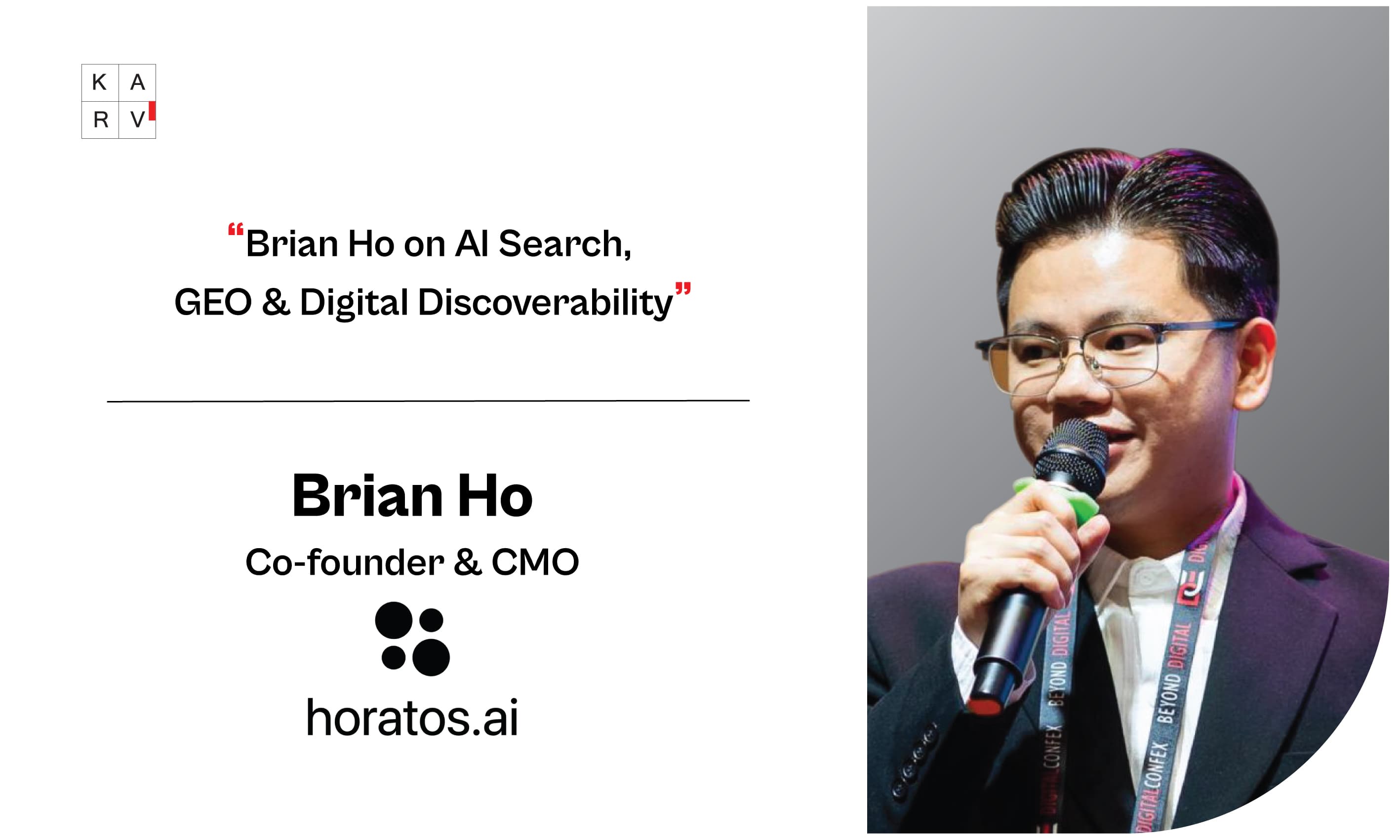
Article content
1. From SEO to GEO
Search behavior is evolving rapidly as users increasingly turn to AI platforms such as ChatGPT, Perplexity, and Gemini for answers. How do you see the relationship between traditional SEO and Generative Engine Optimization (GEO) evolving over the next few years?
A:
Search is no longer a list of blue links. It is becoming a conversation.
Traditional SEO optimized for crawlers that ranked pages. Generative Engine Optimization optimizes for reasoning systems that synthesize answers. The two will not replace each other. They will converge.
Over the next few years, SEO will remain the foundation. Websites still need to be crawlable, structured, and authoritative. But GEO will sit on top of that foundation, shaping how a brand is represented when an AI model writes the answer instead of returning a result.
Having led AISEO work across markets as different as Singapore, Korea, Japan, the US, and the UK, I can say the pattern is global. The user behavior shift is happening everywhere, just at different speeds.
SEO earns you a position. GEO earns you a sentence.
The brands that win will treat both as one discipline, not two.
2. Building Horatos AI
What inspired you to co-found Horatos AI, and what market opportunity did you identify that convinced you AI search visibility would become a critical business challenge?
A:
The name Horatos comes from the Greek word for “visible.” That is the entire thesis of the company.
Before co-founding Horatos AI, I spent eight years helping brands grow across five markets, including time as Head of AISEO at MediaOne Singapore. Working with companies like Dior, HL Assurance, FXTrading, and Evoto.ai, I saw the same quiet shift happen in boardroom after boardroom. ChatGPT, Perplexity, Gemini, and Claude began answering questions directly. Users stopped clicking. They started accepting. And enterprise leaders proud of their Google rankings were suddenly invisible inside the very models their customers were already trusting.
That gap was the opportunity. Brands had spent two decades learning how to be found by search engines. Almost no one knew how to be cited, recommended, or remembered by an AI. We co-founded Horatos AI to close that distance, with measurement, strategy, and tooling built specifically for AI visibility.
It is not a feature of marketing. It is the next layer of it.
3. The AI Visibility Gap
Many organizations are still focused primarily on search engine rankings. What are the biggest misconceptions businesses have about AI-driven search and discoverability today?
A:
The biggest misconception is that AI search is just another channel. It is not. It is a new layer of trust.
A few specific blind spots we see often.
Leaders assume that ranking well on Google guarantees visibility in AI answers. It does not. Models cite a narrower, more curated set of sources, and the signals that earn a citation are different from those that earn a click.
Many believe AI visibility is a content problem. In reality, it is a credibility problem. Models reward consistency across the open web, structured data, third party validation, and depth of expertise.
Some assume this is a problem for tomorrow. The reality is that AI traffic is already replacing meaningful portions of top of funnel discovery. Across the campaigns I have worked on, from luxury to fintech to SaaS, every quarter without measurement is a quarter of decisions made without data.
And finally, many believe AI search is unmeasurable. It is measurable. It simply requires new instruments.
4. Winning in an AI-First Search World
As AI-generated answers increasingly influence customer decisions, what practical steps should brands take to improve their visibility and authority across AI-powered platforms?
A:
Four practical steps, in order.
First, measure where you stand. You cannot improve what you cannot see. Audit your presence across the major AI platforms for the queries that actually matter to your business.
Second, become quotable. AI models cite clear, structured, factual content. Long, vague brand pages do not survive synthesis. Short declarative sentences, defensible data, and original perspective do.
Third, build third party authority. Models triangulate. A brand mentioned consistently across reputable sources earns far more trust than one that only talks about itself. This is true whether you are a global luxury house or an early stage AI product.
Fourth, treat your knowledge graph as an asset. Schema, entities, and structured facts are the language models read most fluently. The brands that organize their truth will be the brands that get repeated.
5. The Future of Content & Marketing
How do you see AI transforming content strategy, customer acquisition, and digital marketing over the next three to five years?
A:
Three shifts will define the next three to five years.
Content will move from volume to authority. The era of publishing for the algorithm is ending. The era of publishing for the model is one of clarity, originality, and depth.
Customer acquisition will become probabilistic. Funnels will give way to influence graphs. Marketers will optimize for the probability of being recommended, not just the probability of being clicked.
Digital marketing will become an intelligence function. The marketers who succeed will sit closer to data, product, and brand strategy than ever before. Less campaign manager, more systems thinker.
The center of gravity is moving from distribution to discoverability inside reasoning.
6. Developing the Next Generation of Marketers
As an SEO and GEO trainer and mentor, what skills and mindsets do you believe marketers need to develop to remain relevant and successful in an AI-driven landscape?
A:
The skills matter, but the mindset matters more.
On skills, marketers need fluency in three areas. Structured data and how machines read the web. AI literacy, meaning the ability to use, evaluate, and prompt large models with rigor. And analytical depth, because the new metrics live in citations, mentions, and model behavior rather than in clicks alone.
On mindset, three qualities stand out. Curiosity, because the field changes monthly. Restraint, because hype is the loudest signal and the least reliable one. And craft, because in a world of infinite generated content, taste becomes the competitive edge.
In my training and mentoring work, I tell young marketers the same thing. The ones who thrive will be those who can think like analysts, write like editors, and build like engineers.
7. Looking Ahead: The Future of Search
What trends or developments in AI-powered search and digital discoverability excite you most, and what advice would you give to business leaders preparing for this next phase of transformation?
A:
What excites me most is the return of trust as a measurable asset.
For two decades, search rewarded scale. The next decade will reward credibility. AI agents are beginning to act on behalf of users, making purchases, comparing vendors, and shortlisting partners with very little human supervision. The brands that are clear, consistent, and verifiable will be the brands that get chosen.
My advice to business leaders preparing for this phase is simple. Do not wait for the dust to settle. By the time AI search feels stable, the leaders in your category will already have been chosen by the models. Start measuring now. Start shaping your presence now. Treat visibility inside AI as a board level concern, because that is what it is becoming.
The future of search is not about being found. It is about being understood.
About Brian Ho
Brian Ho is Co-Founder and Marketing Director of Horatos AI, a Singapore based company helping enterprises measure and improve their visibility across AI powered search platforms. He brings more than eight years of experience growing brands across Singapore, Korea, Japan, the United States, and the United Kingdom, and previously served as Head of AISEO at MediaOne Singapore. Over his career he has led campaigns for global and regional brands including Dior, HL Assurance, FXTrading, and Evoto.ai. Today he writes, speaks, and trains the next generation of marketers on the shift from traditional SEO to Generative Engine Optimization, and on how businesses can remain discoverable in a world increasingly mediated by AI.
About Horatos AI
Horatos AI is a Singapore headquartered company focused on AI search visibility and Generative Engine Optimization. The name Horatos, from the Greek word for “visible,” reflects the company’s mission: helping brands be seen, cited, and recommended by the AI platforms shaping the next era of digital discovery. Through measurement, strategy, and training, Horatos AI partners with enterprises and marketers to navigate the shift from traditional SEO to a world where ChatGPT, Perplexity, Gemini, and other reasoning engines mediate how customers find, evaluate, and choose brands.