
Expert ArticlesAI Applications & Use Cases
Perry Claunch, Senior Product Leader at First Orion, on RCS, trusted communications and the future of messaging
Article content
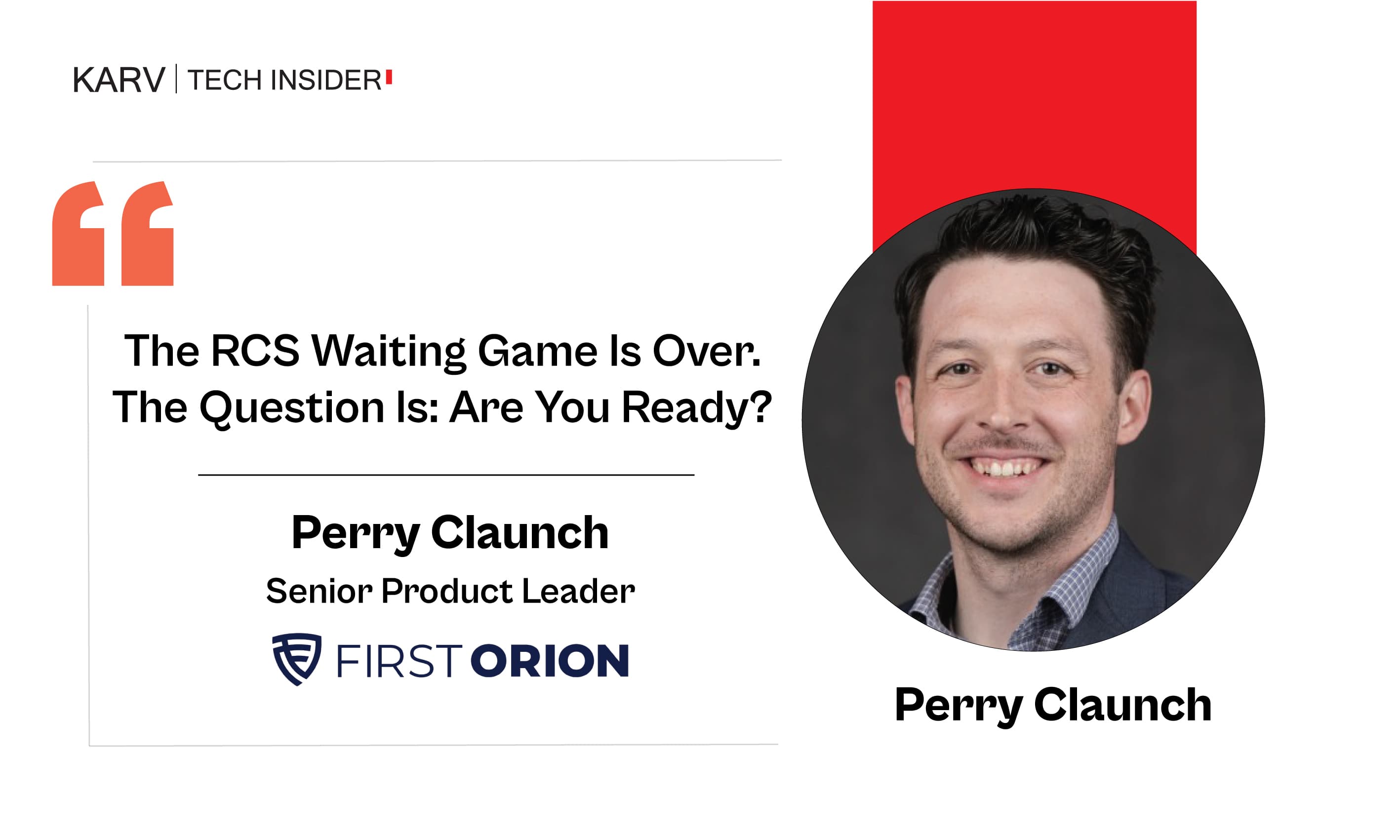
Perry Claunch, Senior Product Leader, First Orion
Rich Communication Services (RCS) has reached an inflection point. What was once an emerging channel with questions around reach, compatibility, and commercial readiness is quickly becoming a serious opportunity for businesses.
A year into broad RCS support, the market is notably different. Businesses have had time to plan, allocate budgets, and determine where RCS fits into their communications strategies. In the conversations that I’m having, the value proposition rarely needs to be explained anymore. The focus has shifted to when to invest, where to start, and how to achieve the highest return.
Trust Across Voice and Messaging
The significance of RCS goes well beyond making text messages more visually engaging. One of its most important advantages is the trust and transparency it can bring to businesses by making the brand behind an interaction immediately recognizable.
But that recognition shouldn’t reside in a single channel. Customers don’t think about voice and messaging as separate experiences. They want to know who’s reaching them and whether they can trust the interaction, regardless of the channel.
RCS should be considered in the context of a broader shift toward more consistent identity across voice and messaging. At First Orion, we’ve been working toward that convergence as part of our broader mission to restore trust and transparency in communications. RCS extends that work into messaging, enabling brands to make their identity immediately recognizable to customers.
The industry is moving in the same direction. Emerging standards around open, verifiable communications reinforce the potential for businesses to establish a more consistent identity across voice and messaging. The long-term opportunity is bigger than either channel alone: creating a communications experience in which customers can more easily recognize and trust the businesses reaching them, whether through a message or a call.
For businesses that have spent years working to make legitimate communications more recognizable and trustworthy, that matters. RCS brings that effort into messaging today, while also laying the groundwork for a more consistent identity across communications over time.
Moving Beyond an SMS Mindset
RCS significantly expands what businesses can accomplish through messaging, with rich cards, carousels, high-resolution images, and interactive elements that give customers more ways to engage directly within the conversation.
The opportunity is to combine those richer capabilities with a recognizable brand identity, not simply to recreate an existing SMS program in a new format. A business can turn on RCS, establish its brand identity, and continue sending essentially the same messages it sent through SMS. That alone can deliver meaningful value through greater recognition and trust, but it still leaves many of RCS’s richer capabilities unused.
The greater opportunity comes when businesses reconsider how messaging fits into the customer experience: reducing unnecessary steps, making it easier for customers to act, introducing richer interactions, and identifying where automation can simplify experiences that previously required customers to move between channels.
Getting the full value from RCS takes more than turning on a new channel. Businesses need people who understand how to identify the right use cases, rethink existing workflows, and refine those experiences as RCS evolves.
That makes specialized RCS expertise increasingly valuable. The goal shouldn’t simply be to get a business activated on RCS, but to help it evolve how it operates so it can take full advantage of what the channel truly enables.
Evidence of the potential is already encouraging. At First Orion, we recently saw a retail furniture company compare its first RCS promotional campaign directly with its SMS performance, with RCS generating roughly twice the website traffic. It was a first campaign, but the result offers an early indication of what can happen when businesses move beyond traditional text messaging and give customers a richer, more contextual way to engage.
The Role of AI
While RCS isn’t itself an AI technology, the two complement each other well. One of the challenges businesses face as they move beyond SMS is determining how to incorporate a much broader set of capabilities into existing communications.
Consider rich cards and carousels. Creating these experiences dynamically and tailoring them to an individual conversation can be complex. Conversational AI can help generate and adapt them in real time, making it easier for businesses to take advantage of RCS’s more advanced capabilities rather than limiting the channel to branded messaging alone.
As businesses incorporate AI into their broader communications strategies, RCS should be part of the plan. AI can help businesses take greater advantage of the channel’s capabilities and create more dynamic customer experiences.
Getting to RCS Faster
When RCS first began rolling out more broadly, one of the significant barriers for businesses was simply getting activated. Brand approval could take several months, and in some cases even longer. That was enough to discourage businesses from getting started.
This has changed. Activation now commonly takes less than two months. There are also opportunities to automate more of the onboarding process and further reduce that timeline. Businesses still need to account for some lead time, but the process is substantially easier than it was during the early rollout.
RCS is already delivering results, while adoption is still relatively early. Businesses that start now can begin to learn what works for their customers and refine their approach as the channel grows.
The Cost of Waiting
There will always be a reason to wait for the next improvement. RCS standards will continue to evolve, commercial models may change, onboarding will become more efficient, and businesses will continue discovering new ways to use the technology.
But none of these issues change what is already available today.
The technology is here. The commercial environment is in place. Activation times are shorter. And early campaigns are beginning to demonstrate the impact of successful RCS strategies. That changes the calculation around waiting.
Delaying RCS isn’t simply postponing an investment. It means postponing the customer insights, operational knowledge, and practical experience that come from putting the technology to work. Those capabilities take time to build, regardless of when a business begins.
For years, businesses could reasonably ask whether the RCS ecosystem was ready for them. Increasingly, that question has been answered.
The question now is whether businesses are ready for RCS. That means not simply adopting another messaging channel, but rethinking how they communicate, how they operate, and how they establish a trusted identity across every interaction.
About Perry Claunch
Perry Claunch is a Senior Product Leader at First Orion, where he focuses on the evolution of trusted customer communications across voice and messaging.
With deep expertise in communications technology, product strategy, and solutions designed to restore trust in business interactions, Perry brings a practical perspective to how brands can build more recognizable, transparent, and engaging experiences for customers. His work spans the evolution of branded communications, including the growing role of Rich Communication Services (RCS) and the opportunities it creates for businesses to rethink how they connect with customers.
In his work at First Orion, Perry is focused on helping businesses navigate the shift toward more trusted, recognizable, and increasingly intelligent communications experiences across channels.
About First Orion
First Orion is a communications technology company focused on building greater trust and transparency into customer interactions. The company helps businesses make their communications more recognizable, protect their reputation, and create better customer experiences across voice and messaging.
Its solutions span branded calling, branded messaging, reputation monitoring, call blocking, and risk detection, helping businesses establish recognizable identities while protecting customers and employees from fraudulent communications. First Orion's branded messaging capabilities also support secure RCS experiences with rich media and two-way interactions.
Trusted by more than 16,000 businesses, including Fortune 500 companies, First Orion works across the communications ecosystem to make every customer touchpoint more transparent, recognizable, and trustworthy. Its work with major carriers and enterprises reflects a broader mission to restore trust in communications at scale.
Source & Credits
This article was provided to KARV Tech Insider by Trier & Company for publication.