
Expert ArticlesAI Infrastructure & Compute
Inside Tokyo's Global Startup Communities: Building Connections Beyond Borders
Article content
When conversations turn to startup ecosystems, the spotlight often falls on venture capital, accelerators, emerging technologies, or government initiatives. While these elements are important, they represent only part of the equation.
According to Maki Mizuno, the true foundation of innovation is something much more human.
"Communities are the real infrastructure of innovation."
After years of working across startups, universities, corporations, and local governments, Maki has come to believe that communities create the relationships that allow ideas to move, partnerships to form, and opportunities to emerge.
Without them, even the most promising ideas remain isolated.
Tokyo's Innovation Ecosystem Is Entering a New Phase
Tokyo has long been recognized as one of the world's leading economic and technology centers. Today, however, its innovation landscape is entering a new chapter.
Alongside government-backed programs and corporate innovation initiatives, a growing network of community-led ecosystems is connecting entrepreneurs, researchers, investors, students, and international professionals in ways that traditional institutions cannot.
Rather than operating independently, these communities are creating collaborative spaces where knowledge, talent, and ideas move freely across industries and cultures.
For Maki, this evolution represents one of Tokyo's greatest strengths—and one of its biggest opportunities.
Community Is Infrastructure, Not an Event
Networking events may introduce people.
Communities create lasting relationships.
Maki believes that communities should be viewed not as one-time gatherings, but as long-term infrastructure that continuously creates opportunities for collaboration.
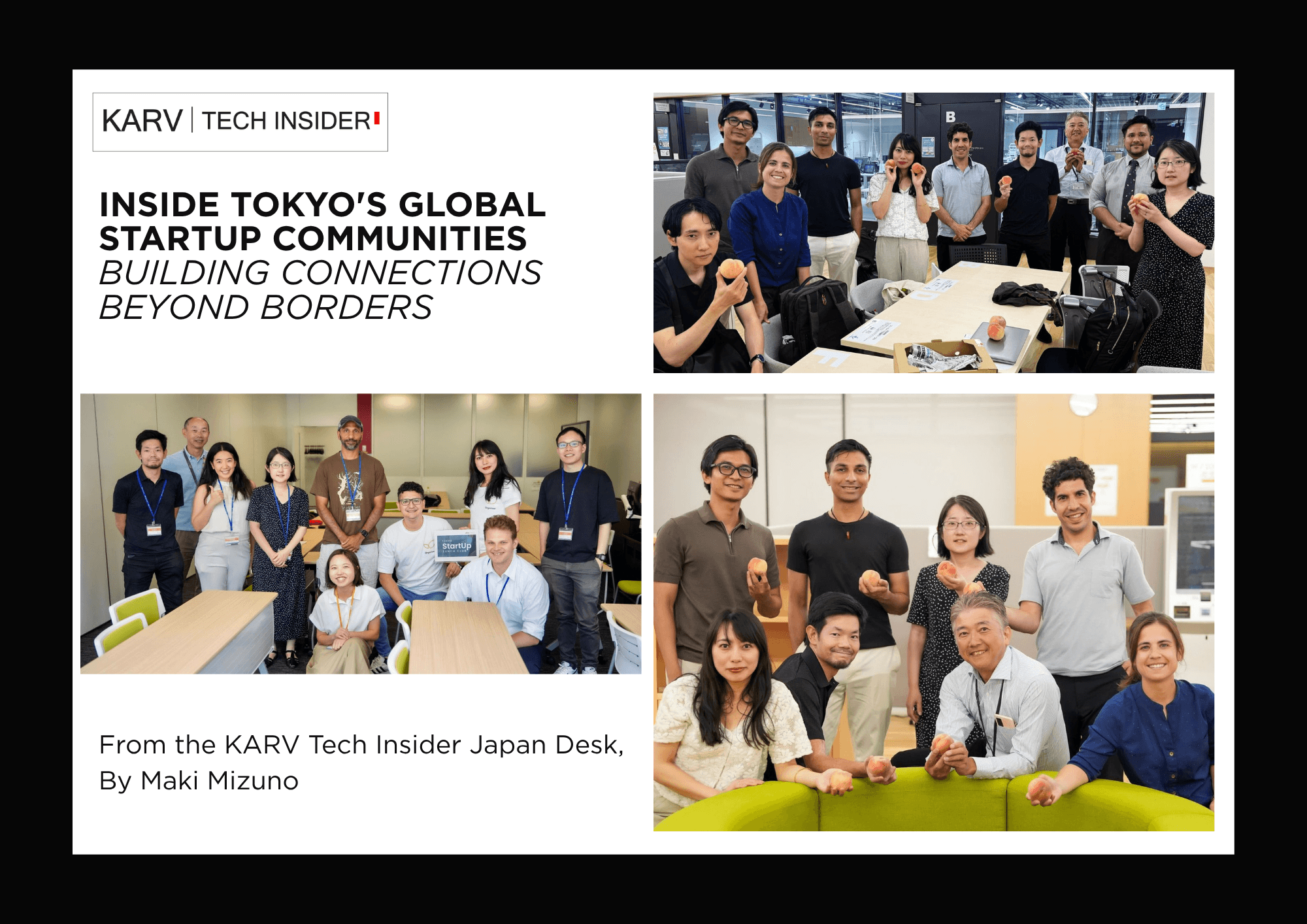
That philosophy came to life during a single day in Tokyo, where she hosted two completely different communities.
One gathering brought together entrepreneurs and alumni from one of Japan's most internationally diverse universities.
The other welcomed researchers, startup founders, ecosystem builders, and local government representatives to discuss regional innovation and Fukushima's future.
Although the audiences were different, both shared the same purpose:
Creating opportunities that otherwise wouldn't exist.
Rebuilding the APU Spirit in Tokyo
Ritsumeikan Asia Pacific University (APU) is widely recognized as one of Japan's most internationally diverse universities, with students representing more than 100 countries and regions and nearly half of its student body coming from overseas.
While that diversity creates a unique educational experience, graduation naturally scatters alumni across the world, making it difficult to preserve the community that shaped them.
As an APU alumna and frequent guest speaker, one question stayed with Maki every time she returned to campus.
"How can I recreate that environment in Tokyo?"
The answer began by connecting two different ecosystems.
Working alongside Francisco Dalla Rosa Soares, who has cultivated one of Tokyo's most welcoming international startup communities through the Tokyo Startup Lunch Club, Maki is helping bridge APU's globally minded alumni network with Tokyo's growing international startup scene.
The Tokyo Startup Lunch Club is more than a networking event.
Every week, entrepreneurs, investors, engineers, founders, students, and startup enthusiasts gather over lunch to exchange ideas through open conversation rather than formal presentations or investment pitches.
The result is an environment where unexpected collaborations happen naturally.
By bringing together APU's international community with Tokyo's entrepreneurial ecosystem, Maki and Francisco are creating a space where people from different cultures, industries, and backgrounds can build relationships that extend far beyond a single conversation.
Crossing Academia, Business, and Local Government
Later that same day, another conversation unfolded at the Minato City Industrial Promotion Center, one of Tokyo's emerging hubs for entrepreneurship, business support, and cross-sector collaboration.
The venue reflects a broader shift in Tokyo's approach to innovation.
Rather than focusing solely on supporting startups, it creates opportunities for universities, corporations, entrepreneurs, researchers, local governments, and community organizations to collaborate under one roof.
The discussion was led by Professor Saja Kesht Kar of Tokyo Metropolitan University, who shared insights from visits to Fukushima while exploring how communities can become catalysts for regional revitalization.
One moment stood out.
Participants held peaches brought directly from Fukushima as they discussed the region's future.
It was a simple gesture, yet it transformed the conversation.
Instead of viewing regional recovery through policies or economic statistics, everyone was reminded that revitalization is ultimately about people, local identity, and the communities that continue to shape those places.
Equally inspiring was the diversity around the table.
Researchers, entrepreneurs, community organizers, and professionals from different sectors exchanged ideas as equals.
Each brought a unique perspective:
- Universities contributed research and long-term knowledge.
- Entrepreneurs brought experimentation and speed.
- Local governments created the conditions for innovation to flourish.
- Communities connected them all.
Innovation, Maki believes, rarely happens within a single organization.
It emerges when different sectors are brought into the same conversation.
Why Community Matters More Than Ever
Many assume thriving startup ecosystems are built through major conferences, accelerator programs, or government initiatives.
While these play an important role, Maki argues that lasting innovation grows through something much simpler—and far more consistent.
"Communities are not a by-product of innovation. They are the infrastructure that makes innovation possible."
The strongest ecosystems are built through everyday interactions:
- Weekly founder lunches.
- University and alumni networks.
- Cross-sector meetups.
- Trusted conversations between entrepreneurs, researchers, investors, and policymakers.
- Long-term relationships that evolve into partnerships, startups, and global collaborations.
These seemingly small moments become the foundation of sustainable innovation.
A Mission Centered on Connection
As a Japanese entrepreneur working across startups, universities, corporations, and local governments, Maki Mizuno sees her role as more than bringing people together.
Her mission is to design environments where collaboration happens naturally, spaces where different cultures, industries, and perspectives intersect to create opportunities that would never exist in isolation.
Tokyo already possesses many of the ingredients needed to become one of Asia's leading innovation ecosystems:
- World-class universities.
- Exceptional entrepreneurial talent.
- Strong corporate innovation programs.
- Active government support.
- A rapidly growing international startup community.
According to Maki, the missing ingredient isn't talent.
"The challenge is not talent. It is connection."
By strengthening those connections, Tokyo can continue evolving into a globally connected hub for innovation, entrepreneurship, and cross-border collaboration.
As Maki concludes:
"Communities are built around people, not places. And the people who build communities shape the future of startup ecosystems."
Editorial Credit
Reported and photographed by Maki Mizuno.
Editorial Note
This story is part of KARV Tech Insider's Japan Desk, a dedicated editorial initiative covering technology innovation, artificial intelligence (AI), startups, enterprise technology, digital transformation, and emerging business ecosystems across Japan. Through local reporting and industry collaboration, the Japan Desk brings global audiences closer to the leaders, companies, ideas, and innovations shaping Japan's rapidly evolving technology landscape.