
Expert ArticlesAI Governance & Ethics
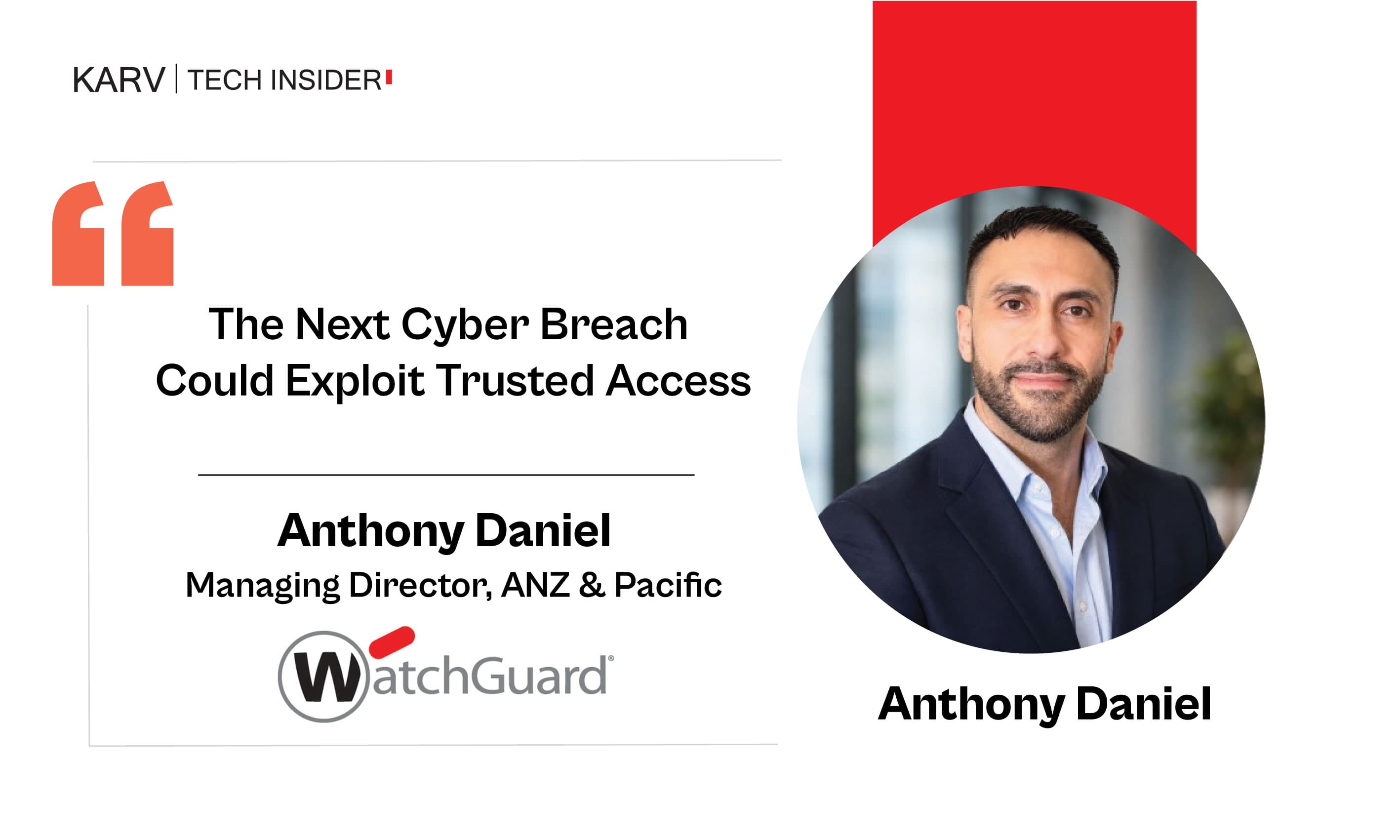
Anthony Daniel on Four Cybersecurity Predictions That Will Shape Australia's Threat Landscape in 2027
Article content
Four Cybersecurity Predictions for 2027
By Anthony Daniel, Managing Director, Australia, New Zealand and the Pacific Islands, WatchGuard Technologies
In 2027, some of the biggest cyberattacks facing Australian businesses will not come from external adversaries forcing their way through corporate perimeters. Instead, they will emerge from within, enabled by the very tools, software and personnel organisations already trust.
This shift is already underway across the region. WatchGuard's latest threat intelligence shows that while traditional network attacks fell by 79%, new malware targeting individual endpoints surged more than twentyfold year on year, with Asia Pacific accounting for roughly half of all network malware detected per device globally. As organisations deepen their reliance on connected systems and AI, threat actors are pivoting from breaking in to simply logging in. Four developments will define the year ahead.
1. Businesses' own AI will become an entry point for attackers
As Australian businesses grant AI assistants direct access to emails, internal documents and customer records, they are inadvertently opening a new door for attackers. In 2027, I expect to see a major local breach caused by an AI assistant manipulated into turning its legitimate permissions against the organisation. Businesses will quickly realise that the very tools helping employees work faster can also give attackers a trusted way in.
2. Attackers will exploit vulnerabilities faster than businesses can fix them
AI is accelerating how quickly attackers can find and exploit software weaknesses, leaving businesses with far less time to respond. Australia's new ASD Essentials guidance underscores the need for organisations to take a broader, more proactive approach to cyber resilience. Yet attackers are not just hunting for brand-new flaws. WatchGuard's first-half 2026 data found that the typical vulnerability targeted was originally disclosed back in 2014. In 2027, organisations that continue to treat software updates as routine IT maintenance rather than an urgent security priority will increasingly find themselves exposed.
3. Cybercriminals will increasingly recruit insiders through financial coercion
Rather than spending weeks trying to breach hardened infrastructure, threat actors are targeting employees who already hold legitimate access. In 2027, I expect a marked rise in cybercriminal syndicates approaching staff via encrypted messaging apps and professional networks, offering cash in exchange for credentials or sensitive data. Persistent cost-of-living pressures risk making these offers harder to refuse, creating a complex governance challenge where valid credentials and trusted personnel no longer guarantee legitimate activity.
4. Advanced security will become more accessible to smaller businesses
AI will begin making sophisticated security monitoring and incident response far more affordable for small and midsize businesses. Rather than needing dedicated internal security teams, smaller organisations will increasingly be able to rely on AI-powered tools and managed service providers (MSPs) to detect and respond to threats in real time. For Australia's SME-driven economy, this represents a major shift, putting enterprise-grade protection within reach of businesses that previously could not afford it.
Ultimately, trust will be one of the defining cybersecurity challenges of 2027. Whether it is an AI agent, an employee or a trusted software provider, businesses will need to rethink who and what they rely on.
Key Takeaways: Four Cybersecurity Predictions for 2027
-
AI assistants as attack entry points: Manipulated AI assistants could misuse legitimate permissions to access sensitive business information and systems.
-
Faster vulnerability exploitation: AI-enabled attacks will put pressure on organisations to identify and fix software weaknesses more quickly.
-
Growing insider threats: Cybercriminals will increasingly target employees with financial incentives in exchange for credentials or confidential information.
-
Enterprise-grade security for SMEs: AI-powered monitoring and managed service providers will make advanced cybersecurity more accessible to smaller businesses.
The bigger picture: As AI becomes more deeply embedded in business operations, organisations must rethink how they establish, manage and monitor trust across people, systems and technology.
About Anthony Daniel
Anthony Daniel is Managing Director for Australia, New Zealand and the Pacific Islands at WatchGuard Technologies, where he leads regional business growth, channel strategy and partner development. With over 15 years of experience in IT and telecommunications, he has previously held senior leadership roles at SolarWinds, Oracle, Vocus and Vodafone.
About WatchGuard Technologies
WatchGuard Technologies is a global cybersecurity company providing network security, endpoint protection, identity security and managed security services. Its solutions help organisations and managed service providers protect their digital environments against evolving cyber threats.
Source & Credits
Expert Commentary: Anthony Daniel, Managing Director, Australia, New Zealand and the Pacific Islands, WatchGuard Technologies.
Media Partner: Hotwire AU