
Industry NewsAI Business & Ecosystem
WPP Integrates Google Earth AI to Bridge Digital Marketing and the Physical World
Article content
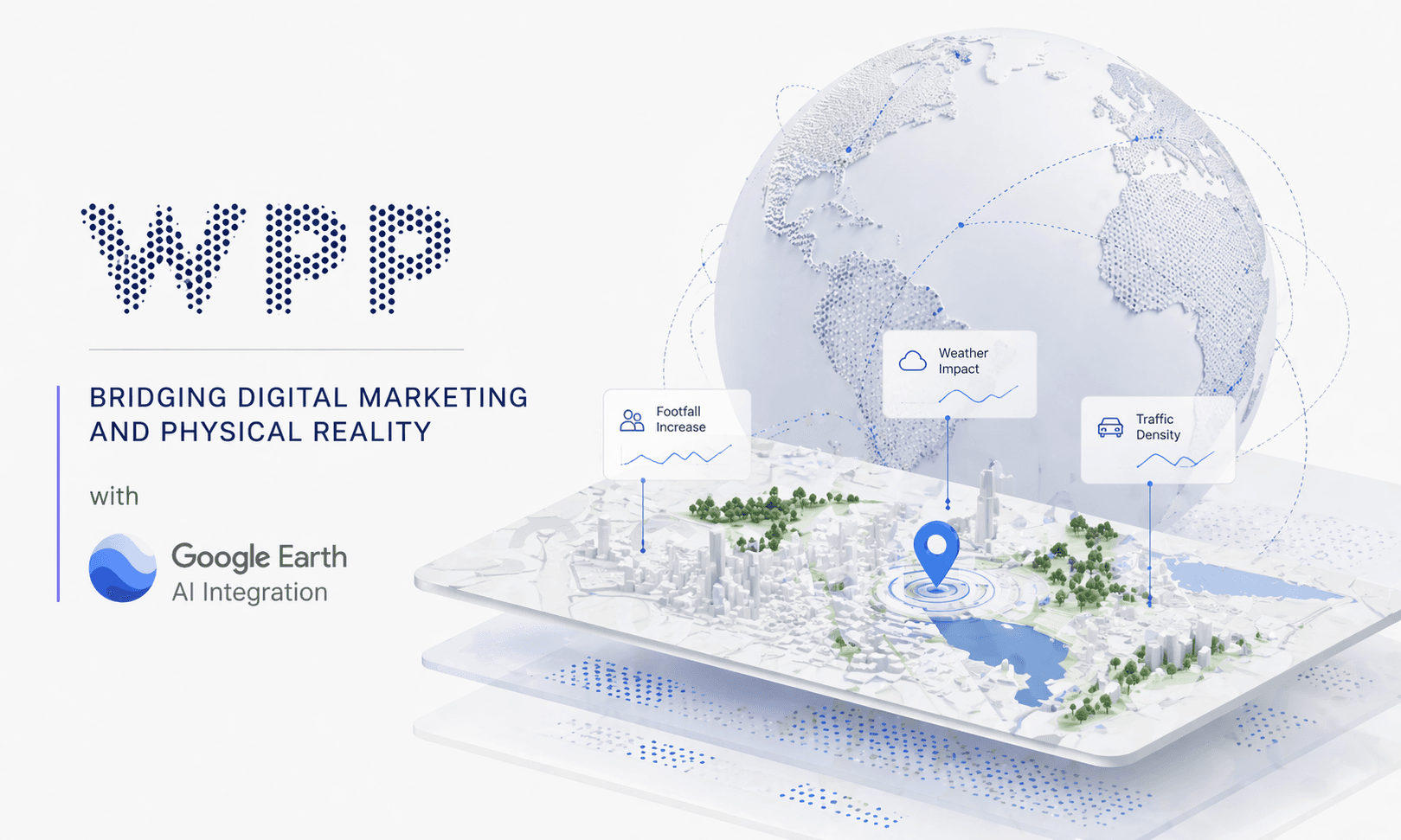
WPP has integrated Google Earth AI into its Open platform, marking a shift toward combining digital marketing intelligence with real-world environmental data.
The integration brings Google’s geospatial AI models and datasets into WPP’s agentic marketing ecosystem, allowing brands to analyze how physical-world factors such as traffic, weather, and movement patterns influence consumer behavior.
This approach addresses a long-standing gap in marketing. While digital data has shaped how brands understand audiences, a large share of consumer activity still happens offline. By incorporating Earth AI, WPP is enabling a more complete view of the customer journey—one that reflects both online signals and real-world context.
The platform allows marketers to predict demand and automate campaigns at a hyper-local level, shifting from reactive targeting to more proactive, real-time decision-making.
WPP’s Open Intelligence framework underpins the integration, enabling secure and privacy-first data collaboration while combining client data with geospatial insights for more accurate outcomes.
At a broader level, the move reflects a deeper evolution in Martech. Marketing is no longer confined to digital touchpoints—it is becoming increasingly tied to real-world environments, where context, location, and physical behavior are as critical as online activity.
For the industry, this signals a shift toward “physical-world intelligence,” where AI models are used not just to understand what people click, but how they move, interact, and make decisions in the real world.
Source and Credits: PR Newswire